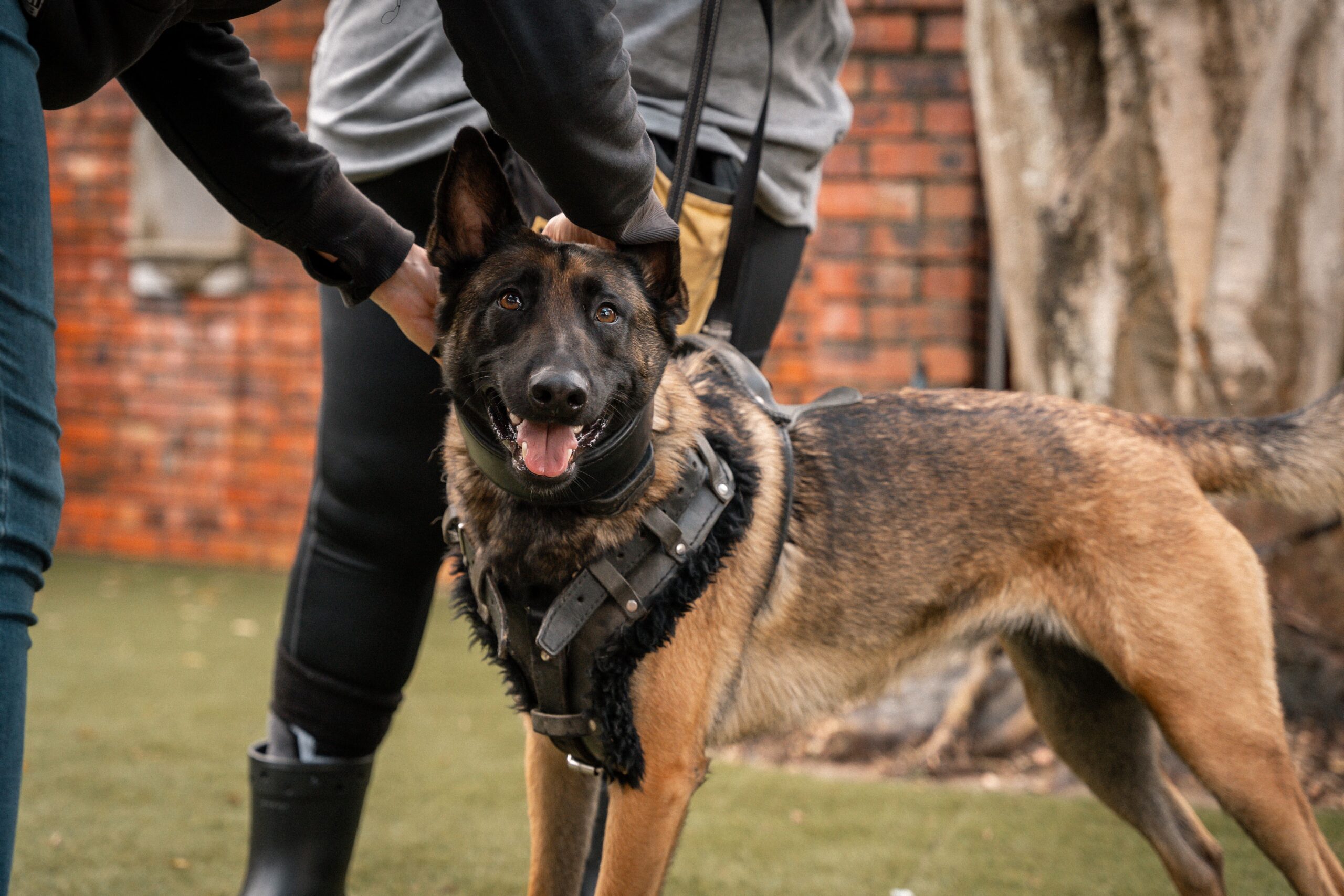
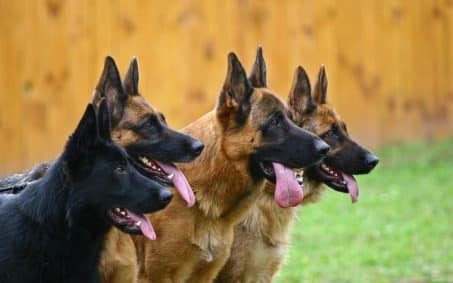
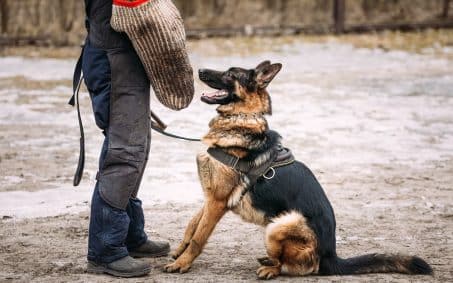
Most people will say the German Shepherd. And they wouldn’t be wrong.
There’s a reason you see them beside law enforcement officers, guiding the visually impaired, herding livestock, and curled up in the corner of a family living room—all in the same lifetime.
They are brilliant, loyal, deeply intuitive. And when trained well, they know the difference between a child’s scream and an intruder’s silence.
But they’re not the only ones.
There’s the Rottweiler. The Belgian Malinois. The Doberman Pinscher. And then—surprisingly to some—the Bullmastiff.
See, we’re used to categories. We separate guard dogs into binary buckets: aggressive vs. gentle, fighters vs. lovers, protectors vs. pets.
But like most things in life, the best candidates often exist in the overlap. That place where two seemingly opposing truths meet. Where a dog can be both fearsome and friendly. Both a guardian and a goofball. Both deeply protective and endlessly patient.
The friendliest guard dogs are not anomalies. They’re just misunderstood. And maybe that’s the story of most good things in life—they don’t make sense on paper until you meet them in person.
You’ve heard the stories—aggressive Rottweilers, dangerous Pitbulls, vicious Cane Corsos and other unpredictable working breeds. But those stories? They rarely tell the whole truth.
They capture a moment, not a pattern. Yes, some of these dogs have been bred poorly—genetically tampered with by backyard breeders chasing size or aggression rather than stability.
Some are left untrained and tossed into homes or yards with no structure, socialization, or sense of direction. And others failed by humans who never corrected poor behavior, never rewarded the good, and never gave the dog a job to do.
So, before we discuss the friendliest guard dogs, let’s answer this question…..
Yes.
But friendliness in a guard dog depends on a few key factors. The right temperament. Early and consistent socialization. Thorough, intentional training.
Let’s break that down.
 Every dog is born with a temperament. Just like humans, some are more confident, some more anxious, some naturally affectionate, others more reserved. You can shape behavior with training, but temperament? That’s baked into the cake.
Guard dog breeds like the German Shepherd, Doberman, or Bullmastiff are often chosen for their steady nerves and strong instincts. But within every breed, there’s variation. Not every Rottweiler is aloof. Not every Malinois is intense.
The friendliest guard dogs tend to be genetically wired with a calm, stable demeanor. They’re protective without being wildly reactive.
So, when I say that we travel far and wide to look for breeds with the right temperament, I don’t mean the toughest. I mean the most balanced. That’s the foundation—because temperament affects everything else: trainability, socialization.
You can train a dog to obey. You can desensitize it to distractions. But you can’t train away a fragile nervous system. You can’t force a tightly wound dog to be easygoing.
That’s why temperament comes first. It tells us how much we can build on.
Temperament gives us the raw material. But socialization? That’s the mold. It shapes how a dog sees the world—and more importantly, how they respond to it.
A well-socialized guard dog has been exposed to a variety of people, environments, sounds, and situations—ideally from a young age. That exposure teaches them what’s normal and what’s not.
Don’t get me wrong though, the friendliness we’re after here isn’t about a wagging tail at every stranger. It’s about discernment. Calm confidence. The kind of quiet assurance that doesn’t escalate unless it needs to.
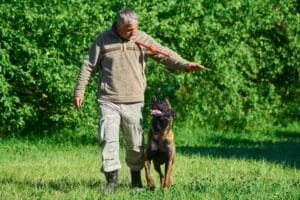 Training brings it all together– including control. A well-trained guard dog knows how to harness its protective instincts in an appropriate and safe way. And just as importantly, it knows when not to act.
Training also deepens the bond between dog and handler. It builds trust. Mutual respect. Communication. And when that foundation is strong, you end up with a capable protector and a loyal companion.
Now, I’d like you to look beyond the stereotypes. And into the gentle, steadfast eyes of….
You see a Rottweiler walking down the street, and most people will instinctively cross to the other side. Broad chest. Thick neck. That intense, unreadable stare.
But hang out with a trained one for five minutes and you’ll realize: this is a dog who just wants to sit on your foot and lean into your body.
Rottweilers are incredibly loyal to their people. Not in the over-eager, tail-chasing way—but in the I’ve-got-your-back-no-matter-what way.
They’re intuitive. Deeply observant. And while they’re slow to trust strangers, once you’re “in,” you’re in for life.
They’re also famously great with kids when raised and trained well—gentle giants who know how to be soft in all the right moments and strong when it matters most.
What makes them friendly?
A well-trained Rottweiler won’t lash out without cause. They don’t want a fight—they want peace. But if a threat comes knocking? They’ll answer the door first.
These dogs were bred not to attack intruders—but to pin them. Hold them. Stop the problem without causing harm. That restraint is baked into their DNA, and it’s what makes them such phenomenal guard dogs.
They’re calm. They’re affectionate. And despite their intimidating size, they’re not overly active. Bullmastiffs would rather lounge around near their humans than pace the perimeter. They’re big snugglers with an even bigger heart.
What makes them friendly?
They’re not easily spooked, and they don’t overreact.
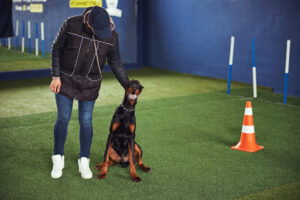 Sleek. Muscular. Alert.
There’s something undeniably regal about the Doberman Pinscher. But underneath all that elegance is a highly affectionate, people-focused dog who thrives when they’re part of a pack.
Dobies are famously loyal—and not just in that “they’ll protect the house” kind of way. They bond deeply with their humans.
They’re also whip-smart. Give a Doberman structure, affection, and meaningful work, and they’ll become your shadow—in the best possible way.
What makes them friendly?
Their emotional sensitivity. Dobies are attuned to their humans in a way that feels almost… human. They love touch, interaction, and being part of the family unit. When they’re raised with kindness and clarity, they protect with love.
The Malinois is often mistaken for the German Shepherd’s caffeine-fueled cousin—and that’s not far off.
These dogs are driven. Agile. Lightning fast. You’ll see them leaping out of helicopters, chasing down suspects, working in elite military units.
But here’s what most people don’t see: their affection.
Malinois don’t just love—they attach. They are the textbook definition of a Velcro dog. They want to be where you are. Doing what you’re doing. All the time.
And while that kind of energy isn’t for everyone, it’s also what makes them one of the most loyal, responsive, and emotionally connected guard dogs.
What makes them friendly?
Their desire to belong. A well-socialized Malinois is affectionate, playful, and often hilariously expressive.
We started here—and for good reason.
German Shepherds are the most versatile working dog in the world. Guide dog? Check. Police K9? Check. Hollywood …? Check. Family protector? Absolutely.
However, most people overlook their softness.
Shepherds are deeply sensitive animals. They read tone. They watch faces. They respond to moods. And when trained with consistency and care, they become not just guards—but partners. Allies. Emotional anchors.
What makes them friendly?
It’s their adaptability. A good German Shepherd knows when to dial it up—and when to settle in. They can switch from protective mode to play mode without missing a beat. And that emotional range? That’s what makes them so trusted. So beloved. So classic.
 Boxers are goofballs.
They bounce. They wiggle. They zoom around the house with oversized paws and flailing limbs like they’ve just discovered gravity.
But don’t mistake playfulness for passivity. Boxers are fiercely protective of their people—and especially good with children. They were bred to be working dogs, but they’ve evolved into some of the most affectionate, people-oriented guardians.
What makes them friendly?
It’s joy. Pure, contagious joy. A Boxer will make you laugh—and then bark at anything that doesn’t belong. They have that rare ability to be both protector and playmate.
There’s a presence to the Cane Corso that turns heads.
The way they move. Deliberate. Controlled. Like they know exactly who they are, and they don’t need to prove it. And of course, there’s the size and muscle.
Bred as estate guardians in ancient Italy, Cane Corsos were trusted to protect homes, livestock, and people. Today? That same sense of duty lives on—but so does something softer.
When raised and trained in the right environment, the Cane Corso becomes one of the most affectionate, people-centric guard dogs you’ll ever meet. They bond tightly with their families. However, they crave structure, consistency, and closeness.
What makes them friendly?
Their loyalty. Corsos don’t waste energy on strangers—but with their people? They’re gentle giants. Patient with kids. Calm around guests (once introduced). Devoted to their routines.
They may not be the kind to play fetch for hours, but they’ll follow you around, head, quietly keeping watch.
Even the friendliest protection dogs aren’t blank slates. They’re observant, deliberate, and wired to assess everything: body language, tone of voice, movement patterns.
So when someone new enters their world, they’re not looking for a playmate—they’re scanning for intent.
That’s intelligence. And it means you need a plan.
Before you even make the intro, read your dog’s body language. Tail high or low? Ears forward or pinned? Loose posture or stiff?
If your dog is keyed up, anxious, or overly alert, that’s not the time for a meet-and-greet. Let them settle. Create space. Don’t force it.
And remember: just because your dog is trained doesn’t mean they’re a robot. Like humans, some days are just “off.” Respect that.
New people shouldn’t rush in, petting or hands flying. Instead, let your dog observe from a distance. Keep them on leash, calm, and under control.
Let them smell the air, watch the energy in the room. No over-the-top greetings.
If you’re introducing your dog to someone they’ll see regularly—like a babysitter, neighbor, or family friend—try meeting on neutral territory first. A park. A sidewalk. Somewhere without territorial vibes.
Why? Because dogs, especially protective ones, can be more reactive on their home turf. Meeting outside the home reduces pressure. Once rapport is built, bring that new person into your home.
By then, the dog has a mental “file” on them. And that makes everything easier.
Guard dogs can be incredibly gentle with kids—but only when they’ve been raised and trained properly.
Still, kids are unpredictable. Sudden movements, loud noises, wild energy. You know the deal.
When introducing your guard dog to children:
Over time, your dog will learn what’s “normal kid behavior” and when something’s off. That’s the beauty of a good protection dog—they don’t react unless it’s necessary.
Some dogs warm up in minutes. Others take days, even weeks. And that’s okay.
The goal here isn’t instant affection—it’s mutual respect. You’re not just helping your dog trust new people… you’re teaching new people how to respect your dog’s boundaries.
That’s the kind of dynamic that builds safety on both sides.
The truth is: the best guard dogs defy the binary. And maybe… so should we.
At Vanguard Protection Dogs, we don’t believe in compromise. We believe in balance.
That’s why we travel the world to hand-select puppies with exceptional genetics, sound temperaments, and the kind of instinctual intelligence you can’t train into an animal—it has to be there from the start.
Then we train them not only to assess and respond to threats, but also to coexist with your world, your family, and your life.
Schedule a consultation today, and let us help you find the friendliest guard dog.
 904-441-8475