Yes, dogs can see and handle the late-night hours because they have a few anatomical differences that make them better suited to see, survive, and hunt at night.
Their retinas have a higher concentration of rod cells than ours—about 20 times more—which means they can detect motion and low-light movement far better.
Add in their tapetum lucidum (the reflective layer behind their retinas that causes the infamous eye-shine), and you’ve got an animal built for dusk and darkness.
But the fact that dogs can see in the dark doesn’t mean they’re automatically qualified for nighttime security work. That’s like saying a human with eyes is automatically a good marksman.
A well-trained protection dog during the day might hesitate at night—not because it lacks courage or capability, but because it hasn’t been conditioned to process the world without light.
That takes more than physical performance and mental resilience. So, let’s break down what it looks like—and how to do it right.
Night work introduces a different tempo. The silence isn’t quiet—it’s charged. Details are scarce. Instincts must be sharper, and reactions faster.
And that means you’re not just teaching a dog to respond. You’re training it to interpret—quickly, accurately, and under nocturnal challenges, which include: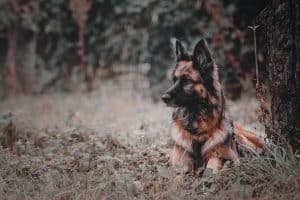
This isn’t something you can address with daytime drills on manicured grass fields. It demands gritty, scenario-based training that mirrors the conditions a dog will actually face.
Which brings us to the day’s question:
How do you build that readiness?
Dogs must experience what they’re expected to defend against. That means putting them through the paces after the sun sets.
Train in realistic environments
Conduct sessions in the areas the dog will patrol—homes, barns, warehouses. Introduce variables like shadows, different terrain, and fluctuating lighting conditions (e.g., moonlight vs. complete darkness).
Rotate lighting scenarios
Expose the dog to various nighttime environments, such as motion-activated lights, flickering bulbs, and sudden blackouts. These help the dog stay focused and not startled.
Practice with human decoys
Deploy human decoys who don’t just “act aggressive”—but use deception. Crawling under fences, staying low and silent, or using objects to conceal themselves. It forces the dog to rely on instinct and training, rather than vision alone.
One of the biggest mistakes in protection training—especially at night—is failing to define the boundary between alerting and engaging clearly.
Alert Behavior: This includes barking, growling, or standing at attention. It’s the dog’s way of signaling that something’s wrong. At night, this is your first line of defense. A dog’s alert can wake a sleeping family or deter an intruder outright.
Engage Behavior: Physical interception or attack is only appropriate when a threat is confirmed and authorized by the handler (unless operating autonomously in a high-security setting).
To build this distinction:
The world sounds different at night—branches snap louder, animals rustle in the dark, and wind can howl unpredictably. Now, your protection dog must distinguish between background noise and legitimate threats.
Tactical Desensitization:
The goal isn’t to dull the dog’s sensitivity—it’s to refine their discernment.
What your dog can’t see, it can likely smell.
Dogs smell 10,000 to 100,000 times better than we do. And at night, scent settles closer to the ground due to lower temperatures, making it easier for a trained dog to track or detect intruders.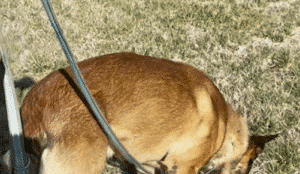
That’s why scent work should be embedded into protection training—not treated like a fun side hobby.
Likewise, dogs’ ears are attuned to high-frequency sounds and distant movement. But again, sensitivity isn’t enough. Your dog must learn to differentiate:
Training drills should simulate real noises, footsteps on gravel, whispered voices, subtle movement in dark brush—all while reinforcing the dog’s ability to assess, not just react.
Dogs thrive on routine. Teaching them structured nighttime behaviors helps build confidence and consistency.
Create Patrol Routes:
Training is just one side of the coin—gear matters too.
🐾Reflective Collars or Vests: These allow you to locate your dog quickly in the dark without giving away their position to outsiders (some have toggles for brightness settings).
🐾Night Vision or Infrared Cameras: These tools provide full situational awareness and let you monitor your dog’s behavior remotely.
🐾Tactical Harness with Handle: Useful for guiding the dog silently or lifting them over obstacles.
🐾GPS Tracker: If your dog operates off-leash on a large property, a GPS tracker ensures you never lose contact
This one’s not sexy, but it’s necessary.
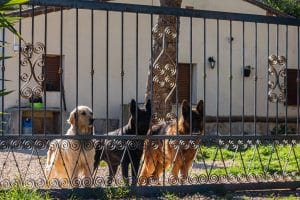
Protection dogs can open you up to lawsuits if improperly trained or deployed. At night, the risk escalates. Mistaken identity, poor visibility, a neighbor cutting through your yard—it all happens.
The truth is simple:
A poorly trained dog creates legal exposure. A properly trained one closes those gaps—physically and legally.
Ensure your dog is trained with a clear command structure, control in ambiguous situations, and a solid recall.
Don’t cut corners on the training. Invest in it. Prioritize it. Build it right.
And if you need help in training, get it from professionals who don’t leave anything to chance.
Well… if you know, you know. Vanguard Protection Dogs.
Elite training. Real-world readiness. No compromises.
Reach out now and let’s get your dog mission-ready—day or night.
 904-441-8475