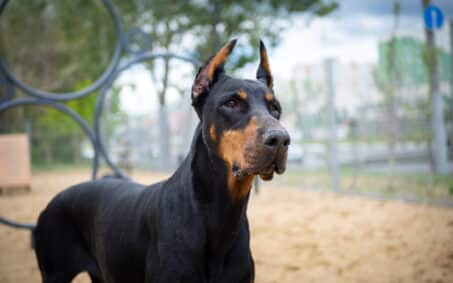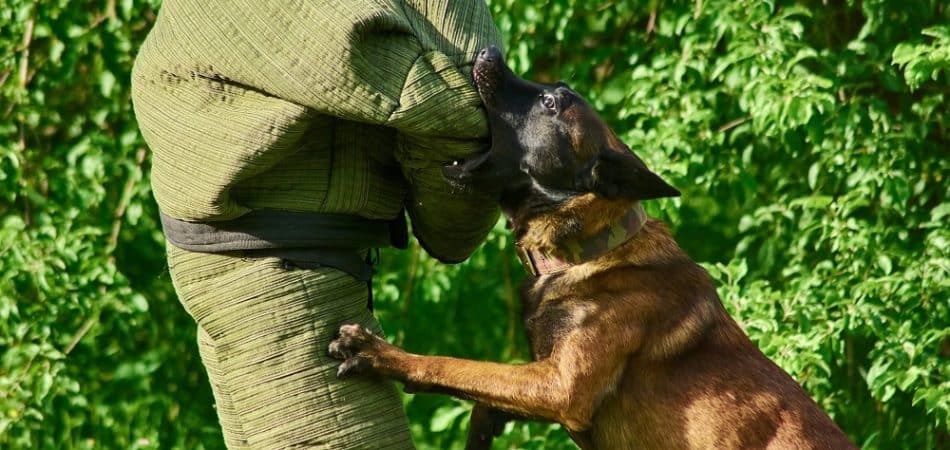
In the past few years, I’ve seen a noticeable shift in people’s attitudes toward dogs, especially protection dogs.
They’ve become aspirational. Scroll through social media and you’ll find endless clips of sleek Dobermans, Shepherds, or cropped-eared Cane Corsos moving perfectly with their handlers.
It’s captivating. It’s easy to think, “That’s the one. That’s the dog I want.” The strong one. The badass, ride-or-die companion.
And while there’s nothing wrong with admiring the strength and presence of working breeds, there’s a growing gap between the image people fall in love with and the reality of what these dogs were actually bred to do.
Most people are fixated on appearance, size, and price. Bite force. It’s like a checklist of stats. And bite force? That’s one of the most misunderstood.
Because when people ask, “Which protection dog breed has the strongest bite force?”, what they’re asking—consciously or not—is something deeper.
So, let me set the record straight.
A dog’s ability to protect doesn’t come down to the bite force. It’s about genetics, temperament, training, the bond with the handler. And yes—physicality.
But strength alone? That’s not enough.
Still, the fascination with bite force isn’t going anywhere, so let’s see what science and experience tell us.
 Bite force is typically measured in PSI—pounds per square inch. It’s a metric that estimates how much pressure a dog’s jaws can exert when they bite down. Sounds straightforward, right?
Not quite.
There’s no standardized test across all breeds. No scientific panel measuring bite strength with perfect accuracy.
Most of the “bite force rankings” you see online are based on isolated studies, speculative estimates, or anecdotal reports. Some are more credible than others, but they vary wildly depending on the method used.
Some rely on electromyography. Others use pressure sensors with meat lures (yes, really). And most don’t account for individual variance or adrenaline in real-world situations.
Look, dogs don’t walk around at maximum PSI, ready to clamp down at full capacity like a hydraulic press. Bite force depends on context—training, drive, stress levels, and even the angle of the bite.
But the severity of a dog bite comes down to a combination of different factors:
Pointed, dagger-like teeth puncture deep—fast. Flatter, broader teeth crush tissue and bone. Depending on the breed, the same PSI can cause vastly different injuries.
It’s not just how hard the dog bites. It’s how their jaw works. Breeds with shorter, wider jaws (think Rottweiler) have a mechanical advantage—more leverage, more crush. Longer, narrower jaws (like a Borzoi or Collie) don’t deliver force the same way, even if the pressure numbers match.
Where the bite lands changes everything. A bite to the thigh is bad. A bite to the neck or face? That’s life-threatening. Hands and forearms—where most people get bitten—carry higher risks of tendon damage and nerve injury.
A quick nip isn’t the same as a sustained bite. And a bite followed by shaking, thrashing, or multiple regrips? Far worse. This often comes down to the dog’s intent. Was it a warning or a full-out attack?
As you can see, a bite force number doesn’t tell the whole story—it’s one piece of a much larger puzzle.
Still, it gives us a baseline. Not a definitive ranking, but a glimpse into the raw potential of certain breeds.
So let’s look at a few commonly cited breeds…
The Kangal is the undisputed king when it comes to bite force. This Turkish livestock guardian was bred to fend off wolves, bears, and human predators. Not just sound the alarm—take them on.
But I must clarify this: Kangals are not your typical protection dogs. You won’t see them in personal protection work, law enforcement, or military units.
Their temperament is fiercely independent. They think for themselves—and they do it well. It means that not easily trainable in the way Malinois or GSDs are.
That makes them incredible guardians of territory, but not necessarily reliable in controlled, obedience-heavy environments.
So yes, they top the charts in terms of bite pressure. But that doesn’t mean they’re the best choice for someone looking for a personal protection companion.
The Cane Corso looks like it came straight out of a Roman war camp. And in some ways, it did. These dogs have been used for guarding, hunting, and protection for centuries. Their bite force is among the highest of any breed used in protection work.
Corsos are powerful, intimidating, and intensely territorial. But they’re not the kind of dog that tolerates sloppy handling. They require structure, consistency, and leadership. If you’re not in charge, they’ll take over. And trust me—you want to be in charge.
Originally bred to hunt wild boar in Argentina, the Dogo Argentino combines athleticism with raw power. They’re courageous, determined, and, when properly trained, highly loyal.
Their bite is strong. But their will? Even stronger.
That’s what makes them such formidable protection dogs—but also what makes them a challenge. Dogos aren’t plug-and-play. They require structure, early socialization, and a handler who can channel their intensity.
High energy. High prey drive. High independence. That’s the Dogo trifecta.
So, if you’re looking for a dog that just looks tough without the necessary training investment? This isn’t the one.
These dogs were bred to think independently, which means they can have a mind of their own and require patience for training.
Rottweilers are formidable. Bred originally to drive cattle and guard property, they’ve earned a reputation for strength and reliability. A well-bred, well-trained Rottie can be one of the most stable and protective dogs you’ll ever meet.
Their bite force may not rival the Kangal’s, but in real-world protection scenarios, it’s more than enough. What sets them apart is not just strength—it’s control. They’re confident, clear-headed, and loyal to the core. With structure and purpose, they thrive.
Height: 22–26 inches
Weight: 40–80 lbs
Lifespan: 12–14 years
Yes, it’s the “it” dog of protection sports and police work. And no, it doesn’t have the highest bite force on this list. But PSI isn’t what makes the Malinois legendary.
What they do have is unmatched drive. Speed. Agility. Focus that borders on obsessive. Their smaller frame hides a work ethic that few other breeds can match.
In the hands of a skilled handler, their 195 PSI bite might as well be 500—because they’re going to hit hard, fast, and with total commitment.
And that matters more than raw pressure.
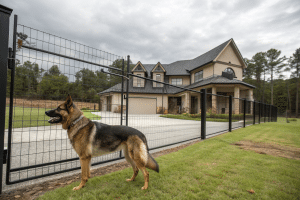
Let’s not forget the OG.
Their strength isn’t just physical—it’s mental. They’re loyal, balanced, and highly trainable. That combination makes them versatile and dependable.
Working line GSDs, in particular, are bred for performance. They’re not show dogs. They’re functional. Their bite is strong enough for any scenario, and their judgment makes them trustworthy in high-pressure situations.
Sleek, fast, and alert—the Doberman is a thinking dog. Originally developed by a tax collector who needed a smart, fast, protective companion, the breed has intelligence and precision built into its DNA.
Their bite force is respectable, but their responsiveness sets them apart. Dobermans are incredibly in tune with their handlers. They’re quick learners, fast movers, and sharp decision-makers.
When trained properly, they become elegant enforcers—calm when they need to be, fierce when they have to be.
But like many breeds on this list, they’re not ideal for passive ownership. They need stimulation, training, and leadership. In the right hands, though? They’re a force.
If you’re asking for pure jaw pressure, the answer is simple: the Kangal.
But if you’re asking, Which dog with strong bite force makes the best personal or family protection dog?, then it gets more interesting.
The Kangal may have the highest PSI, but the Rottweiler, Malinois, and Dobermans offer a mix of trainability, loyalty, and strength that’s more practical for real-world protection.
The German Shepherd may not break bite force records, but excels in controlled aggression, obedience, loyalty, and situational awareness.
As I said earlier, most people want the idea of a protection dog more than the reality. They want to say, “My dog has a 650 PSI bite.”
But they don’t want to do the reps. They don’t want the training sessions, structure, and consistency.
That’s dangerous. You don’t choose a dog based on a number.
You choose a dog based on:
So, if you’re serious about protection dogs, find a reputable breeder or trainer. Learn about the differences between show lines and working lines. Understand the genetics, the temperament, and the responsibilities that come with owning one.
Vanguard Protection Dogs handles everything from breed selection and advanced training to handler onboarding and lifestyle integration.
Schedule a free consultation, and let’s discuss your right fit.
Remember, the wrong dog will cost you time, money, and possibly someone’s safety.
 904-441-8475