I get this question a lot:
“If I get a protection dog from a working bloodline, should I be worried about it biting my kids or turning on my family?”
Short answer? No, if you do it right.
It starts with choosing the right dog. That means from a breeder who knows what they’re doing. Not someone with a flashy website and a stack of titles, but someone who understands bloodlines, temperament, and purpose.
Then comes how you raise the dog: training, structure, socialization, and consistent leadership.
Protection work doesn’t create aggression toward family members. In most cases, that kind of behavior isn’t a training flaw alone—it’s a temperament flaw. And more often than not, it’s tied to dominance, not drive.
I’ll explain.
Not all dogs with a strong drive are dominant. And not all dominant dogs are suitable for protection work.
Drive makes a dog want to chase, bite, tug, or track. It’s the motor under the hood. It’s what you build on when you’re shaping a reliable protection dog.
Dominance, on the other hand, is about control. It’s the dog trying to call the shots in the household—pushing boundaries, ignoring commands, challenging authority.
You can have a high-drive dog that’s completely safe with kids, provided it respects the handler’s authority. That respect doesn’t come from punishment. It stems from a consistent structure, daily interaction, and clear expectations.
If a dog doesn’t see you as the leader, it doesn’t matter how well it’s trained because it won’t listen when it counts.
But before you lead……..
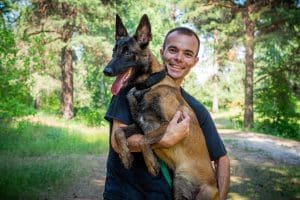 I’ve said it before, and I’ll keep saying it: Good breeding is everything.
You can’t out-train bad genetics. If a dog has unstable nerves, poor temperament, or unpredictable reactivity—you’re not going to “fix” that with obedience drills or more reps on the bite sleeve.
This is where bloodlines come in. See, you’re not just buying a dog—you’re investing in decades of selective breeding, clear temperament, tested traits, and proven stability.
All built through experience, discipline, and a deep understanding of what makes a protection dog safe and reliable.
That’s why we only work with top breeders. When I tell clients that my team flies across the globe to hand-select puppies, I’m not exaggerating. Out of fifty, we might come home with one or two.
Why? Because we’re looking for the right traits.
Unfortunately, backyard breeders are flooding the market. Some are chasing profit; others are intentionally breeding for aggression because they think “protection” means “mean.”
So, I’ll be crystal clear: Protection doesn’t equate to aggression. A well-bred protection dog is confident, clear-headed, and in control—even under pressure.
Back to our topic:
We’ve already touched on the foundation—good breeding. That’s step one. Without it, nothing else holds.
Now let’s talk about….
And no, I don’t mean letting your protection dog run wild at the dog park or forcing it to tolerate every stranger on the street.
Socialization is controlled exposure, not overstimulation. You’re showing your dog the world in a calm, structured way—teaching it what’s normal, what’s neutral, and what deserves attention.
You don’t want a dog that views everything as a threat. And you definitely don’t want one that shuts down or panics in unfamiliar situations.
That balance doesn’t come from one training session or one environment. It comes from everyday life. Walks through the neighborhood. Structured play with your kids. Quiet time around visitors–without forcing interaction.
Protection dogs don’t need to “love” everyone. But they do need to be stable around them. That stability comes from consistent exposure, not random chaos masked as “social.”
Now……
What your dog needs at eight weeks isn’t what it needs at eight months—or two years. The goal shifts as your dog matures.
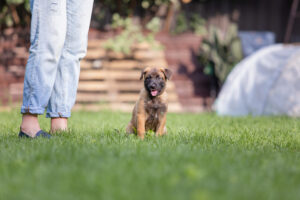 Your puppy’s brain is wide open right now, soaking up information about what’s safe, what’s neutral, and what to ignore. It’s the perfect window to start shaping how your dog sees the world.
And yet, this is where most people fail:
They flood the puppy with noise, strangers, and chaotic environments, thinking more is better. Too much, too soon doesn’t build confidence; it creates stress.
Keep it simple.
Let the puppy observe the world. Kids playing, vacuum cleaners running, car rides, basic leash walks. No pressure to interact. Just calm exposure, paired with clear structure at home.
We call this the bratty teenager phase for a reason. Hormones kick in. Independence grows. You’ll notice more pushback, especially from dogs with a dominant streak.
Structure matters most at this point. Don’t let your dog rehearse bad habits, keep walks structured, control play, and keep the home rules tight. You’re shaping its view of the world and its place in it.
Still expose it to new environments, but with control. This is the age when fear responses can flare up. Don’t baby the dog. Don’t correct too hard. Just guide and move forward.
Drive peaks up here. Your dog is stepping into its adult instincts, and if you’ve laid the right foundation, this is when it starts to pay off. Your dog’s confidence sharpens. Focus improves. And you can finally ask for more and dial up training.
Socialization at this stage is no longer about “meeting new things.” It’s about accountability in familiar environments. Calm when guests show up, steady around kids and respectful on leash.
You’re asking for maturity—and you get there by staying consistent, not by throwing the dog into high-pressure situations to “see how it does.”
By now, your dog should be a settled part of the family. The socialization is baked in. Your job now is to maintain it.
This means reinforcing the same boundaries you built early on. Regular obedience sessions. Controlled exposure when needed. And don’t let bad habits slide because “he knows better.”
The truth is: dogs do what works. If ignoring you works, they’ll do it. If reacting gets them what they want, they’ll keep reacting. The mature dog is easier to live with—but only if you keep up your end of the deal.
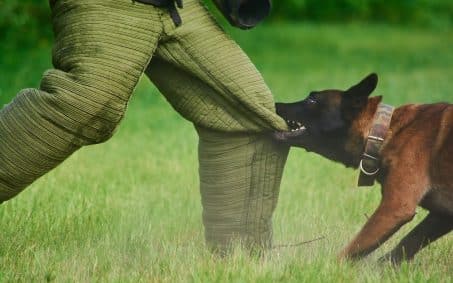
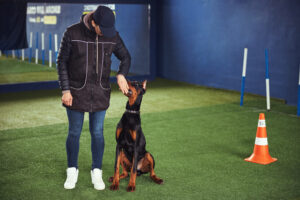 Bite sleeves, bark-and-hold drills, maybe a helper in a suit. That stuff has its place, but it’s not the core of what makes the dog safe in a home.
You don’t need a perfect down-stay under gunfire. You need a dog that comes when it’s called the first time. You need a dog that can ignore the neighbor’s kid screaming across the fence. You need a dog that knows when to work and when to settle.
That comes from everyday life.
If your dog won’t obey you on a walk, don’t expect it to obey when tension’s high. Start with the basics, and don’t skip steps.
And if the dog doesn’t do it? Don’t repeat the command, fix it. Ensure your corrections are clear and fair. Don’t beg or bribe. Be direct.
Protection dogs thrive under strong leadership. Not yelling or intimidation. Just consistent structure and follow-through.
Everyone in the home needs to be part of the process.
That doesn’t mean your five-year-old should be giving heel commands. But it does mean the dog should know to respect the space of every person in the house, no matter their size. No jumping, pushing, or testing boundaries.
Even small things like feeding routines, crate time, leash work, or exercises should follow the same rules across the board. Dogs notice when rules shift between people. And they’ll test the weakest link first.
You don’t want a dog that lives on a tight leash. You want a dog that can move through your home with confidence and self-control.
That means freedom after structure. Not before.
You earn a calm dog in the living room by giving it crate time, training time, and clear routines throughout the day. A dog that knows what’s expected doesn’t need to be micromanaged. But getting to that point takes training and patience.
Don’t be afraid to limit access. Close doors. Use baby gates. Keep the leash on indoors if needed. Over time, the structure builds habits. The habits build trust, and trust gives you freedom.
A stable protection dog isn’t just the handler’s job—it’s a family-wide effort.
Everyone in the home needs to understand the dog’s role, its boundaries, and what fair handling looks like.
Kids shouldn’t be climbing on the dog, pulling its ears, or treating it like a stuffed animal. The dog shouldn’t be expected to tolerate chaos without limits. Respect runs both ways.
You don’t need to be afraid of your dog—but you do need to respect it. And the dog needs to understand its place in the social hierarchy. If your five-year-old gives a command, the dog doesn’t need to follow it. But it does need to remain calm and neutral.
Make rules and stick to them.
The clearer the home environment is, the safer it becomes. The dog doesn’t wonder who’s in charge. The kids learn how to read body language and safely play with the dog. And everyone’s less likely to make a mistake that costs you later.
 You can’t just wake up one day, decide you want a Belgian Malinois, and expect it to work out, especially if your idea of exercise is walking from the couch to the fridge.
This isn’t a couch-potato breed. Malinois and other high-drive protection dogs are built for intensity. They need structure, mental stimulation, and serious leadership. Don’t give them a job? They’ll create one for themselves, and chances are, you won’t like it.
That’s why matching the right dog to the right home comes down to one key factor: lifestyle.
How active are you? Do you have experience with working breeds? Can you commit to daily training, structure, and engagement? Can you match their drive—or at the very least, manage it?
There are protection dogs suited for beginners, and there are dogs that demand a seasoned handler.
Knowing the difference can save you a world of frustration—and prevent a good dog from being misunderstood or mishandled.
Stability isn’t luck but a byproduct of consistency.
Here’s what that looks like:
Crate time. Place work. Structured potty routine. No free-for-all mornings where the dog bolts around the house and decides what to do.
You don’t need a formal “training session” every day. But you do need structure—sits at thresholds, downs before meals, recall during walks, place during dinner.
Tug is fine—but it ends when you say so. Fetch has rules. Wrestling has limits. Protection dogs often love to work, but that drive needs to be channeled, not allowed to leak out in bad behavior.
Bring the dog with you. Let it observe the world. Train neutrality daily. A walk through town or a coffee shop outing can do more than another backyard drill.
Constant activity is not the goal. Balance drive with downtime. Dogs that never rest can’t think clearly when it counts.
What you allow, you reinforce. What you reinforce, you live with.
There’s no one-size-fits-all answer here. The best dog for one home might be a disaster in another.
It’s not just about breed in this case, but the individual dog, the breeder behind it, and the people it’s going home to.
That said, some breeds tend to show the traits that work well in family protection—stable nerves, clear-headedness, natural territorial instinct, and the ability to switch between work and rest without getting stuck in drive.
Let’s walk through a few that consistently check the right boxes.
It’s no surprise that the German Shepherd consistently ranks as one of the top choices for family protection.
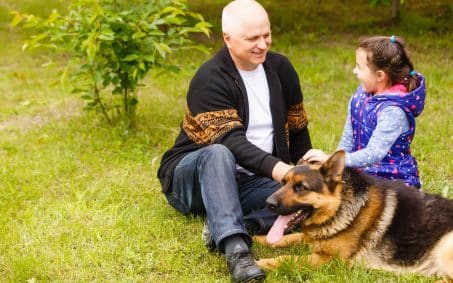
German Shepherds are intelligent, loyal, stable, and highly trainable. They bond deeply with their family and, when raised well, can be an excellent match for children.
But they’re not plug-and-play. You still need to put in the work.
Avoid lines bred purely for sport or looks. What you want is a balanced dog—solid nerves, moderate drive, and clean structure.
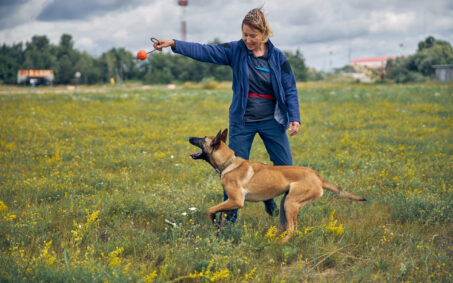
Fast, driven, responsive. A Malinois in the right hands is a serious working dog. But let’s be blunt—they’re not for beginners.
If you’re new to protection dogs, and you want a dog that blends well with kids and downtime, this probably isn’t your breed. They’re sharp, sensitive, and demand a ton of structure.
The exception? A mellow, well-bred Mal from a breeder who understands family placement. They exist—but even then, you’ll need the guidance of a professional who knows how to bring out the best in that dog without letting the wheels come off.
Loyal. Alert. Confident.
A well-bred Doberman is a natural guardian, driven by strong family instincts and a sharp, intuitive mind.
They tend to be more home-oriented than breeds like the Malinois or Shepherd, and they don’t typically need the same level of constant stimulation. That makes them a solid fit for families who want a dog that’s protective, but not overwhelming.
However, Dobermans are known for being a little softer than other working breeds. If you end up with one from a nervous or reactive line, you could be dealing with anxiety, fear-based reactivity, or unstable behavior.
So, if you’re considering a Doberman, choose from a breeder who prioritizes temperament, not just sleek looks.
Steady, confident, and protective but not frantic.
Rottweilers bring a calm, dominant presence. They don’t bark unless it’s worth barking about, and they’re generally low-key in the house.
They’re not built for passive homes or soft handlers. Without strong boundaries and consistent direction, a Rottie can become pushy, territorial, or hard to manage.
But if your household provides firm leadership, the Rottweiler can be one of the most stable and trustworthy protection dogs.
Other Breeds? It Depends.
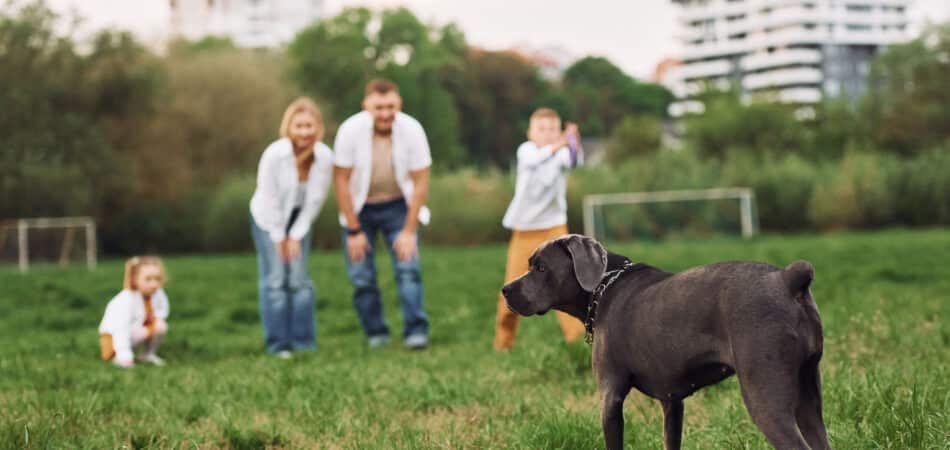
Cane Corsos, Boxers, even some well-bred American Bulldogs—all can be good family protection dogs in the right hands.
But again, it comes down to the individual dog. Breed gives you a rough sketch. Breeding, temperament, early development, training, and how you live with it—that’s the full picture.
There’s no shortage of protection dogs. But finding the right one—one that matches your family, guards your home, and settles into your daily life without drama—that’s not easy. Especially in a state like California, where every other ad promises the “perfect protection dog.”
The bitter truth:
Not all protection dogs are built the same. And not every breeder is thinking about your family’s safety when pairing bloodlines.
That’s where we step in.
At Vanguard Protection Dogs, we don’t deal in theory. We place dogs that are proven, trained, and tested in real-world family environments.
Every dog is raised with intention—from the first imprinting to the final off-leash obedience. Nerve strength, clarity, control, and stability come standard.
Whether you’re looking for a young prospect with all the right foundations or a fully trained dog ready to integrate with your family, we’ve got options.
But quality takes time. We don’t mass-produce dogs. We select, train, and only place the right dog with the right home—nothing rushed.
Join our waitlist or reserve a trained family protection dog from Vanguard.
Spots are limited, so let’s start that conversation now.
 904-441-8475