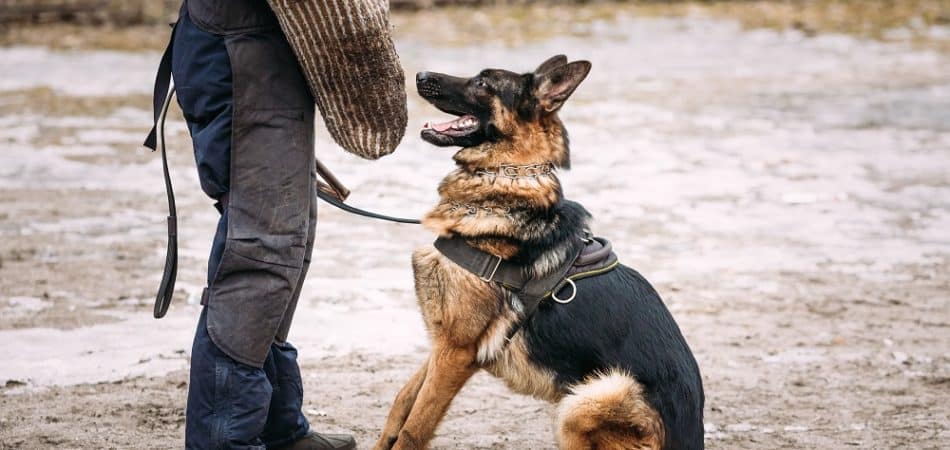
If you’ve ever looked up training advice for a protection dog, there’s a good chance you’ve stumbled into the crossfire of the great dog training debate.
Around this time last year, a wave of self-proclaimed experts took to social media to launch a full-scale attack on something called balanced training (more on that later). Video after video, they claimed the dog training world was in crisis, accusing trainers who use any form of correction or pressure of being outdated, cruel, and even abusive.
Now, before this, I’d seen it creeping in. Instagram posts with terminology pulled from other movements: “We should get consent from our dogs before petting them.” Others went deeper: “I will not project colonial, capitalist, or patriarchal concepts onto my dog,” one trainer declared between posts on leash reactivity. Another urged followers not to “gaslight” their dogs.
Here’s the point: If you’re trying to figure out who to trust with your protection dog’s training, you’re not just choosing between facilities. You’re navigating a cultural war inside an industry.
And it matters, because the wrong choice doesn’t just waste your money. It puts your dog, your family, and others at risk.
So, how do you separate ideology from results? Flashy marketing or true skill? Let’s get into it…
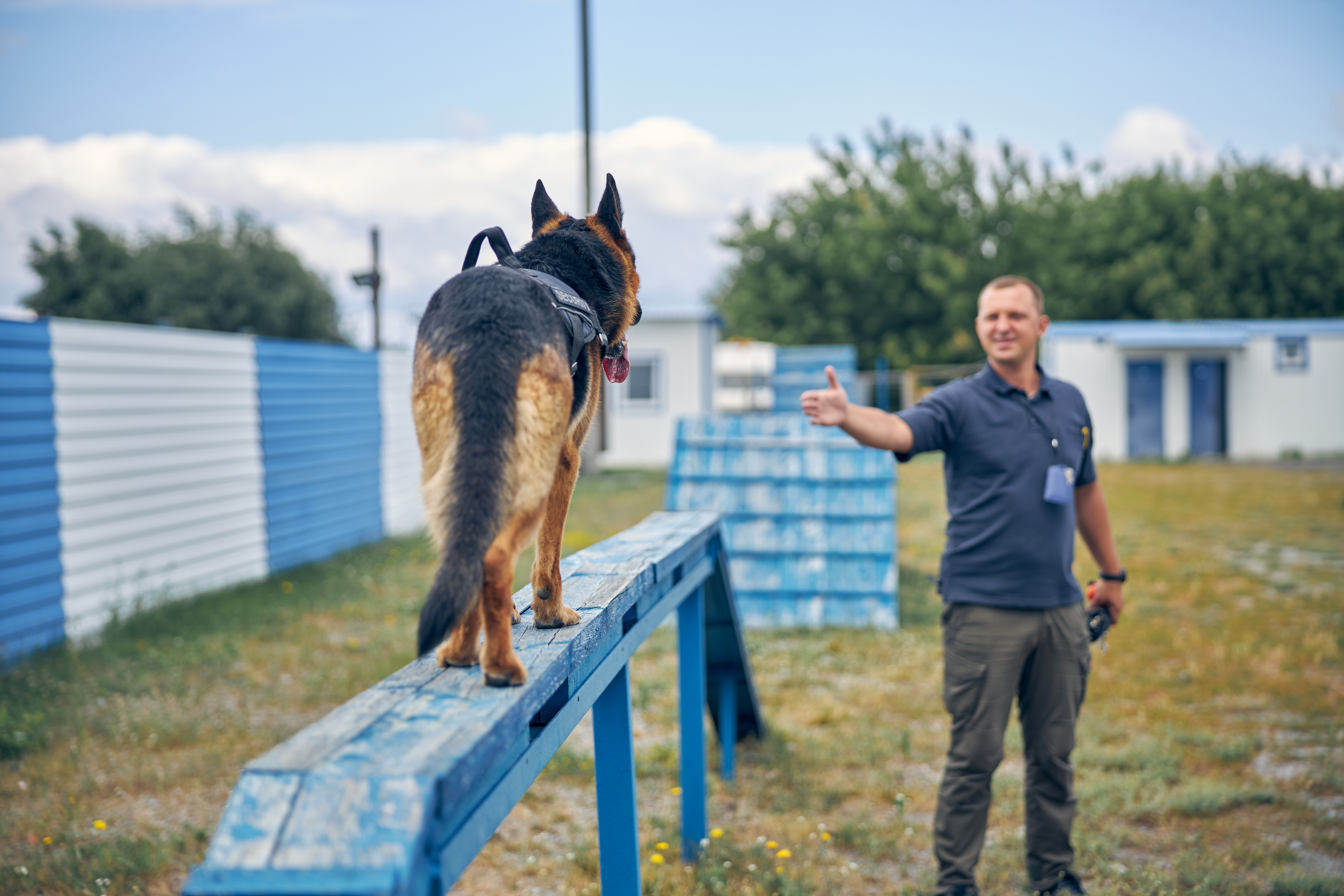 We’ll start here because some trainers still treat protection work as if it were just another obedience class. It’s not.
Protection dog training is the formal development of a dog’s natural protective instincts. Through structured, repetitive exercises, the dog learns how to recognize threats, respond purposefully, and, just as critically, stand down on command.
The goal is simple: the dog must believe they can win any fight when necessary and trust their handler enough to disengage when told. A properly trained protection dog is stable, focused, and reliable.
Now, you don’t build this kind of confidence and reliability by intimidating the dog or throwing it into overwhelming situations. You build it through steady, thoughtful work, by setting up the dog for success and gradually increasing the challenge. It takes time, patience, and repetition.
So, anyone using fear tactics or abuse to make a dog “savage” isn’t a trainer. And in my opinion, they shouldn’t be allowed anywhere near working dogs.
If you’re considering protection training, make this your first step: vet the trainers and the facility. Ensure they meet a standard worth trusting.
What should you look for, though?
Some facilities specialize in military or police dogs—dogs trained for tactical environments, detection work, or high-intensity deployment. Others focus on guard dogs meant to secure commercial properties.
But if you’re looking for a personal or family protection dog, that’s a whole different lane. These dogs must be social, stable around children, calm in public, and be able to flip the switch if a real threat appears. Each category demands a different approach.
So before anything else, ask yourself: What role do I want this dog to play in my life?
The answer will determine what kind of trainer and facility you should seek.
With that in mind, here’s what to look for in a facility:
Avoid facilities that only train military or law enforcement dogs if you want a family protection dog. Those dogs are often wired for a different mission, which doesn’t always translate cleanly into a home environment.
You need a facility that understands the balance between sociability and protection—a dog that can relax in your living room and rise to the occasion when needed.
So, start by asking for proof:
In this space, claims don’t mean much unless results back them.
Influencers don’t run an excellent facility; it’s built by people who’ve put in the reps.
Years of hands-on experience. Thousands of training hours in the field. Dogs are placed in real homes, with real families, facing real-world scenarios.
Trainers who know that no two dogs are alike—each comes with its temperament, drive, and challenges. And they’ve learned how to bring out the best in every one of them.
Look for signs that the team knows what they’re doing:
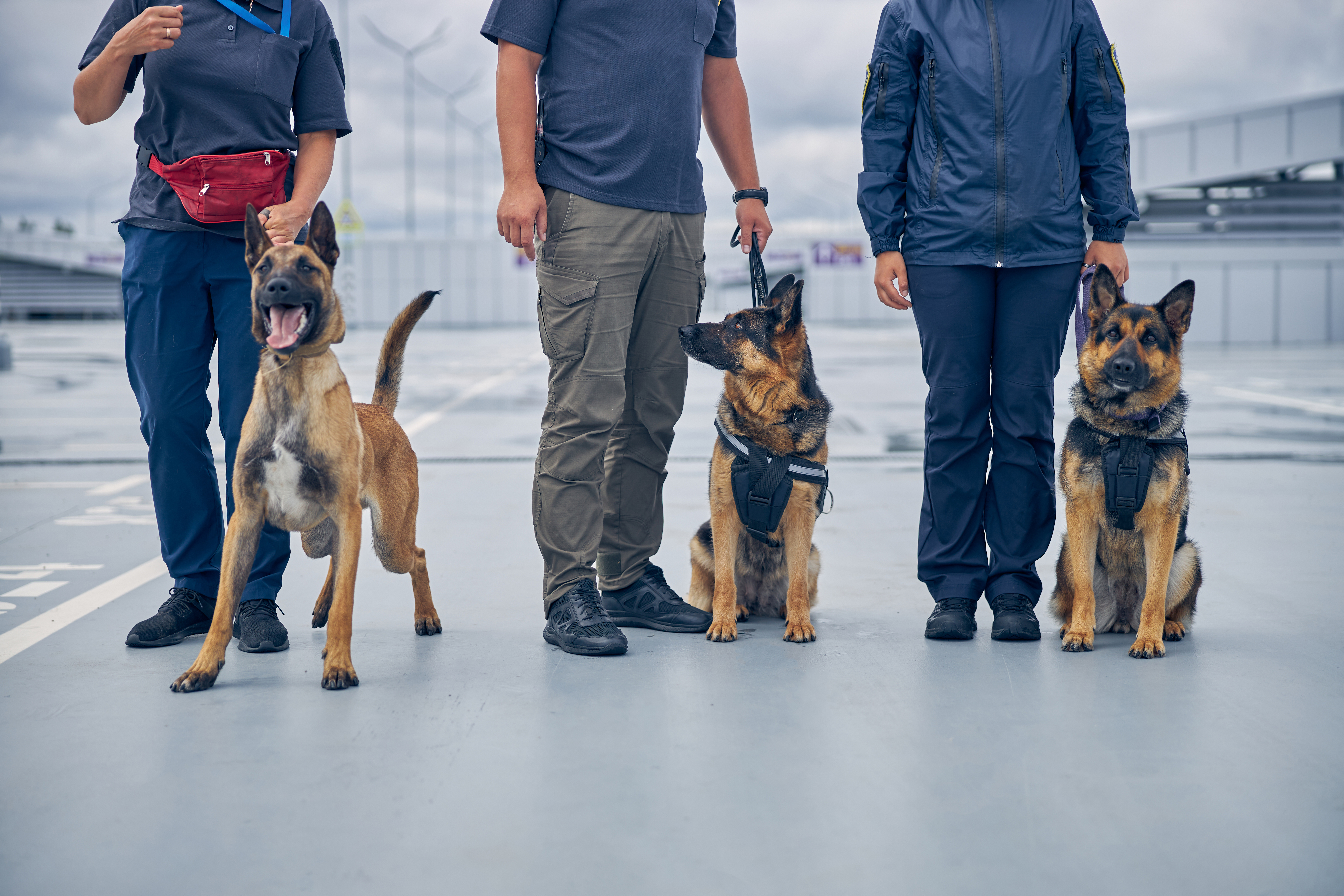 The methods used to train a dog matter as much as the outcome. Remember that debate we mentioned earlier? The one where balanced trainers got dragged for using so-called “aversive tools”? Yeah, this is where it comes full circle.
At Vanguard Protection Dogs, we use balanced training because we believe in clarity, not confusion. Structure, not chaos. And results that hold up outside of controlled environments.
Balanced training means we use a mix of positive reinforcement (praise, play, food rewards) and corrections (timely, fair pressure) to communicate what’s expected clearly. It’s less about punishment and more about accountability. And when done right, it builds trust, confidence, and reliability in high-stakes situations.
Force-free training may be practical for pet dogs in low-stress environments. But when you’re counting on a dog to respond to a threat—instantly, precisely, without hesitation—you can’t afford to rely on hope and cookies.
But that doesn’t mean trainers should put the fear of God into these dogs, either. That approach usually creates more problems than it solves because the dog responds out of fear, not because it understands the job and trusts the handler.
Fear-based methods often backfire, leading to anxiety, unpredictability, and even redirected aggression.
This is another topic that sparks a lot of controversy online. Yes, we use tools like e-collars. But we don’t rely on them. And that’s an important distinction.
The real issue isn’t the tool itself, but its overdependence on it. I’ve seen trainers who can’t get a dog to come back reliably without pressing a button. Some won’t even take a dog off-leash unless it’s wearing an e-collar. That’s not training, that’s relying on a safety net.
The truth is, e-collars aren’t the problem. It all comes down to the person holding the remote. When applied correctly, a modern e-collar becomes a long-distance communication device, not a punishment machine. It’s there to reinforce, not replace, the work that’s already been done.
This is a broad topic, and we could dig into its nuances. But here’s what matters most: your trainer should be able to explain their methods clearly and show you how they individualize the process for your dog.
Over the years, we’ve come to understand one thing: different clients have different needs. Some want a dog that acts as a visible deterrent. Some want a dog that can play with the kids, relax in the living room, and still step between their family and danger.
Others need an elite-level protector—trained to respond precisely in high-risk scenarios, capable of standing beside presidents, dignitaries, CEOs, celebrities, and other high-profile individuals. That’s why reputable training facilities can’t afford to take a one-size-fits-all approach.
Yes, we have structured training tiers—but within each, we customize the program to fit the individual dog, the family dynamic, and the client’s specific lifestyle and security concerns. Live in a busy suburb with kids and guests coming in and out? Your dog’s training should reflect that.
Run a large property with more exposure to potential threats? That’s a different setup—and it demands a different strategy.
So, when you’re selecting a facility, look for a training team that takes the time to learn:
In an industry where anyone with a leash and a YouTube channel can call themselves a “trainer,” credentials are essential. However, not all certifications carry weight. Fancy logos and online badges mean very little if real-world experience, high standards, and peer-reviewed validation don’t back them up.
When evaluating a trainer or facility, look for legitimate, verifiable certifications—especially those from organizations specializing in working dogs, behavioral science, and high-level protection work.
On the obedience side, programs like the AKC Canine Good Citizen (CGC) certification are among the most recognized. Then there’s behavioral modification. One respected framework in this category is Behavior Adjustment Training (BAT), developed by Grisha Stewart.
While obedience and behavior certifications still count, protection work demands specialized, performance-based titles from respected international organizations. These aren’t earned in a weekend seminar—they result from rigorous testing, real-world drills, and high-pressure evaluations.
So, when vetting a facility or trainer, look for certifications, affiliations, or memberships with well-respected organizations that hold trainers to a high standard.
These include:
Well…one of the most respected certifications is from the Certification Council for Professional Dog Trainers (CCPDT).
A trainer with CPDT-KA (Certified Professional Dog Trainer – Knowledge Assessed) or CPDT-KSA (Knowledge and Skills Assessed) has passed rigorous exams and met hands-on experience requirements.
And just as important as the paper on the wall? Results in the field. A trainer with a list of satisfied clients, proven placements, and dogs that perform —that’s the kind of credibility you can count on.
 Dogs, like people, learn through context. You can’t expect a dog to perform flawlessly in real-world situations if it’s only been trained in a quiet, controlled setting.
When evaluating a training facility, pay attention to the environment:
Is it clean? Safe? Structured? Does it have diverse training setups—urban environments, home simulations, vehicle drills, decoy scenarios? Are the dogs exposed to different surfaces, noises, distractions, and situations?
A serious facility should have the space and resources to train dogs under various conditions.
That includes:
The environment shapes the dog.
What happens after the dog goes home? The last thing you want is someone handing you the leash and leaving you to figure it all out on your own. You need ongoing support.
A reputable facility won’t ghost you after the handoff. They’ll offer structured follow-up, guidance, and support as long as needed. You see, training doesn’t end—it transfers.
We walk our clients through that transition. We show you how to handle your dog, reinforce commands, maintain obedience, and build a strong working bond.
So, when you’re choosing a training partner, make sure they offer:
Ensure that ongoing support isn’t optional but part of the package.
Start with the basics:
Take your time. Be thorough. And trust your gut.
 904-441-8475