Most people start their protection dog journey with just one dog—buying, training, and deploying a single canine at a time. It makes sense at first. But eventually, they realize something: one dog can only do so much. And sometimes, that dog ends up lonely, overworked, or stretched too thin.
One dog isn’t enough if you’re securing a large property, managing expansive grounds, or running a full security detail—whether it’s guarding against intruders, neutralizing threats, or keeping wildlife like coyotes and bears at bay. The workload is too much. The risks multiply.
Eventually, the need for a pack becomes clear. But then comes the hesitation—how do you introduce a new dog into an established unit without triggering chaos? How do you avoid territorial fights, stress, or breakdowns in trust between animals?
I’ve run as many as 20+ adult protection dogs together at one time. That’s not just dogs coexisting; that’s a real, functioning family pack. And that experience has taught me about canine communication, body language, hierarchy, and what it truly means to lead a balanced pack.
When done right, this integration reflects something close to what we see in wild wolf packs—a confident, content unit bonded by mutual trust.
But it starts with you, stepping into the role of leader, teacher, and parent.
Here’s how to approach the process, step by step, with structure and purpose.
Your energy, structure, and leadership will dictate whether this transition goes smoothly or becomes a mess. The prep starts well before the new dog arrives.
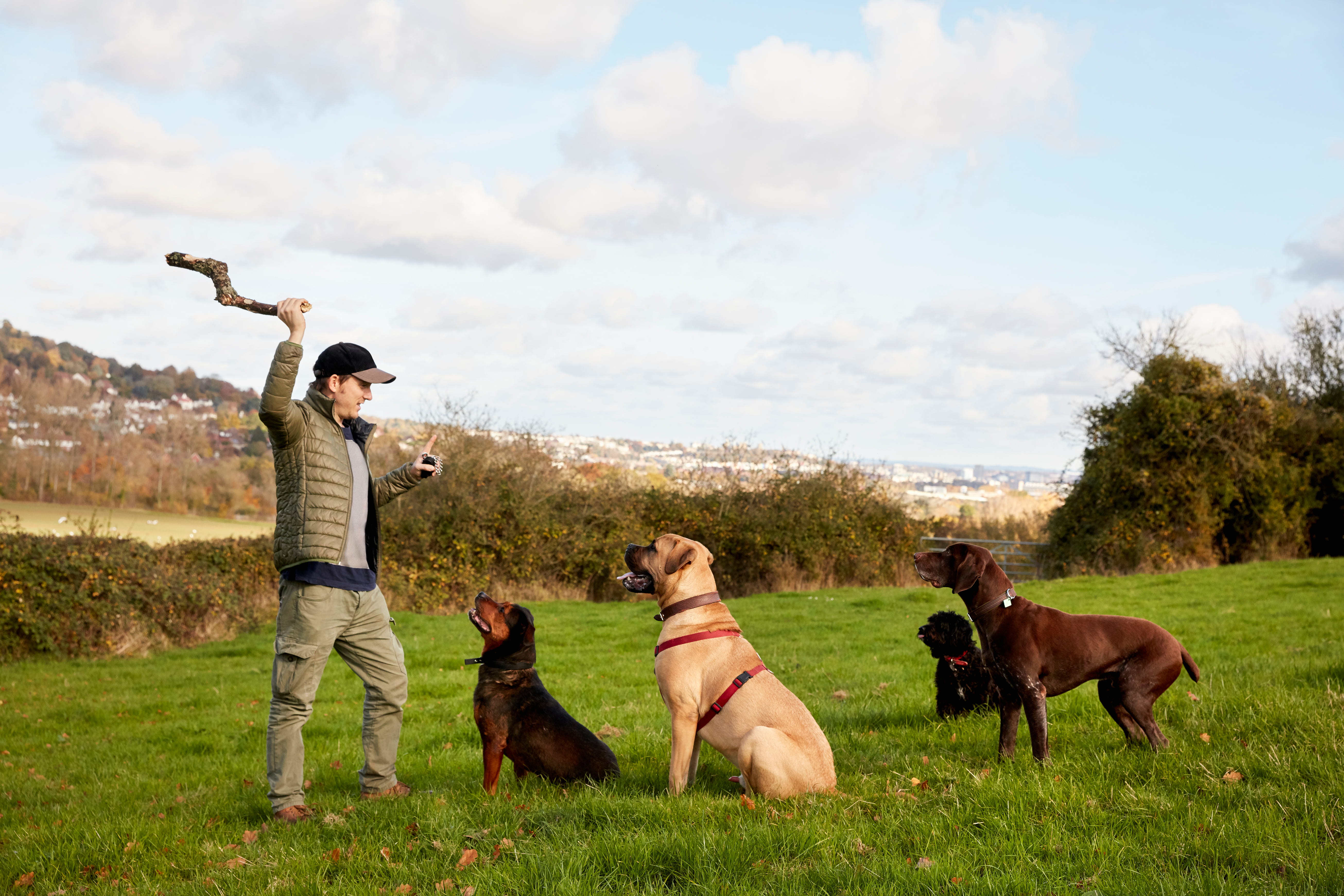 Every pack has a rhythm, even if you’re unaware of it. There’s a pecking order, specific dogs that are more dominant or submissive, and daily habits that define how the group operates.
Take note:
Knowing the emotional makeup of your current pack gives you an edge. You’ll anticipate where tension may rise and which dogs need extra monitoring during the transition.
Not all dogs are a match for your existing setup. Age, temperament, energy levels, and gender all matter. You’re not just adding a dog—you’re shifting the social dynamic.
Stick to legitimate lines from proven breeders who understand the demands of protection work. Some risky breed mixes—often sold by backyard breeders—might look the part but carry poor genetics or unstable temperaments.
Watch for red flags:
These kinds of dogs don’t belong in a guardian pack. They create tension, instability, and danger.
Pro tip: Avoid introducing two unneutered males unless you have serious pack management experience. Even then, it’s a risk.
Never immediately introduce a new protection dog to the pack inside your home or yard. That’s asking for trouble.
Established dogs are territorial by nature, and protection dogs are often more intense about guarding what they consider “their space.”
Instead, pick a neutral location: a quiet field, open area, or even a large driveway where the environment doesn’t belong to anyone. You want to remove the “this is mine” mindset as much as possible.
With groundwork in place, it’s time for the first meeting. How you structure this moment will set the tone for the entire integration process.
One of the most effective introduction methods is side-by-side walking, not face-to-face. Each dog has its handler, and they walk in the same direction.
This serves two purposes:
During the walk:
Dogs speak volumes without saying a word. You need to read them as they walk:
If either dog shows signs of escalating stress, stop. Create space. Reset. Never let them “work it out” on their own. That’s not leadership, it’s negligence.
After the walk, allow each dog to sniff the areas the other walked through. It’s an indirect way of sharing information on a chemical level.
Later, you can extend this with:
Scent carries meaning in the dog world: it communicates status, mood, health, and familiarity. Use it to your advantage.
Once both dogs seem calm and relaxed, allow a short greeting—3 to 5 seconds max. Then separate. Rinse and repeat a few times.
You train them to see each other, sniff briefly, and disengage without drama. That’s gold.
 After the initial neutral-ground meetings, it’s time to bring the new dog onto your turf. But even now, it’s not free-for-all time. Control is key. And timing? It makes all the difference.
Choose a day that’s calm and uneventful. No storms, howling winds, extreme heat, or cold. Avoid days packed with guests, construction projects, or heightened emotional energy on the property.
You want predictability because dogs pick up on every energy shift.
Also, pick the right time of day—after light exercise, not after a high-adrenaline patrol or exhausting training session. Mid-morning or early evening works well—after they’ve had light activity but still have clarity and calmness in the tank.
Bring the new dog onto your property for a leashed walkthrough. Keep resident dogs leashed and let them observe.
Don’t let them meet freely just yet. This allows the new dog to explore, while the existing pack sees you’re in control.
After the walkthrough, set up a visual barrier—baby gates, kennel fencing, or crates—where dogs can see and smell each other without direct access.
This gives them time to:
Rotate their roles—let the new dog observe while the resident dogs roam freely, and then switch it up. This balanced exposure helps both sides build familiarity without pressure.
Use crates or separate areas to manage exposure in the house. Let the new dog observe routines: meal preps, walks, and play sessions.
They’ll learn your home’s rhythm without being thrown into it. This also reduces overstimulation and builds safe bonding from a distance.
If the dogs seem at ease in proximity, begin supervised group sessions. Start with two dogs at a time—ideally, the calmest members first. Slowly build up until the whole pack is included.
Also, be proactive:
If things go smoothly for a couple of days, you can begin closely supervised off-leash interactions.
Pick areas without corners, doorways, or confined spaces. Trapped energy creates conflict. Give them room to move, retreat, and reset.
Keep initial sessions brief. Don’t wait until something goes wrong. End on a positive note and separate them calmly.
If one dog escalates—over-posturing, tail up, hovering—interrupt immediately. Redirect, reset, and move on. Don’t wait for a fight and then punish everyone involved.
Food, toys, and affection are all high-value resources that can trigger fights even in well-adjusted dogs.
During the integration phase:
No one should feel like they have to compete for your attention. That’s what sparks conflict.
Dogs are social animals, and a hierarchy will naturally form in any group. Your job isn’t to force it, but to lead and manage the pack.
Don’t overstep by trying to assign roles. The dogs will naturally figure out who leads play, who yields space, who corrects, and who follows. Step in only if it turns into bullying or insecurity.
We cannot overstate this: if you don’t lead, one of the dogs will. And in protection dog packs, they can become dangerous fast.
As a leader, your calm authority prevents:
Your dogs should look to you for cues. When you say sit, they sit. When you call, they come. That energy trickles down through the entire pack.
Give every dog time to adjust, and be willing to adjust your expectations as well. Don’t force proximity, play, or interaction. Dogs communicate with their bodies far better than we often give them credit for.
Trust them to do what dogs do—navigate, assess, respond. Let them move, read each other’s signals, and find a calm footing together.
You’re still there to guide, observe, and allow the process to unfold naturally.
Even with the best planning, problems can crop up. Here’s how to handle a few common ones:
Solution: Step in immediately. Interrupt the behavior and create space. Sometimes older pack members test the new dog, but you must prevent pile-ons. Respect doesn’t come from violence—it comes from boundaries.
Solution: Go back to feeding in separate areas. Use visual barriers if needed. Work on impulse control drills, such as waiting calmly for food until it is released.
Solution: Slow it down. Pull back on full pack exposure. Spend more 1-on-1 time with the new dog to build their confidence and bond with you.
You can read every article, watch every video, and study every pack integration method out there, but when things go wrong, none of that matters. All it takes is one fight. One moment of mismanagement. Suddenly, your dogs lose trust in each other and in you.
Worse? Your family’s safety is compromised because your “protection pack” just became a liability instead of an asset. And you’re out tens of thousands of dollars.
Look, a quality protection dog costs $50,000-$200,000. If you’re building a pack of 3-4 dogs, you’ve got over half a million dollars’ worth of trained security moving around your property.
And one failed integration can destroy all of that:
The “cheap” way isn’t cheap when it fails. It’s the most expensive mistake you can make.
Most trainers work with pets. Protection dogs are completely different. They’re bred for intensity and controlled aggression. The stakes are higher, the methods are different, and the consequences of failure are catastrophic.
You don’t need theory. You need experience. Real-world, hands-on, proven experience with elite-level protection dogs. And that’s exactly what Vanguard Protection Dogs brings to the table.
Now…
You have two choices:
The choice is yours.
And if you’re serious about getting it right the first time, contact Vanguard Protection Dogs today.
 904-441-8475