Warm-up and cool-down routines are essential for keeping protection dogs healthy, injury-free, and performing at their best. A 5–10 minute warm-up of brisk walking, light drills, and active stretching prepares joints and muscles for explosive work. A 5-minute cool-down walk afterward flushes out lactic acid and speeds recovery. Routines should be adjusted based on the dog’s age, condition, and training intensity.
“That’s one small step for a man, one giant leap for mankind.” – Neil Armstrong, Moon, 1969.
Now, Armstrong wasn’t talking about protection dogs (though I’d pay good money to see a Belgian Malinois in a NASA jumpsuit), but the point stands: big achievements start with the small, deliberate steps you take beforehand.
With our dogs, those steps are the difference between a dog that performs consistently over the years and one that burns out early.
Professional athletes would never dream of skipping a warm-up, and it’s not just superstition.
Decades of research prove that priming your muscles before intense activity reduces the risk of injury, improves performance, and speeds recovery. For them, a pulled muscle could mean missed games and lost paychecks.
And here’s the thing: protection dogs are athletes, too. They sprint, pivot, leap, clamp down, and hold under pressure. Their bodies take impacts, absorb sudden bursts of speed, and react in split seconds.
Without the right warm-up, you’re asking cold muscles and stiff joints to fire on all cylinders. Without the right cool-down, you’re leaving lactic acid to build up, stiffness to settle in, and recovery to take longer than it should.
Warm-ups get them ready to perform; cool-downs help them stay ready for the next time.
So, let’s review the importance of warm-up and cool-down routines and provide a solid footing for you and your dog to achieve the moon and the stars.
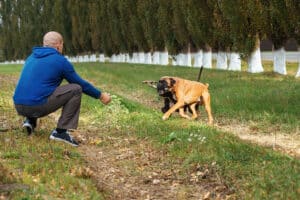 A proper warm-up does more than “loosen your dog up.” It wakes up the entire system: increasing blood flow to the muscles, lubricating the joints, and priming the nervous system so the body is ready for explosive, controlled movement.
That’s important because protection work isn’t just a jog around the park. It’s going from zero to full speed in seconds.
It’s sudden pivots, hard stops, vertical leaps, and the kind of quick reactions that demand every muscle and joint be ready to work under pressure.
Without a warm-up, you’re asking cold muscles to stretch, contract, and absorb impact. A recipe for strains, tears, or subtle wear-and-tear that adds up over time.
Then there’s the cool-down.
After intense work, your dog’s heart rate is elevated, muscles are full of metabolic waste like lactic acid, and adrenaline is still pumping.
Stopping abruptly means all that tension and byproduct stays in the muscles, making recovery slower and soreness worse.
A proper cool-down gradually lowers the heart rate, encourages circulation to flush out waste, and helps the body shift from “work mode” to “recovery mode.”
Yes, it takes a few extra minutes. But those minutes protect the investment you’ve made in your dog’s training, keep them performing at their peak, and most importantly, keep them healthy for years longer.
You might think that you’re saving time by skipping these steps today, but it can cost you in lost training days, expensive vet visits, and a dog who can’t deliver.
For most dogs, that starts with 5–10 minutes of walking. Keep it brisk enough to get them moving, but not so fast that they’re panting hard right away.
From there, you can ramp things up based on the day’s activity:
Active stretching is another great tool, and it’s safer than static stretching on cold muscles. You can use treats or toys to encourage your dog to stretch naturally:
The key is timing. Muscles start cooling and tightening within 20–30 minutes, so plan your warm-up right before you work.
If there’s a wait — like before your turn in a trial — keep them moving with short walks, rehab exercises, or easy focus drills so you don’t lose that readiness.
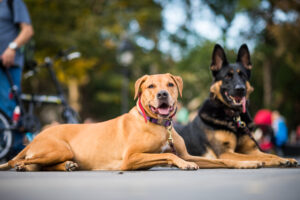 Cooling down is simple.
The moment the work ends, don’t just stop and crate your dog. Shift them into a relaxed walk…slow enough to let their breathing ease, but steady enough to keep blood flowing through the muscles.
This gentle movement helps flush out waste products and keeps the joints from tightening up.
Most protection dogs need at least five minutes of walking after an intense session. Watch for their panting to slow and for them to start breathing comfortably with their mouth closed (unless it’s hot out).
If you’re comfortable with static stretching — and only once the muscles are warm — you can add it here. Static stretches should always be gentle, slow, and within your dog’s comfort zone.
If they resist, you’re pushing too far. If you’re new to stretching, get guidance from a vet or experienced trainer before trying it solo.
Some handlers also use this time for a light massage to relax the muscles further and reinforce the bond with their dog.
Just a few minutes of calm, steady contact can help transition them from “work mode” back into “rest mode.”
And don’t forget the environment. On hot days, offer cool water and, if needed, a light mist or wet towel to help bring body temperature down. On cold days, a coat or light blanket can keep muscles from tightening too quickly.
A 2-year-old Malinois at peak fitness doesn’t need the same warm-up as an 8-year-old German Shepherd with a history of joint issues.
And a light day of focus drills isn’t going to demand the same prep as a high-intensity bite session.
The routines we’ve covered are your “base model.” Here’s how to tweak them for different ages, conditions, and workloads.
Young dogs have energy to spare, but their bodies are still developing. Growth plates don’t fully close until around 12–18 months (depending on breed), so pushing too hard too soon can cause long-term damage.
For these youngsters, keep things low-impact. Start with brisk walking, light trotting, and active stretches. Nothing that slams the joints or forces the neck and spine into extreme positions.
If you’re doing tug work, keep the toy low to the ground so they engage their forelimbs, spine, and hind limbs without hyperextending their neck. Save repetitive jumping and flat-out sprints for when they’re physically mature.
Since their attention span is still a work in progress, use this time to sharpen focus as much as you warm up the body.
Keep the sessions short and purposeful.
For Example:
Older dogs and those with past injuries need extra care to protect their joints and muscles. The goal here is to ease them into movement slowly, avoid strain, and keep them limber without overloading.
Give them a longer walking phase to gradually raise the heart rate and warm the muscles before asking for anything more demanding. Movements should be smooth, with no sudden pivots or stops.
If your dog is managing a specific injury, incorporate targeted movements during warm-ups and cool-downs to support that limb or muscle group. Consult your vet or a canine rehab specialist to select safe, effective exercises tailored to the injury.
Gentle massage before and after sessions can enhance circulation, reduce stiffness, and promote healing, keeping your dog comfortable and mobile.
High-impact work should be reduced or skipped entirely unless your vet has given the green light. For these dogs, quality of movement is always more important than quantity.
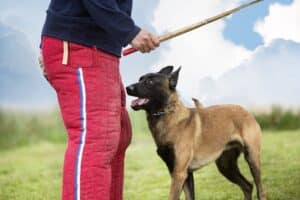 On days when it’s all about bite work, protection scenarios, or intense agility, the warm-up becomes mission-critical. These sessions put the body under maximum stress — explosive movements, sudden stops, full-speed chases — and the risk of injury is much higher without proper preparation.
Here, the warm-up should stretch to at least 10–12 minutes. Start with a few minutes of brisk walking, then work into trotting, controlled entries, simulated turns, and gradually faster sprints.
Add in sidestepping for about 30 feet to wake up proprioception and engage shoulder and hip stabilizers.
A handful of low jumps (just four or five) can switch on the post-activation potentiation (PAP), priming the muscles for explosive power. Finish with left and right pivots for a minute or so to get the whole body coordinating.
Once the cardio portion is done, move into active stretching. Play bows help extend the spine and stretch the forelimbs, while cookie stretches engage the entire body in a controlled range of motion.
When the session ends, the cool-down should be just as deliberate: extended walking, massage over every major muscle group, and slow breathing work to bring the heart rate back down.
Not every training day needs to be a barn-burner. Obedience, tracking, and low-impact drills are just as important, and the warm-up and cool-down can be lighter to match.
Six to eight minutes is plenty for the warm-up, with a mix of walking, trotting, and engagement exercises. The focus here is as much mental as it is physical. Light eye-contact games, simple commands, or scent work can switch them into working mode without overtaxing their body.
Cool-down can be three or four minutes of relaxed walking, paired with calm verbal praise or gentle massage. Over time, these mental cues become just as important as the physical routine for long-term performance and focus.
You don’t need to transform your garage into a doggy gym or break the bank, but a few smart tools and habits can make a difference.
Here’s the lowdown, packed with stuff I’ve seen work
A good-fitting harness allows for safe, controlled movement during warm-ups without putting strain on the neck or spine.
For high-energy dogs, a padded, non-restrictive harness is ideal. Pair it with a sturdy 6–8 foot lead to give enough room for trotting and light drills.
A dog-safe massage roller or even a basic rubber grooming brush can get blood flowing and ease any tightness.
I’ve used a grooming brush on my dog after a long hike, and you can practically see the relief in her eyes. Just go easy—light pressure, especially around joints or bony spots, to avoid discomfort.
On hot days, a cooling vest or mat can help keep your dog’s temperature under control during and after work.
In cold weather, a lightweight canine jacket helps maintain muscle warmth before and after training, reducing the risk of strains.
For proprioception and joint health, tools like wobble boards, balance discs, or low platforms are excellent. They can be integrated into warm-ups or used separately to strengthen stabilizing muscles, which pay off big during agility or bite work.
If your dog is older, has a history of orthopedic issues, or is simply working at a high level, a vet-approved joint supplement with glucosamine, chondroitin, and omega-3s can support long-term joint health.
Always clear it with your vet before starting.
And if injuries do happen, consult your vet immediately and adjust your routine to prioritize recovery, ensuring your dog bounces back stronger.
Now, I get it — you might still be thinking, “But my dog launches after squirrels at full speed without a warm-up and seems fine!” Sure, they can do that.
But those sudden bursts are exactly how soft-tissue injuries happen. The backyard may not look like a high-stakes training field, but the risks aren’t all that different.
We can’t bubble-wrap our dogs or stop them from every wild sprint. But when it comes to training? That’s our turf.
That’s where we have full control to protect their body, prep their mind, and make sure they’re performing at their absolute best.
Protection dogs are working athletes that sprint, pivot, and perform explosive movements under pressure. Warm-ups prepare their muscles and joints for intense activity, reducing the risk of injury. Cool-downs flush out lactic acid and speed up recovery — keeping them healthy and performing consistently over the long term.
Most protection dogs need 5–10 minutes of warm-up before training. Light-intensity days require around 6–8 minutes, while high-intensity sessions like bite work or agility call for at least 10–12 minutes of brisk walking, trotting, and active stretching.
After training, walk your dog at a relaxed pace for at least 5 minutes until their breathing slows and steadies. You can follow with gentle static stretching and a light massage to relax muscles and reinforce the bond. On hot days, offer cool water and a light mist to help bring body temperature down.
Yes. Older dogs and those with orthopedic issues need a longer, gentler warm-up with no sudden pivots or high-impact movements. Extended walking, targeted mobility exercises, and pre-session massage help protect their joints. Always consult a vet or canine rehab specialist before training a dog with a known injury.
Yes. Repeatedly asking cold muscles and stiff joints to perform explosive work increases the risk of strains, tears, and cumulative wear-and-tear. Over time, this can lead to chronic injuries, costly vet visits, and a shortened working career. A consistent warm-up and cool-down routine is one of the most effective ways to protect your dog’s long-term health and performance.
 904-441-8475