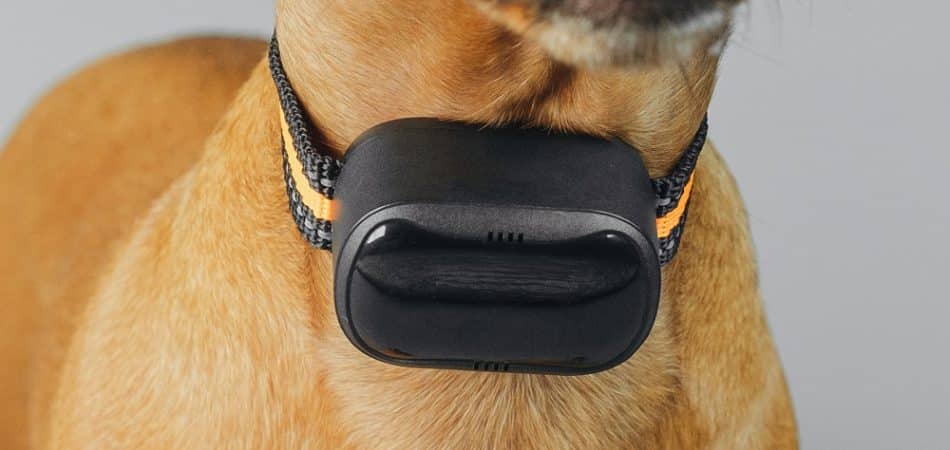
E-collars stir up a lot of opinions. Some trainers treat them like the holy grail of off-leash control. Others? Like they’re one shock away from ruining a dog forever.
Now, where do I stand, you may ask? I’m pro e-collar. I use them. I recommend them. But only after the dog has solid obedience on leash. Not before.
Because I’ve seen what happens when people skip steps. Some dogs get zapped into mechanical obedience—responsive, sure, but with zero confidence.
Others become so desensitized to the collar that the stim might as well be a mosquito bite. And then there are the anxious wrecks—dogs that flinch at every beep, unsure of what’s coming next.
The real problem is not the tool. It’s how people use it. And a lot of that traces back to watered-down methods from big-name franchises or YouTube personalities who make it look way too easy.
In this article, we’re going to unpack all of that—how the e-collar should be used, where it goes wrong, and why treating it like a magic fix will backfire every time.
An e-collar, or electronic collar, is a device that delivers a stimulation—think a mild electric pulse, vibration, or tone—to a dog via a collar. It’s controlled by a remote, so the trainer can deliver the stim at the exact moment it’s needed.
Sounds high-tech, right? It is, but it’s not magic. It’s just a way to communicate with your dog, like a leash or a clicker. The stim isn’t meant to hurt; it’s meant to get attention, reinforce a command, or correct a behavior.
For protection dogs, e-collars are often used to sharpen obedience, reinforce recall, or fine-tune behaviors like barking on command or releasing a bite.
The goal is precision: a dog that responds instantly, whether it’s to attack, guard, or chill out. But most folks don’t understand that e-collars don’t train the dog for you. They’re not a “push this button, get a perfect dog” deal.
It’s just one tool in a much bigger process. And that process starts long before the collar ever goes on.
Training a protection dog is like building a house. You need a foundation (basic obedience), walls (specialized skills like bite work or guarding), and a roof (reliability under stress).
The e-collar can be like a hammer—useful when it’s time to drive something home, but useless (and even damaging) if you grab it too early in the process.
Here’s how it typically works in protection dog training:
Before you even touch an e-collar, the dog needs to know basic commands: sit, stay, come, heel. This is non-negotiable.
You’re building trust and communication, usually with positive reinforcement like treats or praise. The e-collar doesn’t come into play here.
 Once the dog knows the basics, you introduce the e-collar at a low level, just enough to get their attention. The goal is to pair the stim with a command they already know.
For example, you say “sit,” give a light stim, and reward when they comply. Over time, the stim becomes a cue, like a tap on the shoulder.
In protection scenarios, the e-collar sharpens the edge. Bark on command, release on cue, hold position under stress—it allows for precise reinforcement, especially at a distance. You’re reinforcing clarity.
Protection dogs need to perform under pressure—loud noises, strangers, distractions.
The e-collar can help maintain focus, ensuring the dog stays locked in on your commands no matter what’s going on.
So yeah, it sounds straightforward. But plenty of trainers still get it dead wrong.
E-collars go from tool to crutch the moment they replace the process. When trainers rely on the collar instead of the training behind it, things fall apart. Fast.
Here’s how it happens:
Throwing an e-collar on a dog that barely knows “sit”? Recipe for confusion.
The dog doesn’t associate the stim with a known command—it just feels pressure with no context. That leads to fear, not learning.
Some handlers hit the button for every misstep. Sit late? Zap. Break a stay? Zap. Walks a little off heel? Zap again. What you end up with is a dog that either shuts down or becomes stim-resistant. Neither is good.
The e-collar is easy to misuse because it’s so effective at getting a reaction. Lazy trainers rely on it to “fix” behaviors instead of teaching them properly. The dog might comply, but it’s out of fear, not understanding. And that’s a recipe for an unreliable dog in high-stakes situations.
The e-collar is a reinforcement tool, not a teacher. If you don’t follow up with positive reinforcement—treats, praise, play—the dog doesn’t learn what’s right, only what’s wrong.
And that means that you’re just using pressure to suppress behavior, not guide it.
When used as a crutch, the e-collar creates dogs that only perform when the collar’s on. Take it off, and good luck. You’ve got a dog that’s dependent on the stim, not a dog that’s truly trained.
So how do you make sure the e-collar is a tool, not a crutch?
Well, it’s all about the process.
Introduce the e-collar gradually, at the lowest effective setting. The stim should feel like a tap, not a shock. Every dog’s sensitivity is different, so you’ve got to dial it in.
 Always pair the stim with clear commands and rewards. The e-collar should reinforce what the dog already knows, not replace your training.
Protection dogs are often high-drive breeds—Malinois, German Shepherds, Rottweilers. They’re smart, but they’re also sensitive. Read their body language. If they’re stressed (tail tucked, ears back), you’re doing it wrong.
The goal is a dog that responds without the e-collar. Use it to fine-tune, then wean them off as they get reliable. A well-trained protection dog doesn’t need a constant buzz to perform.
The biggest factor isn’t the dog—it’s you. Learn how to use the e-collar properly. Work with a pro if you’re new to it. A bad trainer with an e-collar is like a toddler with a power tool—dangerous.
Used correctly, an e-collar is an amplifier. It takes the obedience you’ve already built and sharpens it for split-second precision.
But the collar is never the whole story. Real reliability comes from a complete training program: clear communication, consistent reinforcement, and a strong bond between handler and dog. Skip any of those, and you’re just pressing buttons without building trust.
As always, if you have any questions or need guidance on e-collar training, feel free to contact Vanguard Protection Dogs
We’ll gladly help you get it right.
 904-441-8475