Neither is universally “better”; rather, they serve distinct purposes in a dog’s protection training. Arm sleeves are ideal for focused grip-targeting, bite mechanics, and foundational work. Bite suits are designed for advanced, dynamic protection scenarios where the dog learns to engage a decoy’s entire body.
I’d say both.
Look, the goal of bite work has always been the same: get the dog to target and hold a bite on command, whether that’s on a person or an object like a sleeve.
That’s it.
But today, it’s not as simple as teaching “bite and release.” Training styles have evolved, and very often, if you spend any time around reputable dog trainers, one word keeps coming up: grip.
Grip refers to the way a dog bites: the pressure, the depth, and the consistency. In sports like IPO, the ideal is a deep, full-mouth grip that stays steady throughout the bite until the release command is given.
For police dogs, the priority is different. The main objective is that the dog latches onto the suspect’s arm and holds, giving the officer the control needed to subdue the person. Style isn’t as important; what matters is strength, commitment, and the ability to prevent escape.
Many police dogs even pull back or shake instinctively, or are trained to do so, because that makes breaking free much harder.
Military dogs take it a step further. Their bites are often about generating submission. Here, the “pushing bite” is common: the dog bites, then drives deeper and deeper, reinforcing pressure until the person has no choice but to submit.
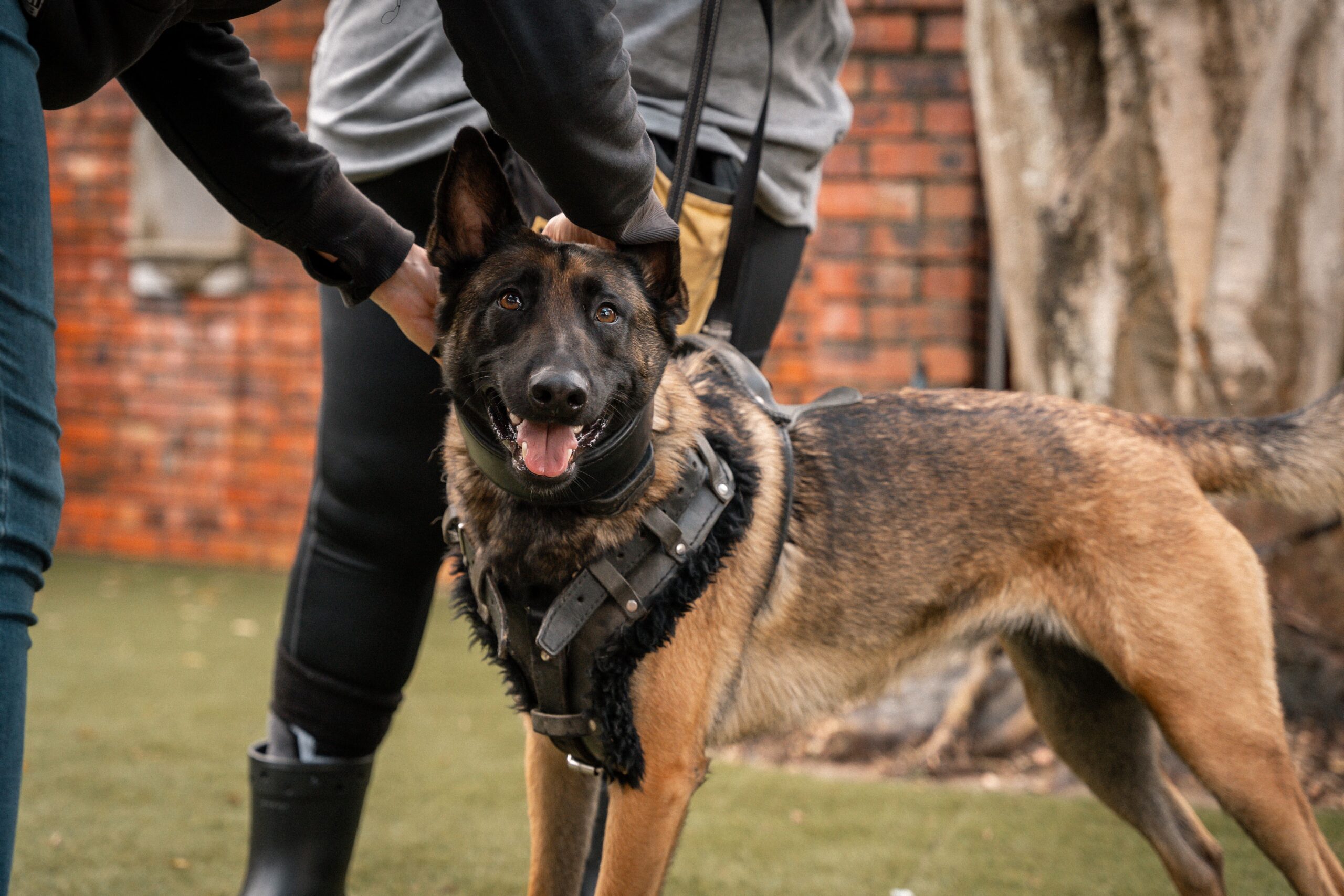
And then we have personal protection dogs. The goal is a versatile dog: one that can switch between defense and control depending on the threat.
Now, for you to achieve all the above grips, you have to either use a bite suit or an arm sleeve.
And this is where the debate takes off: should your personal protection dog be trained primarily with a full bite suit or stick with the classic arm sleeve?
Again, the answer is… both.
Both tools build slightly different skills. Both have limitations. And if your goal is to create a reliable, confident protection dog, the real key is knowing when and how to use each one.
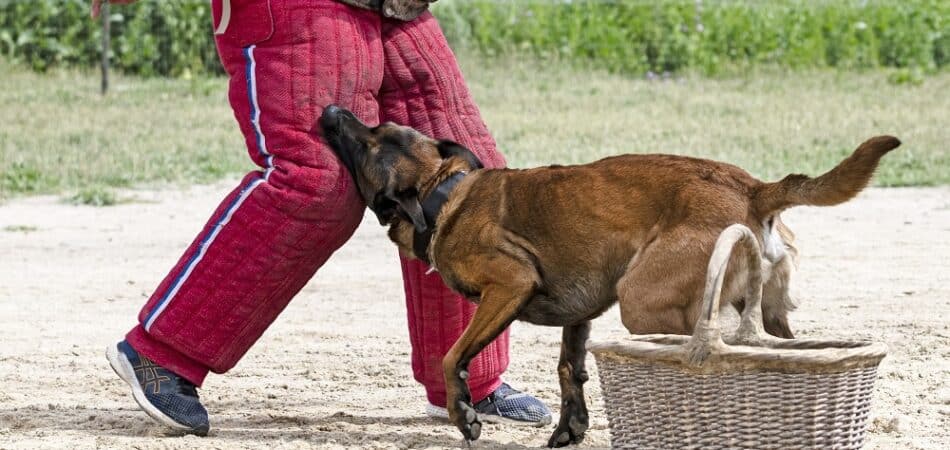
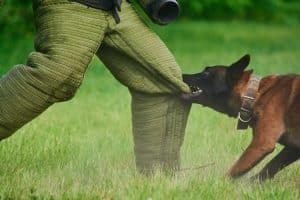 A bite suit is exactly what it sounds like: a padded, reinforced suit worn by the decoy (the person acting as the target).
It covers the arms, torso, and legs, creating a safe—though not exactly painless—surface for the dog to engage with.
Unlike the sleeve, which limits the bite to one spot, the suit gives the dog freedom to go for different areas of the body.
And that freedom matters. Why?
Because real-life scenarios aren’t scripted. An attacker won’t politely offer up their arm for the dog to latch onto. They’ll move, they’ll fight, they’ll twist away. Training with a full suit teaches the dog to bite wherever it can gain control—arm, leg, or torso—and to adjust under pressure.
Bite suits first gained traction in military and law enforcement K9 training.
Trainers needed a way to condition dogs to handle combative suspects without exposing decoys to serious injury. The early suits were bulky and stiff, designed primarily for protection.
Over time, materials improved—lighter fabrics, more flexibility—making it possible to train with greater movement and more natural scenarios.
But…yes, there’s a but:
Bite suits aren’t perfect. While they offer realism, they can also create bad habits if not used correctly.
Some suits are so padded that dogs learn to “chew” or bite shallowly because they don’t feel resistance. Others restrict movement, making the decoy look like a marshmallow man instead of a genuine threat.
And then there’s the handler’s side of things. Training with a bite suit requires a skilled decoy who can move convincingly, apply pressure, and guide the dog’s confidence without either babying or overwhelming them.
In other words, a bite suit on its own doesn’t make good training—the person inside it does.
So,
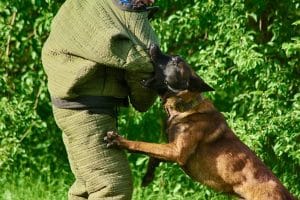 For decades, it’s been the go-to tool in bite training, whether for sport, police, or personal protection work. Simple in design, but incredibly effective when used correctly.
A protection sleeve is typically made of layered jute, linen, or synthetic fibers, reinforced to withstand the pressure of repeated bites.
It covers the decoy’s arm—sometimes with added shoulder padding—and provides a safe target for the dog to latch onto.
Unlike the bulkier bite suit, a sleeve allows the decoy to stay more agile, move freely, and focus the dog’s training on one very specific skill: grip.
Protection sleeves predate bite suits by a long stretch. In fact, they’re some of the earliest equipment designed for controlled bite work.
Early versions were crude—often just heavily wrapped arms covered in leather—but they paved the way for the precision we see in today’s training.
Over time, sleeves evolved to be more durable, ergonomic, and specialized. Some are softer and used for puppies, others are harder and built for advanced bite strength conditioning.
Now, here’s what most experienced trainers will tell you: it’s not bite suit or sleeve—it’s bite suit and sleeve.
And you need both to produce a complete fighter.
Starting with the Sleeve
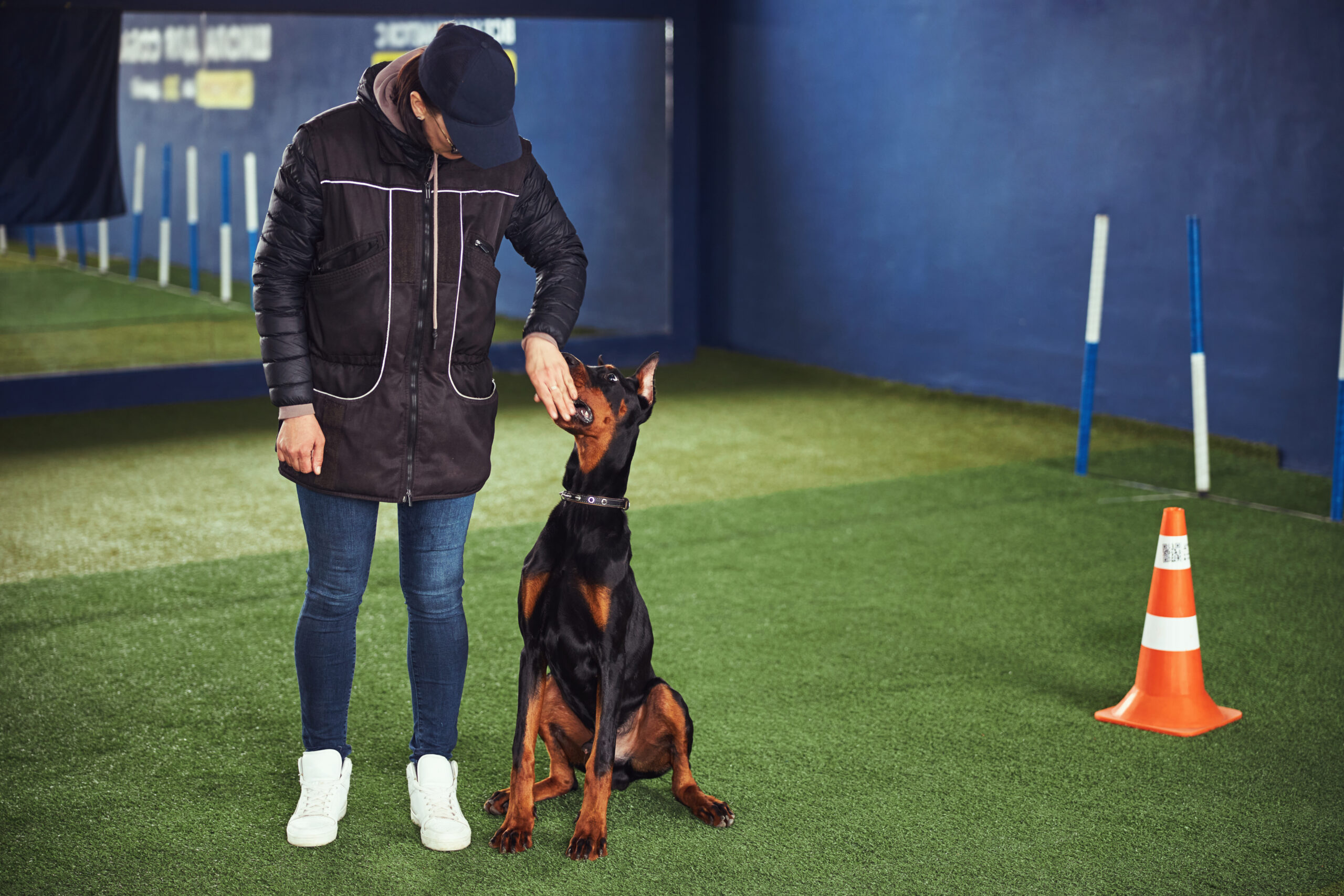
Most protection dogs begin their journey on the arm sleeve.
Why?
Well, a sleeve provides a clear, controlled target that helps young or inexperienced dogs focus on developing a strong, consistent grip.
Puppies and green dogs often start with soft, puppy sleeves or tug-like equipment before progressing to harder sleeves. A hard, oversized sleeve on an 8-week-old pup? That’s a recipe for ruining drive and grip before it ever develops.
The rule: right sleeve, right stage.
Present the sleeve in a way that encourages a full-mouth bite. When the pup locks on with stability, reward it. Calm praise.
This staged approach builds confidence without overwhelming them.
Different types of sleeves serve different goals.
Trainers also rotate between sleeves of different padding levels. With softer sleeves, the decoy can “feel” the bite and adjust training feedback accordingly.
Harder sleeves offer more protection but reduce the ability to gauge grip intensity. Used together, they help the dog progress in both strength and technique.
Transitioning to the Suit
Once the dog demonstrates confidence and has a solid grip on the sleeve, trainers begin introducing the bite suit.
Here, the focus shifts from “can you bite hard and hold?” to “can you engage the person no matter what they do?”
The dog learns to commit to the full body, adjust to different bite zones, and stay engaged during resistance or movement. This is where true protection instincts get honed.
Balancing Both in Ongoing Training
Even after dogs graduate to the suit, trainers don’t throw the sleeve away. In fact, sleeve work often continues throughout the dog’s career as a way to:
At the deployment stage, the ultimate question is: will the dog bite when there’s no obvious equipment?
That’s where proofing comes in. We run three tests.
A low-profile padded sleeve worn under clothing. It strips away the big visual cue of a jute sleeve.
Old models were tied up with laces, but modern ones use Velcro, quick to put on, quick to rip off in an emergency. The surface is tough enough to withstand real pressure without tearing.
This isn’t training gear. It’s testing gear. The goal is to see if the dog recognizes the man, not the sleeve, as the target.
If you want to know whether a dog will bite flesh, you need to take the visual of “bite equipment” off the table. Enter the silicone rubber arm.
It looks like a bare arm. It feels like a bare arm. And once saliva coats it, it gets slick. Dogs who’ve only ever known jute sleeves often slip it right off. That’s the point.
The silicone arm forces the question: Will the dog re-bite and fight through the difficulty, or disengage when the grip isn’t easy?
In our system (Vanguard Protection Dogs), this step is non-negotiable. It tells you whether the bite is trained…or real.
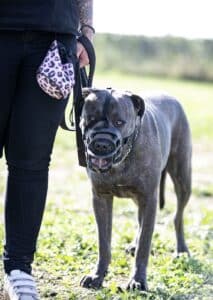 Finally, we go all in. The dog wears a muzzle during encounters. There’s nothing to grab, nothing to clamp down on, no satisfaction of a deep grip. Just frustration.
The decoy moves, taunts, and pressures. The dog’s drive increases. Instead of focusing on equipment, the dog learns to channel all that energy into the fight itself.
This stage shows you everything: commitment, aggression, and whether the dog sees the human—not the gear—as the opponent.
None of this works without skilled decoys. Switching between sleeve and suit requires the person inside the gear to understand what the session is for.
On sleeve days, the goal might be grip refinement. On suit days, the goal might be testing adaptability under pressure.
A bad decoy can blur those lines, confusing the dog instead of building progression.
Now that we’ve broken down each tool, let’s put them head-to-head. While both the bite suit and the protection sleeve are effective, they shine in different areas.
It’s essential to understand where each one excels and where it falls short. Here’s how they stack up:
| Factor | Bite Suit | Protection Arm Sleeve |
|---|---|---|
| Realism | High – dog targets the person, not just equipment. Full-body engagement. | Moderate – dog focuses on the sleeve, which may not translate to real threats. |
| Grip Development | Variable – can encourage shallow grips if padding is too thick. | Excellent – isolates bite for precise evaluation of depth, pressure, and consistency. |
| Versatility | Allows training of multiple scenarios (attacks, fleeing suspects, resistance). | Limited to arm bites, less adaptable to unpredictable situations. |
| Decoy Mobility | Restricted – bulky suits limit agility, depending on design. | High – decoys move naturally, run, dodge, and apply realistic pressure. |
| Dog Confidence | Builds commitment to biting the person, reduces hesitation. | Builds confidence in bite strength and precision in a controlled setting. |
| Decoy’s Safety | High – strong padding protects most of the body. | Moderate – protects the arm but leaves the torso and legs more exposed. |
| Training Progression | Often used after sleeve work to transition into realism. | Usually the starting point for puppies and young dogs. |
| Cost | Expensive – professional-grade suits can cost thousands. | Affordable – sleeves are widely available and much cheaper. |
| Accessibility | Requires skilled decoy and resources, not always practical for casual handlers. | Easy to use and widely accessible for trainers at all levels. |
| Physical Toll | Heavy for the decoy – exhausting to wear and train in. | Lighter and easier on the decoy, less fatigue during long sessions. |
A well-rounded protection dog doesn’t need one or the other. It needs both: applied at the right time, for the right reason, under the guidance of a skilled trainer.
That’s how you produce a dog that is reliable and effective when it counts in the real world.
At Vanguard Protection Dogs, this balanced approach is at the core of everything we do. We develop dogs that will hold the line when your safety depends on it.
If you’re looking for a personal protection dogthat’s been raised, trained, and proven in real-life scenarios, then Vanguard Protection Dogs is your expert source.
Contact us today to learn more about our training programs and available protection dogs.
A bite suit is a padded, reinforced suit worn by the decoy that covers the arms, torso, and legs, giving the dog freedom to engage different areas of the body. A protection sleeve, by contrast, covers only the decoy’s arm and focuses training on one specific skill: grip. The suit is best for realism and versatility; the sleeve excels at isolating and refining bite technique.
Protection dogs almost always begin on the arm sleeve. It provides a focused, manageable target for building grip confidence without overwhelming young or green dogs. The bite suit is introduced later, once the dog has demonstrated a solid, consistent bite.
Experienced trainers consistently recommend using both tools together. Each builds slightly different skills, and relying on only one limits the dog’s development. The real key is knowing when and how to use each one.
Bite suits can create bad habits if misused. Some suits are so heavily padded that dogs learn to bite shallowly because they don’t feel resistance. Others restrict decoy movement, making scenarios feel artificial rather than threatening. A bite suit alone doesn’t produce good training — the skilled decoy wearing it does.
Trainers use three proofing methods: a hidden sleeve worn under clothing to remove visual cues, a silicone rubber arm that mimics bare skin to test whether the dog will re-bite under difficult conditions, and muzzle work that forces the dog to channel drive into the fight itself, with no equipment to grip at all. This final stage reveals whether the dog sees the human — not the gear — as the true target.
 904-441-8475