Rottweilers can be exceptional protection dogs for the right owner, combining natural guarding instincts, high intelligence, and fierce loyalty, but they require confident leadership, consistent training, and serious daily commitment to thrive safely as working or family protection dogs.
Well, that depends.
On your protection needs.
On your lifestyle.
On your leadership.
And honestly, on how much time, effort, and commitment you’re comfortable giving up to earn a Rottweiler’s trust.
If you’ve ever worked with one, you know: it’s not a dog that just gives respect. You earn it, day by day. And maybe that’s why people react so strongly to them.
Some absolutely adore them. Others… fear them. There’s rarely an in-between.
The Rottweiler is the kind of dog that makes you feel safe when everything else seems uncertain.
And yet, it’s also the kind of dog people whisper about, usually as warnings built on half-truths and outdated stories.
Aren’t we past the myths, though? We live in a time where facts are a search away, yet the Rottweiler’s reputation still gets twisted.
They call it a “power breed,” and the numbers back it up. Rottweilers ranked ninth out of 201 breeds last year, according to the AKC. That popularity proves people crave that power.
Still, they’re not for everyone. A Rottweiler can be your fiercest guardian or your greatest challenge. It all depends on who you are and how you lead.
Behind those intelligent eyes lies a mind that tests boundaries, reads energy, and responds to authority with precision.
So before you decide whether a Rottweiler is the right choice for your protection needs, it’s worth understanding the why behind their loyalty, the how behind their bravery, and what it takes to raise one right.
Vital Stats of the Rottweiler
You have to go way back to the marching boots of the Roman Empire to understand the Rottweiler.
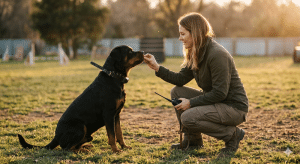 While much of the breed’s early history isn’t documented, most experts agree that the Rottweiler descended from the drover dogs of ancient Rome—powerful mastiff-type canines known for their intelligence, endurance, and strong guarding instincts.
These rugged dogs marched north with Roman legions through the Alps as the empire expanded into what is now Switzerland.
The dog’s mission was simple but vital: keep the army’s food supply alive. Since refrigeration didn’t exist, soldiers moved their herds “on the hoof,” and it was up to these dogs to drive, protect, and control the cattle along the empire’s long, treacherous routes.
When the Roman legions eventually settled in southern Germany, many of their dogs stayed behind.
One of the towns most influenced by their presence was Rottweil, a bustling center for cattle trade. The town’s name came from its red roof tiles (Rote Wil), though in Roman times it was known as Arae Flaviae.
Local farmers and butchers quickly saw the value in these Roman dogs. They needed strong, intelligent dogs to herd cattle and guard property. The Roman mastiffs fit the bill perfectly.
Over generations, as they were crossed with local herding breeds and large working dogs from England and Holland, a new, distinct type began to emerge, the Rottweiler.
The butchers of Rottweil depended on them for nearly everything: driving cattle to market, pulling heavy meat carts, and guarding the day’s earnings, often carried in a pouch tied around the dog’s neck.
These dogs earned their name and reputation: Rottweiler Metzgerhund, the Butcher’s Dogs of Rottweil.
Reliable. Steady under pressure. Fiercely loyal. Always ready to work.
For centuries, they thrived. But by the 19th century, industrial progress began to change everything.
Railroads replaced droving as the primary means of livestock transport, and using dogs as draft animals was eventually banned. The Rottweiler’s purpose (once essential) was nearly erased.
By 1882, only a single Rottweiler appeared at a dog show in Heilbronn, Germany. The breed was on the brink of disappearing.
But a few passionate fanciers refused to let that happen. They sought out the remaining Rottweilers scattered across Europe and began breeding carefully, not just for utility but preservation.
Breeders worked to maintain the Rottweiler’s drive, intelligence, and stability while refining its physical form.
Through deliberate selection, they shaped a modern version of the ancient working dog: one that could adapt to a changing world without losing its core purpose.
Even today, no one can say with certainty what those early Rottweilers looked like.
“We don’t have a true record of how Rottweilers looked exactly, but we know they were different sizes and colors,” explains Robert Galusha, president of the American Rottweiler Club (ARC). “Over natural evolution, their appearance has no doubt changed, but they remain a dog of assurance, confidence, and protection.”
In 1905, a Rottweiler was presented at a prestigious dog show in Heidelberg, described as a “fine dog of unusual breed and irreproachable character.”
That marked a turning point.
What the butchers and traders of Rottweil had long known—the Rottweiler’s discipline, resilience, loyalty, and courage—was finally recognized by the wider world.
In 1910, the German Police Dog Association officially acknowledged the Rottweiler as one of its working breeds.
During both World Wars, Rottweilers served as guard dogs, messengers, and draft animals, proving their worth under conditions few others could endure.
After the wars, returning soldiers brought the breed home, and admiration for the Rottweiler spread across Europe and eventually the world.
In 1930, a German immigrant named Otto Denny bred the first Rottweiler litter in the United States. At the time, the puppies were registered with a German-based breed club, as the American Kennel Club (AKC) hadn’t yet recognized the breed.
That changed in 1931 when the AKC added a Rottweiler to its stud book, officially classifying it within the Working Group. The breed standard was published in 1935, then later refined in 1971 and 1990.
By the mid-1990s, Rottweilers had captured hearts far beyond their German roots. Clubs flourished across continents, and at one point, the Rottweiler ranked as the second-most popular breed in the United States.
 But popularity came with a price.
By the end of the 1990s, everyone wanted a Rottweiler, but not everyone deserved one
What was once a respected working dog became a status symbol. People wanted the look of power, not the responsibility that came with it.
Irresponsible breeding followed. So did poor ownership.
Suddenly, dogs that were meant to be steady and confident were being bred for aggression and size alone.
Handlers skipped training and ignored socialization. And when these powerful dogs acted out of fear or confusion, headlines wrote the story for them.
Sensationalized reports of dog attacks painted Rottweilers as dangerous and unpredictable—turning one of the most reliable working breeds in history into a public villain.
What they didn’t report was why those incidents happened: untrained dogs, inexperienced owners, and breeding practices that ignored temperament.
It was guilt by association, and the Rottweiler paid the price.
Insurance companies refused coverage for homes with Rottweilers. Landlords banned them. Entire cities debated breed restrictions.
In just a few years, the same dog that had once served armies, police forces, and families with quiet loyalty was suddenly treated as a threat.
But history has a way of setting the record straight.
Rottweilers are reclaiming their reputation, one well-bred, well-trained dog at a time.
Because the truth is, the Rottweiler never changed. People did.
And if history proves anything, it’s this: the Rottweiler has always been exactly what humans needed it to be: strong, steady, protective, and steadfastly loyal.
What makes a Rottweiler exceptional?
Most people will tell you it’s the raw power, devotion, or the unmistakable presence.
Those are part of it, sure, but they barely scratch the surface. Peel back the layers, and you find something deeper:
Long before training manuals or modern breeding programs, Rottweilers were bred to decide.
They had to move cattle through chaos, guard money bags in crowded markets, and protect homes, all without waiting for commands.
That independent, calculated instinct still lives in them today, with breed surveys showing 85% of Rottweilers excelling in guard work due to their innate threat assessment.
They don’t just react: they interpret. They sense tone, tension, and intent.
A well-bred Rottweiler knows when to stay calm, when to block, and when to act. According to the American Temperament Test Society, they boast an 84.7% pass rate, proof of their stable, predictable behavior.
They’re not barkers by nature because their instinct is rooted in control. Precision over panic. Awareness over aggression. That’s what makes them natural guardians.
In Stanley Coren’s The Intelligence of Dogs, they rank 9th out of 138 breeds: learning new commands in fewer than five repetitions and obeying the first command 95% of the time.
They notice patterns, test limits, and remember outcomes, making them top performers in advanced protection work.
They thrive on clarity, consistency, and respect. Push them, and they’ll tune you out. Lead with purpose, and they’ll follow anywhere
That mental balance (quick thinking paired with emotional steadiness) is what allows Rottweilers to stay composed under pressure.
They don’t get flustered. They don’t fold. They calculate.
It’s why police units, trainers, and protection handlers prize them: they understand the assignment without chaos.
Everything about the Rottweiler is built for controlled force. A broad chest, compact frame, and muscular hindquarters built for agility and stamina.
At 22–27 inches tall (females 22-25, males 24-27) and up to 135 pounds (average 80-100 for females, 95-135 for males), they’re solid but balanced.
Explosive drive meets endurance, with a body length-to-height ratio of 10:9 per UKC standards.
Their bite force hits 328 PSI on average, ranking them among the top 10 strongest-jawed breeds. When they engage, it’s intentional, calculated, and final.
Their gait is fluid, almost feline, with silent confidence. They burst to 25 mph (up to 43 km/h) in short sprints and sustain endurance for hours, as seen in herding trials where they cover 10-15 miles daily without fatigue.
Even at rest, there’s a readiness about them, as if every muscle is always half a breath away from action.
Few breeds bond like a Rottweiler. When they commit, it’s absolute.
Their loyalty runs deep, almost ancestral, shaped by centuries of working beside humans in close partnership. For a Rottweiler, protection isn’t an instinct alone; it’s devotion.
That’s why they’re called “velcro dogs.” They shadow their owners closely.
Many are leaners: pressing their weight against you, a holdover from herding days when they’d body-check cattle into line.
In moments of danger, they don’t hesitate; they step forward, fearless and unflinching. And yet, minutes later, that same dog can melt beside a child.
That contrast—the fearless defender and the gentle companion—is the essence of the Rottweiler’s heart.
Confidence. Calm. Self-assured. That’s the Rottweiler at its best.
According to the American Kennel Club (AKC) and the United Kennel Club (UKC), a well-bred Rottweiler is everything you want in a working dog: good-natured, steady, brave, powerful, and loyal.
When properly trained and socialized, they’re naturally non-aggressive and deeply devoted to their families. Many have a soft spot for kids; something that still surprises people who only read the headlines.
But let’s go a little deeper.
A 2017 study in Applied Animal Behaviour Science examined Rottweilers in the Netherlands and found something that aligns with what every good breeder already knows: temperament begins with genetics, and then handling shapes the outcome.
Pedigree Rottweilers (those from parents who passed a Socially Acceptable Behaviour test) showed half the rate of fear and aggression-related behaviors compared to non-pedigree “look-alikes.”
That’s not a coincidence. It’s proof that selective breeding and responsible handling create balanced, stable dogs.
Their “aloof dignity” and quiet wariness toward strangers make them exceptional guardians. They don’t rush to make friends, but once you’re in their circle, their loyalty runs deep.
And beyond protection work, their intelligence and adaptability let them excel in almost anything—police service, therapy, obedience, and even companionship.
Just like humans they have different personalities. Some are goofy and playful; others are serious, one-person dogs. But all of them thrive on structure, consistency, and early socialization.
Before training one for protection work, you must understand how they think.
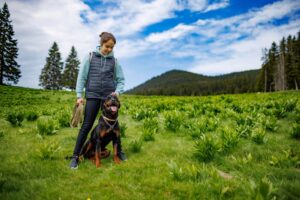 Yep—they’re smart. Sometimes too smart.
They process before they act, weighing situations and reading energy with remarkable precision, which makes them a handful for anyone expecting blind obedience.
There’s a reason you’ll see the warning “Rottweilers are not for everyone” on nearly every breed guide and training manual out there. We don’t mean to intimidate, we’re just being honest.
These dogs will test you. They’ll question inconsistency, notice hesitation, and exploit gaps in leadership.
“Stubborn” is a word that comes up a lot when describing the breed, but it’s not defiance; it’s intelligence paired with confidence. They think for themselves, which is a good thing in working dogs.
So, when a Rottweiler senses uncertainty, they’ll step into the leadership role themselves. And once that happens, good luck getting them to hand it back.
Now, let me say this straight—Rottweilers don’t respond to intimidation or harsh corrections. You try to dominate them, and they’ll push right back.
What they do respond to is calm, steady confidence. Show them you’re grounded, in control, and worth following, and they’ll meet you right there, halfway.
Training a Rottweiler is more about communication than control. You’ve got to work with their mind, not against it.
Keep sessions short, clear, and purposeful. If you drag things out or keep drilling the same command, they’ll lose interest fast.
Now… onto the real work.
Where do you start the training?
If you can, this is hands down the smartest move you’ll ever make.
Rottweilers are naturally protective, no question about it. But professional training gives that instinct direction and control. Without it, things can go wrong very fast.
We’ve seen tragic cases where untrained protection dogs misread harmless situations.
Just recently in Valdosta, Georgia, a toddler was fatally attacked by two Rottweilers after he wandered into a backyard and accidentally let them out of their kennel. Authorities called it a “horrible and tragic event that should never have occurred.”
Heartbreaking, yes—but it drives home a truth most people overlook: a dog’s instinct is not the same as discipline.
Rottweilers, like many working breeds, are wired to protect. But without guidance, that instinct doesn’t discriminate between real danger and innocent movement.
So, when people say “Rottweilers are dangerous,” I tend to ask a different question: Why keep a powerful, protective breed without proper training?
Because let’s be real… any dog bred to guard comes with intensity and purpose. It’s the handler’s job to shape that drive into controlled confidence, not chaos.
And a certified protection dog trainer understands how to do that safely and ethically.
Here’s what that actually looks like:
Look for trainers experienced with working breeds, using positive, respect-based methods: never fear or force.
But hey, if professional training isn’t an option right now, we get it. Sometimes budget, time, or location get in the way.
The good news? You can still make real progress on your own… if you’re consistent and intentional about it.
Let’s talk about how.
Everything that follows depends on getting this part right.
Commands like sit, stay, come, and heel may sound basic, but they’re the foundation of every training. They keep your Rottweiler focused, even when adrenaline kick in.
Go beyond rote memorization: build a partnership with a dog that thinks alongside you instead of merely reacting.
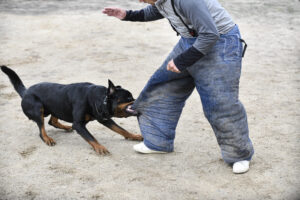
That means structured drills where your dog learns control through action: bark-and-hold exercises, controlled bite work, and most critically, the “out” command for instant release.
If you can’t call your dog off mid-engagement, you’re already missed the mark. It also shows that you’re not in control. The release isn’t optional. It’s the difference between discipline and danger.
Reward calmness and precision to build a thinking partner, not just a follower.
Confidence comes from early, positive exposure to people, sounds, surfaces, and environments.
Start young. Let them experience the hum of traffic, the chatter of crowds, the clatter of shopping carts. All of it builds resilience and teaches them that the world isn’t something to fear.
Note: You’re not training your Rottweiler to love everyone they meet. You’re teaching your dog discernment: the ability to distinguish between normal activity and legitimate threats.
Early socialization shapes a stable dog; waiting too long means undoing bad habits..
Drive is the internal engine that fuels their instincts—chasing, guarding, and engaging. Every working dog has it, but with Rottweilers, that intensity runs deep. Your job isn’t to suppress it. It’s to channel it.
How to go about it?
Watch how your dog reacts in different situations:
Knowing what motivates your dog helps you train smarter, not harder. You’ll learn how to reward the right energy and redirect what’s excessive.
Control starts where excitement peaks. During play, stop mid-game and issue a sit or down command.
Wait for calm eye contact before resuming. This teaches your dog to think through adrenaline—a vital skill in protection work.
Use targeted exercises to refine their instincts:
These small, daily reps create a dog that acts on command, not emotion.
A well-trained Rottweiler should shift from high alert to total calm within seconds.
Practice ending every high-energy activity—tug, chase, or obedience—with quiet stillness. Reward the transition, not just the action.
That’s how you turn drive into discipline.
I don’t get handlers who train their dogs to be straight-up aggressive under the guise of “protection.”
I know… you want to scare the bad guys away. But how do you control an aggressive dog when things go sideways?
Spoiler: You can’t.
A properly trained Rottweiler doesn’t act out of anger or fear; they act because you’ve methodically taught them when to engage, how to respond proportionally, and—crucially—when to stand down.
So, how do you go about this?
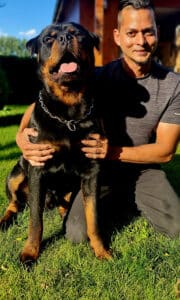 Rottweilers are born with a knack for reading threats; your job is to shape that instinct into something you control.
Here’s what you’re teaching:
The goal in this phase is clarity over intensity.
This is where their brain matches their brawn. It’s less about raw power and more about judgment, precision, absolute control, and tactical engagement.
Here’s what you’re drilling:
This phase becomes more mental than physical. Yes, you will test strength, but you’ll also be shaping judgment.
Each drill should reinforce the idea that protection without discipline is dangerous. And with a breed as powerful as the Rottweiler, discipline is everything.
The advanced ones often require professional guidance. But if your goal is family protection, what we’ve covered here lays a strong, reliable foundation.
Now, we have different levels of protection training. The advanced ones often require professional guidance. But if your goal is family protection, what we’ve covered here lays a strong, reliable foundation.
Your Rottweiler mirrors your behavior—if you’re calm, they’re calm. If you panic, they’ll escalate.
So,
You lead, they execute.
Training a Rottweiler doesn’t end when they master commands or pass their protection course.
Far from it.
These dogs are high-drive, high-intelligence animals. That means their skills, mindset, and energy all need regular conditioning.
Aim for 1.5 to 2 hours of daily work—hard, focused exercise, not just a stroll around the block. Mix it up to keep their body as disciplined as their mind: agility drills, resistance work, or even structured play.
Now, here’s where most handlers drop the ball: mental exercise.
These dogs thrive when you challenge them. So incorporate problem-solving games, scent tracking, or scenario-based drills that push them to make decisions.
Change up environments, vary the difficulty, and keep them guessing. Predictability kills engagement and breeds boredom. And trust me, boredom is a recipe for frustration and bad behavior.
Every few months, run mock scenarios or schedule refresher courses.
If you’ve worked with a professional trainer before, set annual evaluations. They can help refine weak points, strengthen commands, and ensure your dog’s protective instincts remain balanced and ethical.
If not, run mock scenarios or schedule refresher courses every few months.
A well-bred, well-cared-for Rottweiler can live up to around 10 years, but genetics, diet, and lifestyle all play massive roles.
And if you’re new to the breed, here’s something you should know: Rottweilers are surprisingly health-sensitive. Their hearts, joints, and immune systems need just as much attention as their training.
And just because they’re prone to a few specific illnesses and conditions, it doesn’t mean your Rottweiler will face all—or even any—of them.
But being aware of what the breed is vulnerable to gives you the upper hand in protecting their well-being.
Hip and elbow dysplasia target what makes Rottweilers shine—their movement, balance, and relentless strength.
These conditions develop when the joints don’t form correctly during growth. In a healthy joint, the bones fit together seamlessly and glide without friction. But in dysplasia, that alignment is off.
The result is instability, which grinds down cartilage, causes chronic inflammation, and eventually leads to arthritis. The process is slow, but the damage builds relentlessly.
Rottweilers are especially vulnerable because of their size and muscle mass. Their bodies grow fast, and if that growth isn’t supported properly—with balanced nutrition, controlled exercise, and proper weight—the pressure on developing joints can be immense.
Genetics are still the biggest factor, but how you raise and condition your dog can tip the scale toward long-term strength or lifelong pain.
What to watch for:
Early detection makes all the difference. X-rays can confirm the condition, but your first clues often come from behavior—small hesitations or subtle shifts that only an attentive owner would notice.
While there’s no permanent cure, modern management is highly effective. Controlled exercise, like swimming or leash walking, builds muscle without stressing the joints.
Maintaining a lean weight eases pressure, and supplements containing glucosamine, chondroitin, or omega-3s support joint health.
Physical therapy and pain management can significantly improve mobility, while surgical options such as joint replacement or corrective osteotomy can restore function in severe cases.
With the right care, many Rottweilers with dysplasia still lead active, fulfilling lives. The key is intervention before degeneration sets in—and staying consistent with their conditioning for the rest of their life.
Heart conditions are unfortunately common in Rottweilers, and aortic stenosis sits at the top of that list. It’s a congenital defect, meaning many dogs are born with it, even if symptoms don’t show until later.
It occurs when the aorta (the main artery leaving the heart) narrows, forcing the heart to work harder to pump blood through the body.
Over time, that extra effort enlarges the heart muscle and which eventually weakens the heart and disrupts normal rhythm.
Mild cases may go unnoticed for years, but in moderate to severe cases, the impact is unmistakable. Affected dogs may tire quickly, collapse after exercise, or show fainting spells due to reduced blood flow.
Some develop a persistent cough or labored breathing as the heart struggles to keep up. Tragically, in severe cases, sudden cardiac failure can occur with little warning.
The condition is often hereditary, which makes ethical breeding the first and most powerful line of defense. Responsible breeders screen for heart defects through echocardiograms before breeding any dogs.
If you’re buying a Rottweiler puppy, always ask for these health clearances—it can save years of heartache later.
For diagnosed dogs, there’s no cure, but management is possible. Beta-blockers and other heart medications help reduce the strain on the heart and control abnormal rhythms.
Exercise should be moderated—not eliminated—focusing on calm, steady activity rather than bursts of intensity. Regular checkups with a veterinary cardiologist are essential to monitor progression.
What makes aortic stenosis so dangerous is how quietly it develops. Many Rottweilers don’t show signs until the disease has already advanced.
Rottweilers’ massive, muscular builds make them prime targets for osteosarcoma—a savage bone cancer that hits fast and hard. Up to 12% of them may face it.
It usually begins deep within the long bones of the legs (most often near the shoulder, wrist, or knee) and destroys healthy bone from the inside out.
The first signs are easy to mistake for something minor: a limp that doesn’t go away, localized swelling, or reluctance to bear weight on one leg.
Many owners assume it’s a sprain or strain, but as the tumor grows, pain intensifies, and the lameness becomes permanent. By the time visible swelling appears, the disease is often well advanced.
The exact cause isn’t fully understood, but genetics, rapid growth, and body mass are all contributing factors.
Simply put, the same power and bone density that make Rottweilers exceptional protectors also make them more vulnerable to this cancer.
Osteosarcoma is notoriously aggressive, spreading quickly—usually to the lungs. That’s why early detection is critical. X-rays, bone biopsies, and chest imaging help confirm the diagnosis and determine whether it has metastasized.
Treatment typically involves amputation of the affected limb, followed by chemotherapy to control the spread.
While that sounds extreme, dogs adapt remarkably well—many return to running, playing, and living comfortably on three legs. What matters most is pain management and maintaining their quality of life.
For owners, it’s one of the hardest diagnoses to face. But with timely intervention and consistent veterinary care, you can give your Rottweiler more good days than bad—and that’s what truly counts.
Regular vet checkups, awareness of early warning signs, and choosing breeders who prioritize health over size or speed of growth are your best defenses against this devastating disease.
It’s not dramatic to say this: bloat can kill a healthy dog within hours.
Also known as gastric dilatation-volvulus (GDV). It starts when the stomach fills with gas, food, or fluid and expands.
In deep-chested breeds like the Rottweiler, that swollen stomach can twist on itself, trapping air inside and cutting off blood flow to major organs. The result is shock, tissue death, and, without immediate surgery, death.
The early signs are subtle but unmistakable once you’ve seen them: restlessness, a distended abdomen, excessive drooling, and unproductive retching—trying to vomit but nothing comes up.
If you ever see those symptoms, don’t wait. Get to the vet immediately.
No one can guarantee prevention, but you can lower the risk.
Feed smaller, more frequent meals instead of one large one. Avoid vigorous play or training right after eating.
Use slow-feeder bowls if your dog eats too quickly. And talk to your vet about prophylactic gastropexy—a procedure that tacks the stomach to the abdominal wall to prevent twisting.
Bloat doesn’t discriminate between trained protectors and family companions. It hits fast, hits hard, and requires immediate action. Knowing the signs and acting on them can be the difference between panic and survival.
Rottweilers love food almost as much as they love their people. But extra pounds put dangerous strain on their joints, heart, and overall mobility—all things Rottweilers are already predisposed to struggle with.
Keeping them lean is one of the easiest ways to extend their life. Feed for condition, not emotion, because those puppy eyes can be persuasive.
Start with portion control. Measure every meal; don’t eyeball it.
Treats? Keep them under 10% of daily calories. Focus on lean proteins, high-quality fats, and low fillers.
And move. Daily structured exercise: brisk walks, obedience drills, fetch, or light resistance work—keeps muscles active and metabolism steady.
If you can’t feel your Rottweiler’s ribs without pressing, it’s time to reassess.
Rottweilers are notorious for skin sensitivities. What starts as a small itch can spiral into chronic irritation, hair loss, and infection if ignored.
The triggers vary—food allergies, environmental irritants like pollen or dust, or parasites such as fleas and mites.
The immune system overreacts, the skin becomes inflamed, and the dog scratches or chews until the area breaks open. Once bacteria join the mix, you’re looking at hot spots, foul odor, and a miserable dog.
The most common culprits?
Grain-heavy diets, chicken, beef, and low-quality fillers. Switching to a limited-ingredient or hydrolyzed protein diet often helps pinpoint the source.
For environmental triggers, regular grooming, hypoallergenic shampoos, and keeping bedding clean make a real difference.
And never underestimate the role of a strong immune system. A balanced diet rich in omega-3 fatty acids, zinc, and vitamin E helps strengthen the skin barrier from within.
If your Rottweiler suddenly seems sluggish, gains weight despite eating normally, or develops a patchy coat, their thyroid might be to blame.
Hypothyroidism is a hormonal imbalance that slows metabolism and affects everything from energy to skin health. Some dogs even show behavioral changes, seeming withdrawn or irritable.
It’s most common in middle-aged Rottweilers, and while it can’t be prevented, it’s highly manageable. Diagnosis is done through a simple blood test, and daily medication typically restores normal hormone levels within weeks.
The key is catching it early. Regular vet visits, close attention to subtle shifts in weight or energy, and consistency with medication keep hypothyroidism from ever dimming your dog’s drive or spirit.
Let’s break down what daily life looks like with a Rottweiler protection dog.
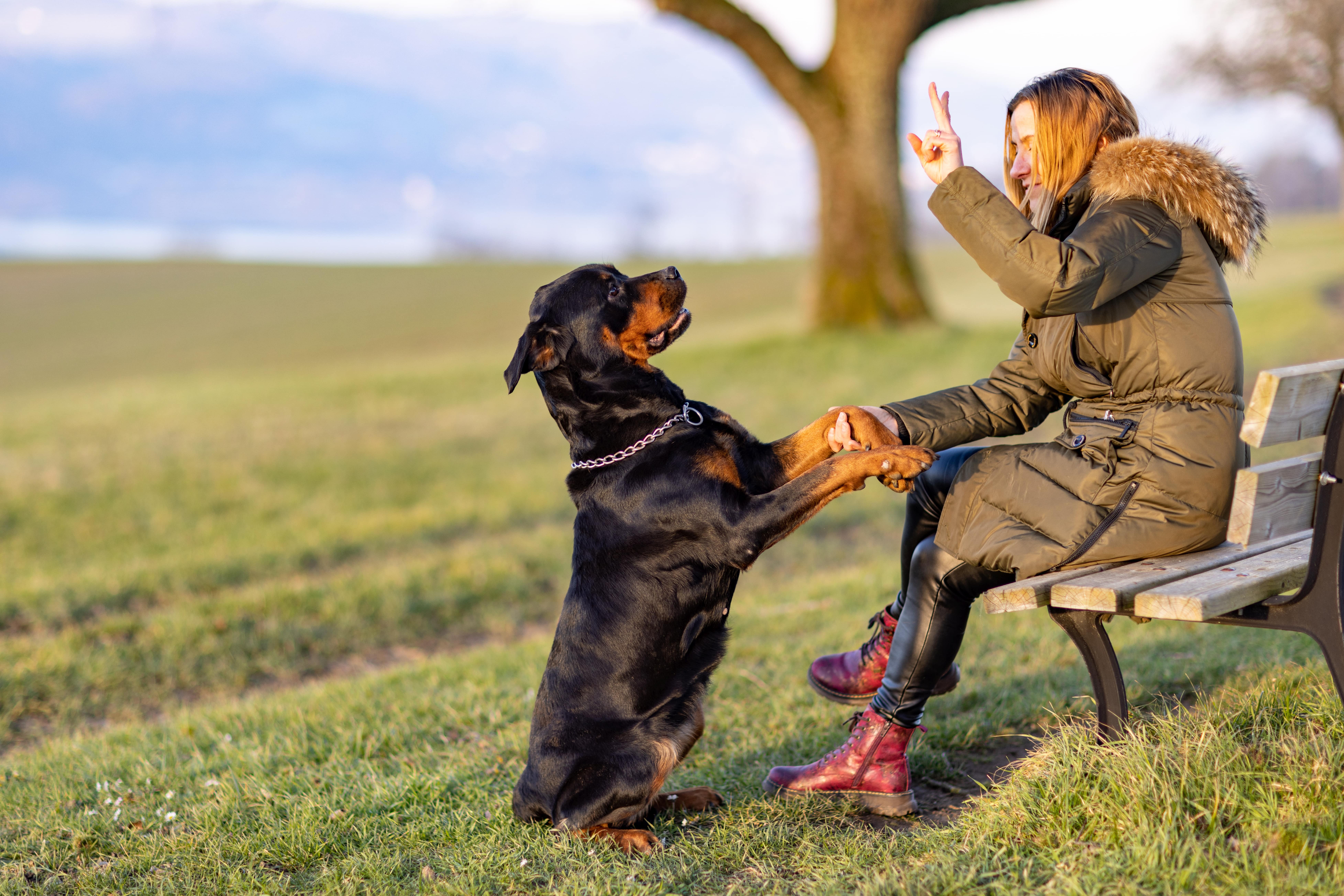 The Rottweiler’s short, dense double coat is low-maintenance compared to fluffier breeds, but don’t get lazy. It sheds moderately year-round, with heavy blowouts in spring and fall.
Brush twice a week with a firm-bristled brush to gently remove loose hair and distribute natural oils for a sleek, glossy shine.
During shedding season, step it up with a rubber grooming brush to dig into that thick undercoat.
Overbathing’s a rookie mistake: every 6–8 weeks is enough. Too many baths strip their natural oils, leading to dry skin and dull fur.
Rottweilers can be prone to dryness and sensitivity. Check for redness, rashes, or hot spots, especially around the neck (where collars rub) and under the legs.
A diet rich in omega-3 fatty acids helps maintain skin elasticity and shine.
Those thick, strong nails grow fast. Long nails throw off their gait, stressing hips and shoulders: joints already at risk in this breed.
Trim every 3–4 weeks or use a grinder for a smooth finish. If you hear clicking on the floor, it’s past due.
Keep an eye on… their eyes. Watch for excessive tearing, blinking, or discharge. Rottweilers are prone to entropion, a condition where the eyelid rolls inward, irritating the eye. If you notice redness or persistent squinting, schedule a vet visit promptly
Their floppy ears tend to trap moisture and debris, setting the stage for infections. Clean weekly with a vet-approved ear solution. Wipe what you see, never jam anything deep. Foul smells or head-shaking mean trouble’s brewing.
Plaque and tartar build up quickly, leading to gum disease, pain, and even heart issues if bacteria spread. Brush their teeth 2–3 times a week with a dog-safe toothpaste, human stuff’s toxic.
Dental chews or raw bones help scrape plaque, but don’t rely on them alone. Annual vet cleanings catch what you miss.
Their diet has a direct impact on their joint health, muscle tone, and overall longevity.
Opt for high-protein, meat-based foods with minimal fillers. Lean proteins (chicken, beef, fish, or lamb) help maintain muscle mass, while omega-3s support joint and heart health.
Avoid grain-heavy kibble, as it’s often a contributing factor to bloating and allergies.
For working or highly active Rottweilers, raw or cooked whole-food diets can deliver superior results, provided they’re balanced and vet-approved.
Rottweiler puppies grow fast, and that growth requires steady fuel. Feed them three to four small meals per day to prevent drops in blood sugar (hypoglycemia) and support muscle and bone development.
Use a puppy-specific formula until around 12 months, then transition gradually to an adult performance diet.
For adults, stick to two measured meals daily, never one large feeding. It helps maintain steady energy levels and reduces the risk of bloat (GDV).
Feed after training sessions, not before. Let them rest for an hour after eating before resuming activity.
Consider adding joint supplements (glucosamine, MSM, chondroitin) early. Don’t wait for aging to start protecting those joints.
Portions depend on size, age, and workload. A working Rottweiler needs dense calories; a companion with lighter exercise needs far less.
Always adjust to body condition, not the feeding guide on the bag. You should be able to feel ribs under a light layer of muscle, not fat.
Daily walks, off-leash runs (in secure areas), resistance work like weighted pulls, agility sessions, and obedience drills build strength and discipline.
Avoid excessive jumping or stair running in puppies; their joints are still forming.
Training sessions, scent games, controlled protection drills, and problem-solving exercises keep their minds sharp.
Always give your Rottweiler a job, even if it’s as simple as carrying a weighted vest on walks. Purpose keeps them balanced.
Rottweilers are affectionate and deeply loyal, but they’re also protective by nature. That means boundaries are essential.
They should bond with the whole family, but follow one clear leader. Mixed commands or inconsistent rules confuse them and can trigger dominance testing.
Everyone in your home should know the same cues, tone, and rules.
A well-trained Rottweiler can live peacefully with children and other pets, but early socialization is essential.
The more structure you give, the calmer and more dependable they become.
When raised right, well-bred, well-socialized, and properly guided, Rottweilers can be exceptional family dogs. Their loyalty runs deep, and once they bond with a child, that devotion becomes fierce. They don’t just live with your family; they guard it.
But that same protectiveness that makes them incredible guardians can also make them overzealous.
A Rottweiler may misread roughhousing between kids as a threat and step in to “defend” their young companion. That’s why supervision is essential whenever children and dogs interact.
Because of their sheer size and strength, even play can get intense. A happy, bouncing Rottweiler can accidentally topple a toddler without meaning any harm.
Teach them how to play gently, when excitement spikes, pause the game for 10–30 seconds to let your dog reset. Calm play is rewarded; overstimulation gets a timeout.
The same goes for children. They must learn to respect the dog’s space, no pulling tails or ears, no climbing or teasing. A Rottweiler that feels respected will mirror that calm energy back.
Training and environment shape everything. A Rottweiler raised in a consistent, structured home that encourages calm interaction learns how to balance power with patience.
Here’s what you should know before committing:
Without clear rules and confident guidance, they can become pushy, stubborn, or overly protective. Training isn’t optional; it’s part of daily life.
That fierce loyalty cuts both ways. A poorly socialized Rottweiler can misinterpret harmless situations as threats. Early and ongoing socialization is key to helping them distinguish friend from foe.
A bored Rottweiler is a destructive Rottweiler. Mental drills, physical exercises, or structured play; this breed needs purpose. Leave them idle, and they’ll create their own “projects,” usually involving your furniture or yard.
Despite their short coats, Rottweilers shed year-round. Add in the occasional drool (especially after water or excitement), and you’ll quickly learn the value of a good vacuum and towel.
Strength is part of their appeal, but it’s also a responsibility. A 120-pound Rottweiler pulling on a leash or jumping in excitement can easily overpower an unprepared handler. Proper training and leash control are essential.
As I’ve already mentioned, Rottweilers are prone to several serious health issues. Understanding them upfront can save you heartbreaking health decisions (and money) down the road.
The costs reflect the level of breeding, training, and care that go into these remarkable animals.
Let me break it down.
Price depends heavily on the breeder’s reputation, bloodline, and health certifications.
A well-bred Rottweiler puppy from health-tested parents costs more, but you’re also getting better genetics, fewer health issues, and a temperament suited for family or working life.
Beware of “bargain” puppies from unregistered breeders: they often come with long-term problems that end up costing far more down the road.
 This is the elite level…. dogs professionally bred, raised, and trained for personal or family protection.
At this stage, you’re not just buying a dog. You’re investing in a complete skill set: controlled aggression, advanced obedience, environmental stability, emotional intelligence under pressure, and top-tier protection performance.
The price reflects years of rigorous training, expert handling, and exceptional breeding.
Vanguard Protection Dogs, for example, offers fully trained Rottweilers starting at $100,000, sourced from top-tier European breeding programs and trained to the highest executive and family protection standards.
Meet our trained Rottweilers for sale or start your application here.
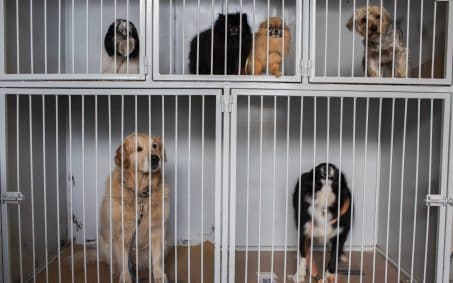
Adopting a Rottweiler from a shelter or breed-specific rescue is the most affordable entry point, but it’s also the least predictable.
Many Rottweilers end up in rescues through no fault of their own. An owner passed away. A family moved and couldn’t take the dog. Someone underestimated what it takes to raise a powerful breed and surrendered when things got hard.
Others come with baggage (previous neglect, inconsistent training, or even abuse).
They may have trust issues, anxiety, or behaviors shaped by instability. Some arrive with medical conditions that went untreated for months or years.
You won’t always know the full story. And that’s the gamble.
Rescue organizations do their best to assess temperament and medical backgrounds, but shelters are stressful environments. A dog that seems calm in the kennel can act completely different once brought home.
So, if you’ve never owned a Rottweiler before, adopting an adult with an unknown history can be risky. Remember, these dogs are strong, intelligent, and capable of serious harm if mishandled.
Without proper guidance, a rescue Rottweiler with behavioral issues can quickly become overwhelming.
That said, for experienced handlers, rescue can be incredibly fulfilling. But it comes with real commitments:
The “3-3-3 rule” often applies: 3 days to settle in, 3 weeks to start showing their true personality, 3 months to feel truly at home. It’s not a quick fix. It’s a rebuild, one day at a time.
This isn’t optional. It’s how you bridge the gap between the dog’s past and their future with you.
Once your Rottweiler is home, expect yearly costs that include:
Add in unexpected vet visits or emergencies, and the total can easily climb higher.
Is It Worth It?
Hell yes… for the right owner.
A Rottweiler isn’t a budget-friendly breed, and it’s not meant to be. The investment is worth every penny if you understand what you’re actually paying for.
If you’ve come this far, you probably already know the answer.
But let’s make it concrete…
If you answered yes to all of that, the Rottweiler might be the perfect match.
However, if your days are unpredictable, your schedule leaves little room for consistent engagement, or you’re looking for a low-maintenance companion, this isn’t the breed for you—at least not right now.
Yes, when properly bred and professionally trained, Rottweilers are among the most capable protection dogs available. They possess natural threat-assessment instincts, an 84.7% temperament pass rate per the American Temperament Test Society, and a calm, controlled disposition that makes them ideal for personal and family protection work.
A Rottweiler puppy from a reputable breeder typically costs $1,500–$4,000, while a fully trained personal protection Rottweiler can range from $70,000 to $200,000, depending on the level of training and bloodline. Elite programs like Vanguard Protection Dogs offer fully trained Rottweilers starting at $100,000, sourced from top European breeding programs.
A well-bred, properly socialized Rottweiler can be a devoted and gentle family companion. Their protective instincts mean supervision is always recommended around young children, and all family members should follow consistent commands and boundaries to ensure a safe, balanced dynamic.
Rottweilers are prone to several health conditions, including hip and elbow dysplasia, aortic stenosis (a congenital heart defect), osteosarcoma (bone cancer affecting up to 12% of the breed), bloat (GDV), hypothyroidism, and skin allergies. Regular veterinary checkups, responsible breeding selection, and proper nutrition significantly reduce these risks.
Rottweilers require structured, ongoing training that goes well beyond basic obedience. Effective protection training covers alert barking, bark-and-hold, controlled bite work, threat discrimination, and scenario-based drills, ideally with a certified professional trainer. Daily mental and physical exercise of 1.5 to 2 hours is also recommended to maintain their skills and behavioral balance.
 904-441-8475