
Protection dog scams in Florida follow consistent patterns: a seller presents a dog as fully trained to an elite standard, collects a large deposit or full payment, and delivers either a dog with no meaningful protection training, a dog that does not exist, or no dog at all.
Florida’s large population of high-net-worth buyers, retirees, and individuals with genuine personal security concerns makes it a particularly active market for fraudulent sellers.
The tools to identify and avoid these scams are straightforward: request specific documentation, verify it independently before any funds are transferred, and treat any seller who resists documentation requests as a seller who has something to hide.
Jacksonville residents with genuine personal security needs are entering a protection dog market that has no licensing requirement for trainers, no regulated certification standard enforced at the state level, and no automatic consumer protection that applies specifically to this category.
That combination creates an environment where fraudulent sellers and undertrained dogs are marketed at premium prices to buyers who have no easy way to distinguish them from legitimate programs.
Vanguard Protection Dogs, based in Jacksonville, FL, has placed fully trained protection dogs with clients for more than 16 years and operates with full documentation transparency – AKC registration, FCI certification, OFA health evaluations, and a written performance and health guarantee on every dog.
Understanding what a legitimate program looks like makes the scams significantly easier to identify. Vanguard’s distinctive approach to placement – covering pedigree selection, training standards, household matching, concierge onboarding, and lifetime aftercare, reflects what a genuine elite program actually requires to deliver. Sellers who cannot describe or document an equivalent level of rigor are not operating at an equivalent standard.
The warning signs below are organized by the stage at which they typically appear in the buyer’s interaction with a fraudulent seller. Recognizing them early is the most effective protection against both financial loss and the personal safety risk of placing an untrained or poorly trained dog in a household that needs genuine protection capability.
Fraudulent protection dog sellers use a consistent playbook that combines fabricated credentials, borrowed imagery, high-pressure timelines, and deposit structures designed to collect money before a buyer can complete any meaningful verification. The most effective scams are sophisticated enough to look credible at first contact, which is why documentation verification rather than visual presentation is the only reliable evaluation method.
The most common credential fraud in the protection dog market involves sellers who claim training backgrounds in military special operations, law enforcement K9 units, or European police agencies that cannot be independently verified.
These claims are designed to create instant credibility with buyers who associate those backgrounds with protection dog expertise. Legitimate trainers with verified backgrounds can name specific units, time periods, and verifiable references from that service.
Fraudulent sellers cannot, and will typically deflect documentation requests with more biographical narrative rather than verifiable records. Buyers can also review what genuine elite protection dogs look like to understand what a credible program actually demonstrates versus what it claims.
Online protection dog scams frequently use video footage of other programs’ dogs, sometimes from international trainers with legitimate credentials, to demonstrate training that the seller’s own dogs have not received.
Buyers who see impressive decoy work, bite sleeve exercises, or off-leash obedience demonstrations on a seller’s social media or website should ask whether the video shows the specific dog being sold, and whether an in-person or live video demonstration of that dog is available before any deposit is paid. A seller who cannot demonstrate the capabilities of the specific dog being sold has not proven that dog has those capabilities.
Some fraudulent sellers invent certification designations, acronyms that sound similar to IGP, OFA, or AKC but refer to organizations that do not exist or are self-created with no independent evaluation process.
A buyer who encounters an unfamiliar certification should search the issuing organization independently, confirm it has a verifiable history and published evaluation standards, and verify that the specific dog’s title appears in the organization’s records.
IGP titles are issued by the Verein fur Deutsche Schäferhunde (SV) and its affiliated national organizations and are verifiable through those bodies. OFA certifications are publicly searchable on the OFA website. AKC registration is verifiable through AKC’s registration database.
An unqualified protection dog trainer is not always operating with fraudulent intent; some genuinely believe their level of training meets an elite standard when it does not. The result for the buyer is the same either way: a dog that cannot perform the protection functions it was sold to provide. Evaluating a trainer’s qualifications requires the same documentation verification approach as evaluating the dog itself.
 A qualified protection dog trainer can name the sport organization they compete or judge under, the IGP or sport titles held by dogs they have trained, the facilities where those titles were earned, and prior placement clients who can speak to the quality of their work.
An unqualified trainer typically cannot provide any of these with specificity. Descriptions of training philosophy, years of experience, or general expertise are not substitutes for a documented training record that can be independently verified through the sport organizations and prior clients named.
Many scam victims discover after the fact that the seller was a legitimate obedience or pet dog trainer who misrepresented their capability level to access the higher-margin protection dog market. A dog trained to obedience competition standards or basic behavioral compliance is not a personal protection dog.
The distinction is significant: protection training requires conditioning for specific threat responses, bite work under handler control, environmental confidence, and temperament stability under stress — none of which appear in standard obedience programs. Buyers who cannot verify IGP or equivalent protection sport training have no basis for concluding a dog has protection capability.
References from prior placement clients are a standard part of any reputable program’s due diligence process. When contacting a reference, buyers should ask three specific questions: How long ago was the placement? Can they demonstrate the dog’s protection capability on request?
Would they purchase from this trainer again knowing what they know now? A trainer who cannot provide references, provides references who are not reachable, or provides references who give vague positive responses without being able to confirm specific capability has not provided a meaningful reference.
Most protection dog fraud in Florida begins online, where the barrier to creating a credible-looking presence is low, and the ability to verify claims before committing funds is limited. Digital due diligence—checking business registration, reverse image searching photos, verifying social media account age, and confirming physical addresses through independent sources—stops the majority of online scams before any money changes hands.
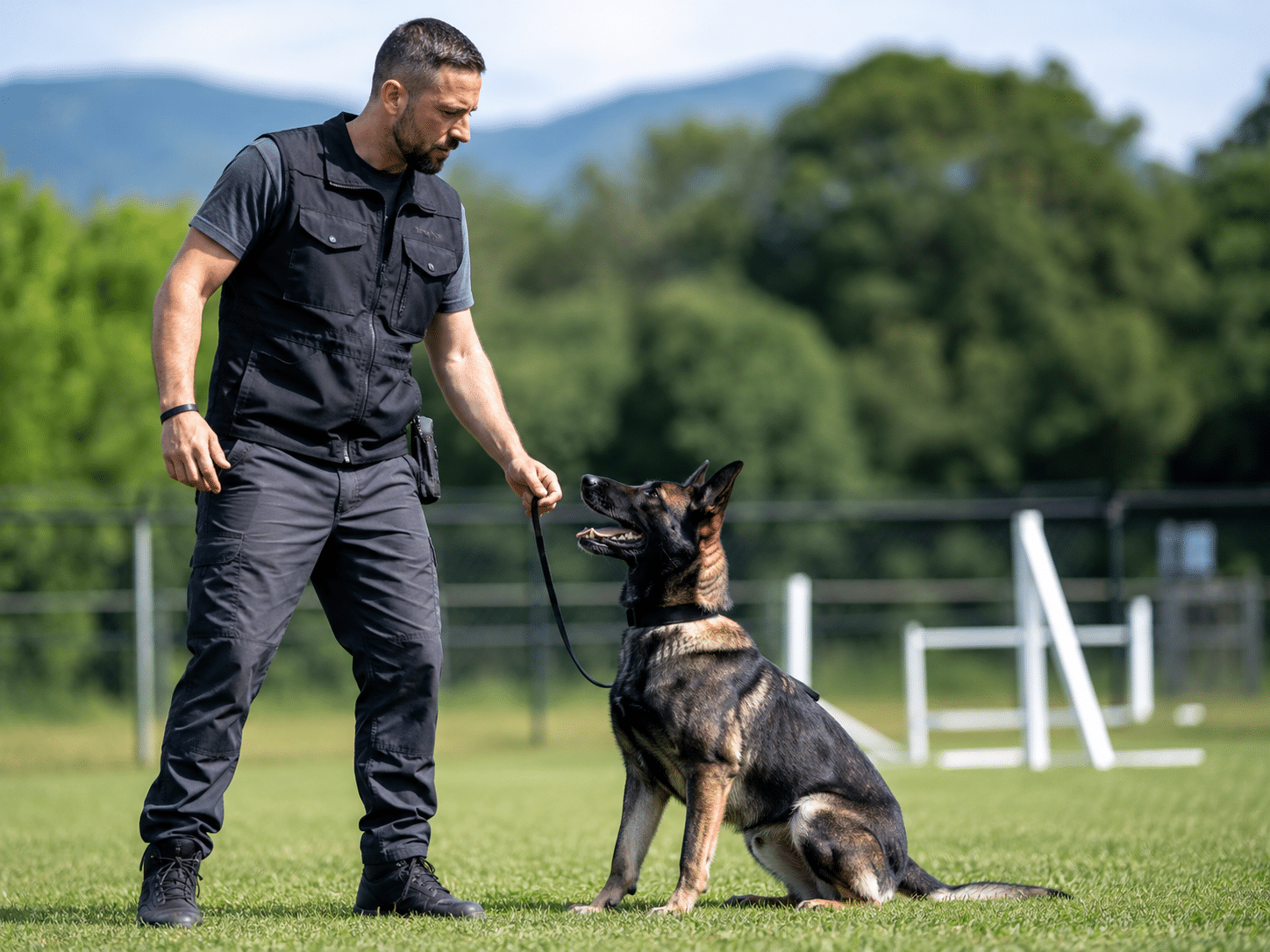 Any photo or video on a seller’s website or social media profile can be reverse searched using Google Images or TinEye to determine whether it appears on other websites. Protection dog scam accounts frequently use images downloaded from international trainers’ websites, YouTube channels, or stock footage libraries.
A reverse image search that shows a seller’s “training photos” appearing on multiple other websites under different names is definitive evidence of misrepresentation. This search takes less than two minutes and should be a standard first step for any buyer evaluating an online seller.
Florida business registrations are publicly searchable through the Florida Division of Corporations (sunbiz.org). A legitimate protection dog business operating for multiple years in Florida will have a verifiable registration, a consistent business address, and a filing history that matches the operating history the seller claims.
Sellers who describe years of experience but have a business registration created in the past few months, no registration at all, or a registration address that does not match what they represent deserve immediate scrutiny before any discussion of payment terms.
Wire transfer requests, cryptocurrency payment demands, Zelle or Venmo requests for large deposits, and no-refund deposit policies applied before any documentation has been provided are financial fraud signals that appear across multiple scam categories, not just protection dogs.
Legitimate programs accept payment methods that provide buyer recourse, including credit card payments and wire transfers made after full documentation has been reviewed and verified independently. Any seller who requires non-reversible payment before documentation is provided is structuring the transaction to remove the buyer’s ability to recover funds if the dog does not exist or does not perform as represented.
Verifying a protection dog program before committing any funds requires three independent actions: confirming the dog’s training titles through the issuing sport organization, confirming health certifications through the OFA public database or equivalent registry, and speaking directly with at least two prior placement clients provided by the seller. A program that cannot or will not support all three of these verification steps has not earned the level of trust a six-figure commitment requires.
Step one is title verification: request the specific IGP or BH title certificate, identify the issuing organization, and confirm with that organization independently that the title exists under the dog’s registered name or number. Step two is health verification: search the OFA public database for the dog’s hip and elbow evaluation results using the dog’s registered name.
Step three is reference verification: contact at least two prior placement clients directly, not through an introduction facilitated by the seller, and ask the specific questions outlined earlier. A program that passes all three steps has demonstrated a level of transparency that fraudulent sellers cannot match.
A legitimate seller’s response to documentation requests is enthusiasm, not resistance. Programs that have invested in proper breeding, training, and health screening welcome scrutiny because it confirms the value of what they are selling.
A seller who becomes defensive, changes the subject, offers more marketing material instead of documentation, or creates urgency to move past verification and into payment is demonstrating that the verification process poses a risk to their sale. That risk exists because the documentation cannot withstand it.
Florida buyers who believe they have been defrauded by a protection dog seller have several reporting options. The Florida Attorney General’s Office accepts consumer complaints under the Florida Deceptive and Unfair Trade Practices Act (FDUTPA). The Federal Trade Commission (FTC) accepts fraud reports at reportfraud.ftc.gov.
The Internet Crime Complaint Center (IC3) at the FBI accepts online fraud reports. Reporting does not guarantee recovery of funds, but it creates a record that contributes to enforcement action and warns other potential buyers.
Vanguard Protection Dogs, based in Jacksonville, FL, has operated for more than 16 years with a verifiable physical presence, a documented placement history, and full transparency on every dog’s training titles, health certifications, and pedigree. Every placement includes AKC registration, FCI certification, OFA evaluations, a written performance and health guarantee, and lifetime aftercare with a 24-hour response commitment.
With only 12 to 15 placements per year and a 5.0-star rating, Vanguard Protection Dogs welcomes the verification process that separates legitimate programs from fraudulent ones.
Jacksonville residents who want to start the evaluation process with a transparent, verifiable program can reach Vanguard Protection Dogs at (904) 822-1609 or schedule a consultation to begin the documentation review process.
Vanguard Protection Dogs is based in Jacksonville, Florida, and delivers fully trained protection dogs nationwide with a concierge onboarding experience.
Protection dog fraud is an ongoing problem in Florida’s high-net-worth market. Because the industry has no standardized licensing or certification requirements, fraudulent sellers can operate without formal credentials and face limited regulatory oversight until a buyer files a complaint. Florida’s large population of retirees, executives, and high-net-worth individuals makes it an active target for sellers offering undertrained or nonexistent dogs at elite prices.
The three-step verification framework covers the most reliable verification methods: confirm the dog’s IGP or BH title through the issuing sport organization independently, search the OFA public database for the dog’s health certifications, and contact at least two prior placement clients directly without the seller facilitating the introduction. A seller who cannot support all three steps has not provided enough documentation to justify a large financial commitment.
Payment methods that provide buyer recourse — including credit card payments and wire transfers made only after full documentation has been independently verified — are the safest options. Wire transfers are appropriate only after verification is complete, not before. Sellers who require cryptocurrency, Zelle, Venmo, or other non-reversible payment methods before documentation has been reviewed are structuring the transaction to limit the buyer’s options if the dog does not exist or does not perform as described.
Yes. IGP titles are issued by national breed organizations affiliated with the Verein fur Deutsche Schäferhunde (SV) in Germany. The issuing organization maintains records that can be confirmed by contacting them directly with the dog’s registered name and title information. A seller who claims an IGP title but cannot identify the specific issuing organization or provide the title certificate for independent confirmation has not provided verifiable documentation.
Three specific questions are most revealing: how long ago was the placement, can they demonstrate the dog’s protection capability on request today, and would they purchase from the same program again. Vague positive responses without specific answers to these questions do not confirm capability. References who are not independently reachable — only contactable through an introduction the seller facilitates — are not independently verifiable references.
Florida’s Deceptive and Unfair Trade Practices Act (FDUTPA) applies to fraudulent misrepresentation in commercial transactions, including protection dog sales. Buyers who can document that a seller made specific false representations about a dog’s training, certifications, or capabilities may have a civil claim under FDUTPA. Complaints can be filed with the Florida Attorney General’s Office. Criminal fraud claims can be pursued through local law enforcement or the FBI’s Internet Crime Complaint Center if the transaction involved online fraud elements.
Legitimate trainers with verifiable military or law enforcement K9 backgrounds can provide specifics: the branch, unit, years of service, and at least one verifiable reference from that period. Claims about classified units or confidential programs that cannot be verified are not verifiable credentials. Buyers who cannot confirm a trainer’s background through independent means — including contacting references from that service period — should treat the credential as unconfirmed.
An obedience-trained dog responds reliably to behavioral commands in low-stress environments. A protection-trained dog has been conditioned for specific threat responses, bite work under handler control, environmental confidence under stress, and sustained focus in high-stimulation scenarios. These are fundamentally different training programs with different evaluation standards. A dog sold as protection-trained without an IGP or equivalent sport title has not been independently evaluated to any recognized protection standard.
Sunbiz.org is the Florida Division of Corporations public database where all registered Florida businesses can be searched. A legitimate protection dog business with multiple years of operating history will have a verifiable registration, a consistent address, and a filing history matching their claimed experience. Sellers with no Florida registration, a registration created recently, or a registration address that does not match their represented location warrant additional scrutiny before any funds are transferred.
Buyers who have already paid a fraudulent seller should immediately contact their bank or credit card company to report the fraud and request a chargeback if applicable. Simultaneously, file reports with the Florida Attorney General (myfloridalegal.com), the Federal Trade Commission (reportfraud.ftc.gov), and the FBI’s Internet Crime Complaint Center (ic3.gov). Contact a Florida consumer protection attorney to evaluate civil remedies under FDUTPA. Document all communications, payment records, and representations made by the seller before taking any action.
 904-441-8475