Public safety and personal freedom often find themselves at odds, and few topics like the presence of protection dogs in public spaces highlight that friction.
The recent push for “dangerous dog” registries in some states bringing this issue into sharp focus. On the surface, a closer look at bite statistics reveals something unexpected: the numbers are decreasing.
But, some experts argue the numbers may actually be climbing—a trend potentially fueled by the surge in pet adoptions during the COVID-19 pandemic, as reported by USA Today.
The reality lies somewhere in between.
And while sensational headlines may point to a few so-called “vicious” dogs, seasoned handlers and behaviorists will tell you that aggression is rarely the dog’s fault. It’s a human problem. Neglect. Poor training. Lack of boundaries. Irresponsible breeding practices.
The dog simply becomes a product of its environment.
Still, the tension remains: How do we balance the rights of dog owners with the safety and comfort of the general public? What happens when a dog trained to defend is walked through a busy park or waits in line at a café?
We’ll break down the rules governing protection dogs in public, the etiquette every handler should follow, and the safety considerations that matter for dogs and people.
Whether you’re a seasoned handler, a curious bystander, or someone trying to understand where these dogs fit in today’s public spaces, this guide will give you the clarity you need.
First….
In most jurisdictions, protection dogs are governed under the same laws as other dogs—leash laws, dangerous dog statutes, noise ordinances, and public disturbance rules.
However, some areas impose additional restrictions due to their advanced training and potential for defensive behavior.
For example:
Others offer a bit more flexibility through a “reasonable control” standard. This means your dog doesn’t always need a leash, but you’re fully liable if it causes harm or disrupts the peace.
It’s also important to note that protection dogs are not the same as service dogs under the ADA (Americans with Disabilities Act).
A dog trained to protect its handler does not qualify for public access like a service dog assisting with a disability does. Trying to pass off a protection dog as a service dog is unethical and illegal.
So, before bringing your dog into any public space, check your local animal control laws, consult your insurance provider, and ensure your dog meets any certification or licensing requirements.
The responsibility lies entirely with the handler to ensure the dog remains calm, controlled, and non-threatening in public.
What should you do then?
Let’s flip the script for a moment.
If you’re a member of the public who spots a protection dog, what’s the right thing to do?
Start with this golden rule: Don’t approach, touch, or distract.
These dogs often work, even if it doesn’t look like it. A single “Hey, buddy!” or extended eye contact could trigger alert mode.
Some protection dogs are trained to respond to subtle environmental cues, so your actions—even well-meaning ones—can create unnecessary tension.
If you’re curious, ask the handler questions from a respectful distance. Most responsible owners are happy to explain what their dog does and how they’re trained. But they’ll appreciate your awareness of boundaries.
Also:
While much of the concern tends to be about how a protection dog might harm someone, there’s also a real risk to the dog.
Public spaces are unpredictable. A child running up unexpectedly. A dog-reactive pet off-leash. A stranger trying to provoke a reaction just to “test” the dog. Plus, even well-trained protection dogs get overwhelmed in the wrong environment.
To keep everyone safe:
Not all protection dogs thrive in the same settings. Some are more social and adaptable; others function best with minimal exposure to crowds. Don’t force a dog into a space just to “prove” it can handle it.
A solid leash grip, well-fitted gear, and calm, confident handling are non-negotiables. If your dog reacts, your leash hand should already be ready.
Vests or tags that read “Working Dog,” “Do Not Pet,” or “In Training” help set boundaries with the public before they even get close.
Unfortunately, some people will intentionally try to provoke a working dog (yeah, it happens) out of ignorance, curiosity, or ego. Don’t engage. Remove yourself from the situation and report the incident if necessary.
Your job as a handler is not to prove your dog’s capability. It’s to minimize risk, ensure control, and model best practices.
Three of the most common challenges for protection dog handlers are children, crowds, and mistaken identity.
Children are naturally curious. They’ll often run toward dogs without warning, especially if the dog looks cool. But not all protection dogs are playmates.
As a handler, you must maintain space and advocate for your dog, even if it means stopping a child mid-run with a firm, “Please don’t touch, this dog is working.”
Crowded areas are another risk. Can you monitor your dog, navigate foot traffic, read body language, block access from strangers, and remain calm, all at once?
If the answer is no, it’s not the right setting for your dog. But if you answer yes, you’re ready for parks or busy streets.
Lastly, service dog confusion is a growing issue. Some handlers try to pass off their protection dogs as service animals to gain access to restricted areas. This hurts legitimate service dog teams and undermines the entire system.
As I pointed out earlier, protection dogs are not covered under the ADA unless they also serve a disability-related function (which is rare).
Advocate for what your dog is: a highly trained, disciplined protection animal, not a medical assistant.
Owning a protection dog is a daily contract of trust between you, your dog, and the world around you.
I’ve seen handlers use their dogs to intimidate. Others are too lax, assuming obedience at home translates to predictability in public. Neither mindset is safe.
You’ll barely notice seasoned handlers. Their dogs are calm, silent, and observant—they simply blend in without drawing much attention. Commands are subtle, confidence is steady, and the bond between dog and handler is unmistakable.
This puts the public at ease, not on edge. That’s the gold standard.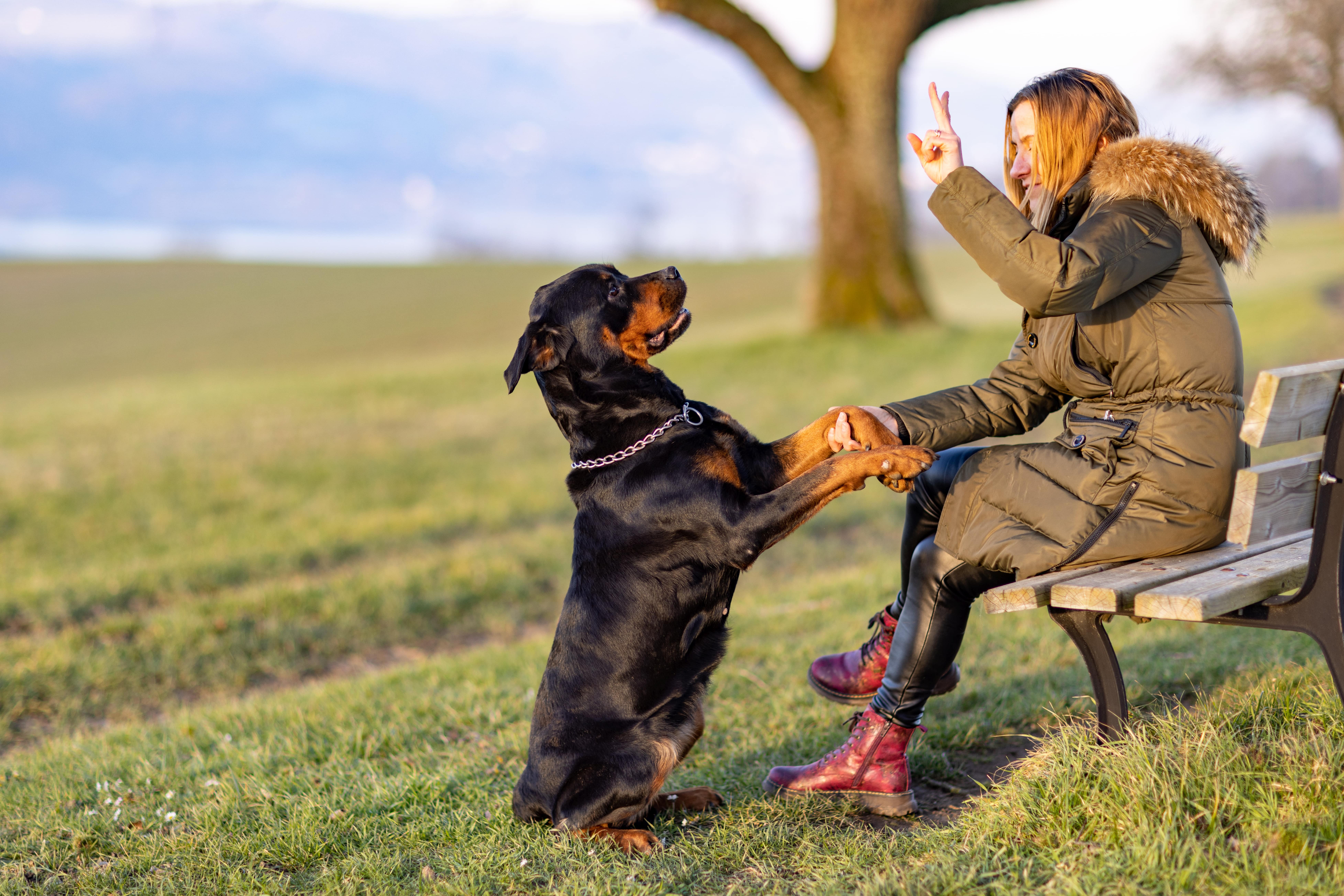
The bottom line?
These dogs are capable of incredible things. However, the measure of their strength is their ability to exist peacefully in a world that doesn’t always understand them.
And with the surge in demand for protection dogs, breeders and shelters are rushing to meet market needs. They’re placing dogs too quickly, including those with unresolved behavioral issues.
The result? Dogs that snap in grocery stores, lawsuits, breed bans and fear.
Every poorly bred and trained “protection dog” in public sets the entire industry back.
So, before you ever step into a public space, ensure your dog is well-socialized, professionally trained and genuinely ready. That’s where safety considerations start.
Now, if you’re ready to do this right, consider partnering with experienced professionals.
Vanguard Protection Dogs guarantees you quality. Well-bred bloodlines, professional-grade training, and dogs matched specifically to your needs and lifestyle.
Schedule your free consultation now and bring home a protection dog you can trust anywhere.
 904-441-8475