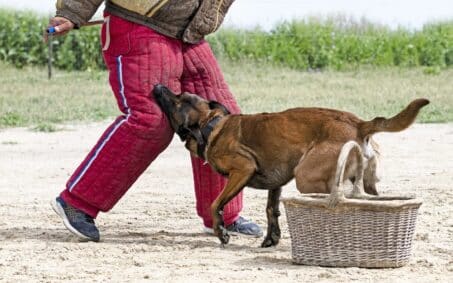
Man, there’s a lot of power in shaping a protection dog through desensitization.
And that’s true, BUT you might not realize that some training techniques are “closer to success” than others…
…Meaning that some methods are like hitting the easy button. A walk in the park, a slam dunk, teaching your dog to sit on command, easy.
…Others, not so much.
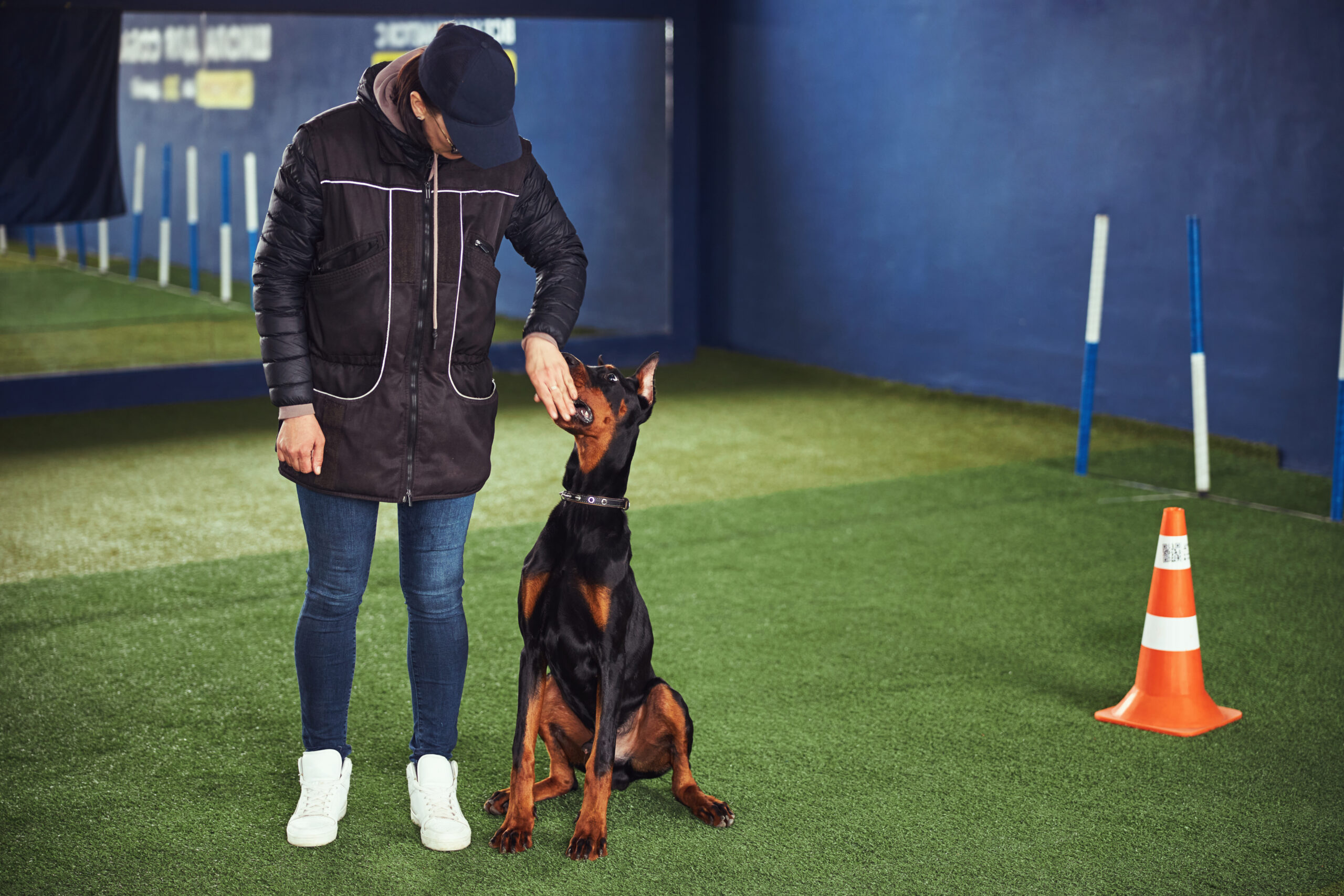
So, while I watch an ongoing dog training session, I thought I’d share a few thoughts on desensitization in protection dog training.
What makes it so effective, what makes it work, what makes it fail, and how to navigate the path so you can train a rock-solid protection dog that’s calm, confident, and ready for action……
 Desensitization is the process of exposing a dog to stimuli that would typically trigger a reaction until those triggers no longer faze them.
We’re talking about the stuff that spikes adrenaline:
Loud noises, aggressive body language, screaming, fast movements, crowded places, unstable footing, unfamiliar surfaces… all the chaos that can throw a dog off their game.
Desensitization takes those stimuli, breaks them down, and reintroduces them in controlled doses—until the dog can face them without flinching.
The goal isn’t to numb the dog or suppress their instincts. Instead, we refine their response, teach them to process chaos clearly, and stay composed under pressure.
So when the real test comes (a home invasion, a crowded event, or a violent altercation), your dog reacts in a controlled and decisive way.
In protection work, pressure is a constant. Dogs must make split-second decisions in chaotic environments, and any weakness in their training can be exposed under stress.
Desensitization fills those gaps, creating a reliable, focused, and prepared dog for the unexpected.
Here’s why it’s critical:
1. Reduces Reactivity
No more false alarms. Your dog doesn’t lose it over slamming doors or rowdy kids.
2. Builds Focus
A desensitized dog stays locked in on their handler’s commands, even amidst chaos like traffic noise or an aggressive stranger. And that focus makes them more effective and safer to work with.
3. Prepares for Real-World Scenarios
Protection isn’t about drills—it’s about real-life readiness. Desensitization exposes dogs to diverse sights, sounds, and stressors, ensuring they’re not caught off guard when it matters most.
4. Enhances Handler Control
A calm dog is a controllable dog. You don’t want to fight your protection system mid-crisis.
5. Promotes Balanced Temperament
A protection dog should be neither nervous nor overly reactive. Desensitization balances high drive with discernment, creating a stable, confident dog that knows when to act—and when to stand down.
Let’s walk you through the steps that make it work:
Miss a step, and you’re back to square one. Skip the gradual increase, and you risk overwhelming the dog, worsening the problem.
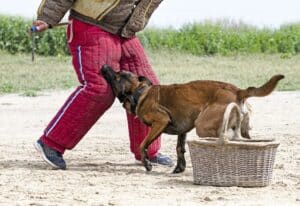 Common pitfalls include:
To avoid these, monitor the dog’s body language, adjust the pace, and ensure training reflects their environments.
So,
The first and most apparent benefit? Reliability.
A properly desensitized protection dog doesn’t fall apart when things get loud, messy, or unpredictable. Screaming, fast movements, unfamiliar surfaces, tight spaces—it doesn’t matter. They stay composed and responsive, even when everything around them is designed to throw them off.
But that’s just the surface.
Desensitization helps minimize fear-based reactions. When dogs are no longer overwhelmed by unfamiliar sounds, surfaces, or situations, they’re much less likely to shut down or lash out. Instead of responding with anxiety or aggression, they pause, process, and assess the situation with a clear head.
And that clarity creates confidence.
Over time, desensitization builds an emotionally balanced dog. They’re not startled by every new stimulus. They’re steady, grounded, and can make smart decisions under stress. That emotional stability makes them more trustworthy, controllable, and far safer to work with.
In short, desensitization doesn’t just polish the surface—it strengthens the core. It makes everything else in the training program more effective, durable, and dependable when it counts.
Training a protection dog is like building a multi-layered system—each layer is essential, and together they create something extraordinary.
As we’ve discussed, desensitization is a critical piece, but it’s not the whole picture. It’s one of several interconnected components that shape a protection dog into a stable, reliable, and capable partner.
Other layers include obedience, bite work, environmental exposure, socialization, impulse control, confidence building, situational awareness, threshold management, decision-making under pressure, and handler bonding.
Desensitization supports all these by ensuring the dog can focus no matter what’s happening around them.
Now….
I’ve seen too many dogs that look impressive in controlled environments completely fall apart when the real world throws them a curveball. And it always comes down to one thing: sloppy or incomplete desensitization.
Look, it’s easy to impress in a controlled setting. It’s another thing entirely to perform when things get messy in the real world.
You can absolutely start the desensitization process on your own. But don’t push through blindly if progress stalls—or worse, your dog starts regressing. Get help.
And not just from anyone—find a trainer with real-world experience and a proven track record.
Vanguard Protection Dogs specializes in building dogs that perform in the real world. We don’t train for the ring—we train for the street. For the noise, the pressure, the unknown. That’s where it counts.
So, if you’re ready to build something real…..
Desensitization is a training method that gradually exposes dogs to stimuli such as noise, crowds, or unpredictable environments to reduce fear and build calm, controlled responses.
It ensures that protection dogs remain stable, confident, and non-reactive in real-world situations, allowing them to distinguish between normal and threatening scenarios.
Dogs are gradually introduced to increasing levels of environmental stressors such as loud noises, crowds, and simulated threats while reinforcing calm and controlled behavior.
Yes, it helps prevent fear-based or reactive aggression by conditioning dogs to remain composed and respond only when necessary under handler control.
 904-441-8475