When clients first reach out, one of the most common questions we get is this:
“Are your dogs the same as the ones used by the police or military?”
And just behind that question is a concern: “If they are, are they safe for me and my family?”
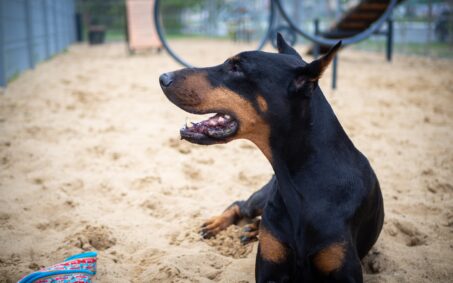
It’s a fair question, especially when the breeds are identical. German Shepherds, Belgian Malinois, Rottweilers, Dobermans, name them.
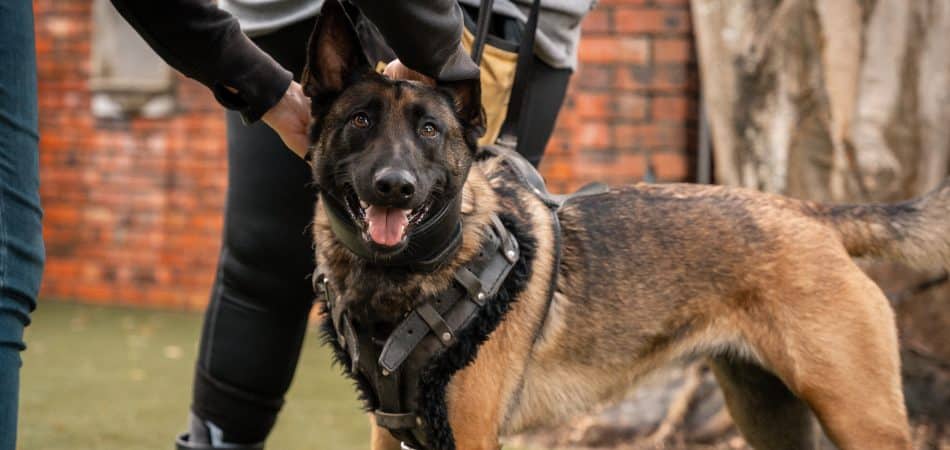
You’ve seen them on patrol in airports, leaping over fences in takedowns, storming buildings on live TV, and taking down suspects. These dogs radiate power, control, and security.
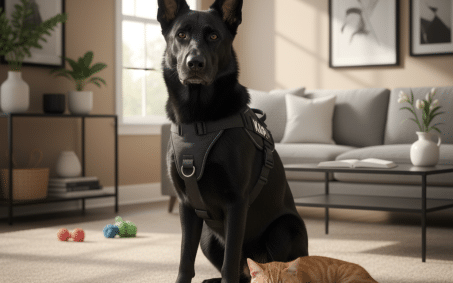
But then you see the same breeds in a completely different setting: sitting quietly next to a businessman at a café, walking calmly beside a mom on the school run, shadowing dignitaries, or even playing with kids.
Same look. Same build. Same intensity.
But they’re not the same—not in training, temperament, or purpose.
Police K9s are fighters. Personal protection dogs are guardians.
That difference reshapes everything—breeding, training, daily life, and how these dogs handle threats.
But today, the lines are blurry thanks to the internet and a lot of surface-level marketing. Now, people are shopping for “family-friendly K9 units” as if they were a menu item. Others are buying high-end protection dogs, expecting a military-grade commando.
So, let’s clear this up.
We’re cutting through the confusion and breaking down the differences between police K9s and personal protection dogs.
The difference starts with why they exist.
Police K9s are built for the fight. They serve as tactical assets—high-drive dogs bred and trained to support law enforcement in high-stakes, high-pressure, and often violent situations.
Their mission? Chase down suspects, search buildings, subdue threats, detect narcotics, explosives, and weapons.
They work side-by-side with officers and perform under extreme conditions—even when lives hang in the balance. Every command is sharp and deliberate: bite, hold, release, repeat. These dogs don’t hesitate. They don’t question. They act.
Now flip the script….
Personal protection dogs exist to defend. They still possess power. They still undergo rigorous training. But their purpose revolves around protecting their owner.
They learn to:
Their environment shapes their behavior. Their job demands emotional control, not combat reflexes.
And that’s just the beginning, the differences continue in their:
 Historically, breed has been the primary focus when selecting police K9s and personal protection dogs. And while breed matters, it’s not the whole story.
Purposeful breeding sets working dogs apart, meaning these dogs are bred for a specific job from the beginning.
That’s why under the working dog umbrella, you’ll find dogs with different specialties:
Same breeds (shepherds, Rottweilers, and Dobermans), but with different missions.
Ever wondered how a German shepherd can thrive on a battlefield and still thrive in a family setting? It all comes down to breeding.
So, whether you’re raising a dog to chase down suspects or to guard a family, the process begins with intentional pairings.
And breeders don’t just pick dogs for looks or pedigree status. They select for specific traits:
They evaluate the bloodline closely. Does the pedigree show a history of strong working traits? Can the parents pass down the instincts needed for tactical deployment or calm, reliable protection?
This is always a deliberate effort to produce dogs with the right stuff—mentally, emotionally, and physically—for their future role.
Police K9s are bred for intensity. The ideal candidate must be highly driven, reactive in the right ways, and quick to act under pressure. The job demands it.
They come from working lines where aggression, stamina, and focus have been fine-tuned over generations—especially in Europe, where police and military breeding programs are decades ahead in selecting for high-performance traits.
Yes, they still need to be strong and capable of defending. But above all else, they need balance.
A family protection dog can’t afford to be nervous, overly reactive, or unstable. The dog must be:
It’s not enough to bite on command. The dog must be discerned to hold back, assess the situation, and only act when necessary.
That kind of judgment under pressure doesn’t just come from training; it starts in the blood. Breeders select for balance. Trainers refine it.
And that’s how you end up with a dog that can switch from playmate to protector in a heartbeat—without losing control.
Both police K9s and personal protection dogs undergo extensive training, but what they’re prepared for makes all the difference.
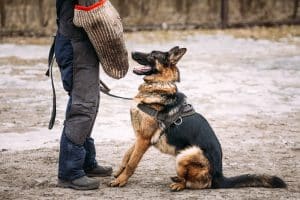 Each police dog is trained with a specific role in mind:
These roles are not interchangeable. Each is tied to a specific mission profile, and the training behind it is deliberate, rigorous, and focused on precision under pressure.
But police K9s today are often cross-trained. That means one dog may be certified for narcotics detection, suspect apprehension, and handler protection.
In modern units, you’ll often find K9s trained for:
Even their engagement style varies:
But one thing never changes across the board: the dog must know exactly when to act, how to act, and when to stop.
That kind of clarity? It’s not instinct. It results from hundreds of hours of scenario-based drills, tight obedience work, and daily reinforcement—not just training the dog but also the handler.
A personal protection dog might learn to bite and defend, but the goal isn’t conflict. It’s control.
So while the techniques might overlap, the outcome is entirely different.
These dogs are trained to:
Where a police K9 is taught to drive into the threat, a personal protection dog is trained to wait until the danger is real and engage when necessary.
Some families opt for foundational protection training: basic obedience, deterrence, and bite-on-command capabilities.
Others further request dogs trained for perimeter checks, child escort routines, VIP protocols, vehicle inspections, emergency response drills, or advanced home integration with smart security systems.
One principle stays the same regardless of the level: control always comes before aggression.
No matter the end role, this level of precision takes time.
Police K9 teams often train together for months before hitting the field. The same goes for families receiving personal protection dogs—it’s not a hand-off, it’s a transition.
Police dogs live to work. Their day-to-day is structured around readiness, duty, and discipline. Whether housed in department kennels or living with their handlers, everything revolves around their deployment schedule.
When they’re not working, they’re resting. That keeps them mentally and physically primed for the next command.
On the other hand, protection dogs live right in the home and are expected to blend into daily life while remaining responsive and ready smoothly.
It’s a delicate balance—being calm enough to lie by the fireplace, yet focused enough to respond to danger instantly. This duality makes them valuable to families: protection without disrupting daily peace.
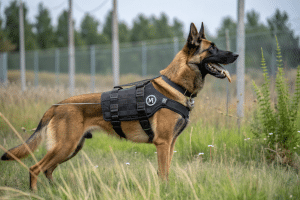 These dogs are only as effective as their handlers.
Police K9 handlers? They’re officers first, then trained to work with dogs.
They study law enforcement protocols, escalation procedures, and tactical deployment. They go through specialized courses, pass rigorous selection, and face regular re-certifications to earn the right to partner with a K9.
They don’t just “own” the dog. They’re part of a tactical team. Their job is to safely, legally, and effectively deploy the dog in high-stakes scenarios.
And their work doesn’t stop in the field. Handlers are also responsible for the dog’s daily care: feeding, grooming, exercise, medical upkeep, and keeping the dog sharp both mentally and physically.
Now with a personal protection dog, the dynamic shifts.
Because the moment that dog steps into your home… you become the handler. And your role is just as important as the dog’s training pedigree.
You’ll be expected to:
Protection is a partnership. And you need to show up for it.
Police Dogs Operate With Legal Immunity
Because police K9s are part of law enforcement, they’re protected by specific legal statutes. If they bite someone during a lawful deployment, the liability typically falls on the department, not the individual handler.
Their use of force is regulated, but within the scope of their duty, they are permitted to act as extensions of their human counterparts.
They are, in effect, operating under the badge.
Personal Protection Dogs? Entirely Your Responsibility
If your protection dog bites someone—whether provoked or not—you are liable. That’s the law.
Which is why control, clarity, and temperament are non-negotiable. Your dog must be predictable, stable, and command-responsive. You’re protecting your family, reputation, finances, and legal standing..
Which means you need to be just as prepared as your dog.
Any trainer who hands over a protection dog without training you first is doing both of you a massive disservice. You should train alongside your dog—repeatedly—before that leash ever transfers to your hand.
And even then, the work doesn’t stop. True protection work includes hands-on guidance, structured follow-ups, and ongoing support for life.
Anything less is just incomplete and reckless.
 If you’re looking for a dog to protect your family, don’t shop like you’re outfitting a SWAT team. You’re not buying a weapon, you’re bringing home a guardian.
That means:
You don’t need the most intense dog in the kennel. You need a confident, stable one—calm in chaos, but ready when it counts.
Insist on absolute protection training—not just obedience.
A well-trained protection dog will stay neutral in public, obey under distraction, and respond instantly when an actual threat appears. Bite work should always be controlled, never chaotic.
If the provider isn’t offering to train you, run. You’re not just buying a dog. You’re stepping into a working relationship. You need to know how to communicate with your dog clearly and effectively.
Got young kids? Frequent visitors? Travel often? Your dog’s temperament and training should reflect the reality of your daily life, not a fantasy of what a “protection dog” should be.
Ask to see the pedigree. Request proof of training. Get references. A true professional will welcome the scrutiny because they know what’s at stake.
Your dog should offer you peace of mind, not paranoia.
So don’t get sold on hype. Get the right match for your family, lifestyle, and peace of mind.
And if you need expert help…
 904-441-8475