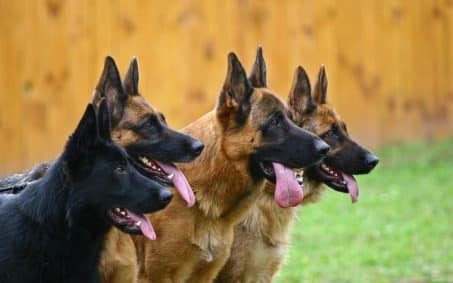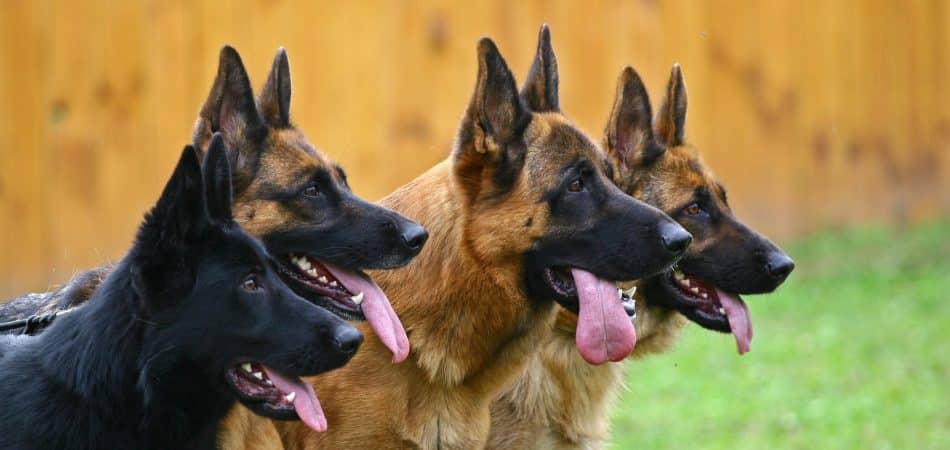
“Take this trouble for me: Make sure my shepherd dog remains a working dog, for I have struggled all my life long for that aim.”
— Captain Max von Stephanitz (1864–1936), Founder of the German Shepherd Dog breed
Max von Stephanitz had a vision (almost an obsession) with creating the ultimate working dog. He found his foundation in a herding dog from Thuringia, later named Horand von Grafrath, the first registered German Shepherd.
From there, von Stephanitz began crossing carefully chosen herding dogs from central and southern Germany. He wasn’t chasing beauty; he was chasing performance.
The Thuringian dogs brought sharp instincts, a wolf-like edge, and quick reactions. The Württemberg dogs offered the opposite: bigger frames, calmer temperaments, and a steadier nature.
Blended together, they created the balance von Stephanitz envisioned: a dog strong enough to work all day, agile enough to respond instantly, and stable enough to live among people.
 That was the blueprint. That was the standard he fought to preserve until his death in 1936.
Fast forward to the 1960s, and the breed began to diverge.
In Germany, breeders doubled down on strict standards, keeping the focus on stamina, drive, and utility—giving us the working line.
In the U.S., freedom in breeding shifted priorities toward showmanship: flashy coats, dramatic angulation, and looks over function—giving us the show line.
The split never healed. Today, the debate rages on: working line vs. show line Shepherds. Same roots, same ancestry, yet radically different priorities.
And this isn’t just an academic debate. Misunderstanding the difference is one of the biggest reasons German Shepherd owners end up disappointed.
A dog bred for the show ring won’t thrive in the same environment as one bred for the training field. Knowing the difference between show line and working line German Shepherds isn’t optional: it’s essential.
The German Shepherd was born from a single vision, but once the breed left von Stephanitz’s careful hands, competing priorities began pulling it in different directions.
In Europe, especially Germany, utility was king. Dogs were judged not just on how they looked standing still, but on how they moved, worked, and held up under pressure.
That’s why the breed club (SV) required rigorous testing (hip and elbow checks, endurance trials, and temperament tests) before breeding was even allowed.
The goal? To preserve the dog as a true working animal.
Meanwhile, across the Atlantic, a different story unfolded. American breeders were less bound by strict regulations.
The AKC prioritized the show ring, where appearance reigned supreme. Dogs with dramatic hind angulation, shiny flowing coats, and exaggerated gaits captured attention.
Over time, this created a bloodline where beauty and elegance outweighed stamina and working nerve. Function took a back seat. These became the show lines.
That divergence, Europe holding the line on performance, America chasing glamour, is what cemented the split between working and show line Shepherds.
It touches everything from structure, temperament, drive, and ultimately purpose. Let’s break it down:
Task-driven. These are the dogs behind police K9 units, military patrols, border security, personal protection, and search-and-rescue missions.
Their entire genetic program focuses on grit, endurance, and reliability under pressure.
They may vary depending on the type (Czech, DDR/East German, or West German working lines), but they share certain hallmarks:
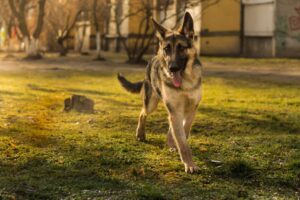 Working lines are practical athletes. They carry straighter backs, solid bone structure, and compact, muscular bodies designed for agility and endurance.
Their coats are often dense and weatherproof, commonly seen in sable, solid black, or bi-color patterns—less flashy than show dogs, but far more practical in the field.
Nothing about their appearance is exaggerated; efficiency is the design.
These dogs are defined by drive. They have intense energy, sharp focus, and a relentless need to engage both mind and body.
Most critically, they remain resilient under pressure. A well-bred working line Shepherd is stable and clear-headed, even in chaotic environments.
Because they’re bred for endurance and stability, Shepherds tend to have fewer exaggerated physical traits. Their straighter backs and balanced proportions reduce the risk of skeletal issues.
That doesn’t mean they’re immune; hip and elbow dysplasia are still concerns in the breed overall.
However, reputable working line breeders rigorously test and select breeding stock to minimize risks.
This is where they shine… and where unprepared owners fail.
A working line Shepherd needs a job. They won’t be content with a stroll around the block. Without structure, consistent training, and daily challenges, they’ll create their own “work”—often in destructive ways.
They thrive in obedience drills, tracking, protection sports (IGP/IPO), or serious service roles. For handlers willing to invest time and consistency, they’re unmatched.
Presentation-driven. Looks and temperament take precedence over high-stakes utility.
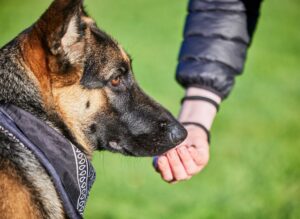 More exaggerated angulation in the hindquarters, sloping backs, and often a more refined head. They’re taller, longer, and bred to move with a flowing, sweeping gait that catches the eye.
Coat colors are often richer and flashier, most famously, the black-and-red saddle pattern that dominates conformation shows.
Generally calmer and more people-oriented than working lines, their energy is still higher than most breeds (they are Shepherds, after all), but compared to working lines, they’re less intense.
They thrive as companions, provided they get exercise and mental stimulation.
German Shepherds with extreme angulation face criticism for higher incidences of orthopedic problems. The exaggerated slope can put stress on hips and hocks, raising the likelihood of lameness over time.
That said, responsible show breeders are working hard to reduce these risks, but the controversy persists.
Show line GSDs are more forgiving. They’re intelligent, highly trainable, but less demanding in terms of daily workload.
They still need exercise and mental stimulation (remember, they’re Shepherds, not lapdogs), but they don’t require the same level of specialized training.
It’s worth noting that European (West German) show lines differ from their American cousins.
| Though bred exclusively for the ring, show line GSDS still undergoes some performance testing. They often balance beauty with at least some functionality, though they still don’t carry the same level of drive as their working relatives. |
There’s no universal “better.”
It depends entirely on purpose:
The real danger is mismatching.
Both scenarios fail the dog.
The better question isn’t which is better, but rather: Which is better for me?
If longevity and structural soundness are top priorities, the working line often has the edge.
And if you want expert guidance in finding the German Shepherd that truly fits your family’s needs, our team at Vanguard Protection Dogs is here to help.
Our experience ensures you won’t just get a dog, you’ll get the right partner for your home and life.
So, feel free to contact us today!
Working line German Shepherds are bred for performance. Their genetics are built around drive, endurance, and reliability under pressure — making them the breed of choice for police K9 units, military operations, personal protection, and search-and-rescue. They carry straighter backs, compact muscular frames, and coats built for the field rather than the ring.
Show line German Shepherds are bred for conformation. Appearance, movement, and temperament take center stage. They feature more pronounced hindquarter angulation, flowing coats in richer colors, and a generally calmer, more people-oriented personality. They excel as loyal family companions rather than high-stakes working dogs.
Same breed, same ancestry — but very different priorities.
Yes, but only in the right home. Working line Shepherds are not casual pets. They carry intense drive, high energy, and a constant need for mental and physical engagement. In a structured environment with consistent training, clear boundaries, and daily challenges, they are deeply loyal, highly reliable, and incredibly rewarding to own.
In a low-activity household without proper outlets, that same drive becomes a problem. Destructive behavior, restlessness, and anxiety are common outcomes when working line dogs are under-stimulated.
If your lifestyle can match their needs, they will be one of the most devoted dogs you will ever own. If it cannot, a show line or another breed may be the better fit.
Working line Shepherds tend to have fewer structural health concerns. Their straighter backs and balanced proportions put less chronic stress on the hips, hocks, and spine, reducing the risk of the skeletal issues that have long plagued the breed.
Show line Shepherds, particularly American show lines, face more scrutiny in this area. The exaggerated hindquarter angulation that wins in the ring can place excess strain on joints over time, increasing the likelihood of orthopedic problems in later years.
That said, no line is immune. Hip and elbow dysplasia remain concerns across all German Shepherds. The difference lies in how seriously each line’s breeders screen and select breeding stock. Responsible breeders on both sides are working to minimize these risks — but working lines generally start with a structural advantage.
There are three primary working line varieties, each with distinct characteristics:
Czech working lines were developed behind the Iron Curtain for border patrol and military use. They are known for exceptional drive, dark pigmentation, and a toughness that makes them well-suited for demanding operational roles.
DDR (East German) working lines share a similar origin and are recognized for their heavy bone structure, broad heads, and strong nerves. They were bred under strict state controls, producing dogs with outstanding endurance and a serious, focused temperament.
West German working lines are the most versatile of the three. They balance high drive with trainability and biddability, making them a top choice for IGP/IPO sport, personal protection, and professional service work.
For serious protection work, working line German Shepherds are the clear choice. Protection requires more than size or appearance — it demands nerve strength, resilience under pressure, sustained drive, and the ability to remain stable in high-stress environments. Working lines are genetically built for exactly that.
Show line Shepherds are intelligent and trainable, and many can learn basic protective behaviors. However, they generally lack the same depth of nerve and drive that working lines carry. When placed under the intensity of real protection training scenarios, show line dogs may show stress, avoidance, or inconsistency — not because they are poor dogs, but because they were never bred for that purpose.
If protection capability is a priority, the working line is the only honest recommendation.
Both are show lines, but they have diverged noticeably over the decades.
American show lines reflect the AKC standard, which has prioritized an exaggerated sloping topline, extreme hindquarter angulation, and a sweeping gait that commands attention in the ring. The result is a striking-looking dog, but one that carries a higher structural risk — particularly in the hips, and has drifted furthest from the original working standard.
West German show lines are held to a stricter European standard. The angulation is less extreme, and importantly, West German show dogs are still required to pass some level of performance testing before being approved for breeding. This keeps them closer to the breed’s working roots than their American counterparts, even if drive and nerve are still secondary to appearance.
If you prefer the show line aesthetic but want a dog with at least some functional foundation, West German show lines are the stronger choice.
Start by being honest about your lifestyle, your experience level, and what you actually need from a dog.
If you are a handler, trainer, law enforcement professional, or serious sport competitor, or if you want a fully trained personal protection dog, a working line is built for your world. Be prepared to invest in consistent training, structured exercise, and ongoing mental engagement. These dogs give everything, but they ask for a great deal in return.
If you want a loyal, intelligent family companion who is protective by nature but manageable in a home environment, a show line is likely the better match. They are easier to live with day-to-day, more forgiving of a less regimented schedule, and still more than capable of being trained to a high level.
The most common mistake is choosing based on looks or reputation alone. The right German Shepherd is the one that fits your life — not just the one that impresses people at the dog park.
If you are unsure, the team at Vanguard Protection Dogs can help you work through the decision and match you with the right dog for your specific needs.
 904-441-8475