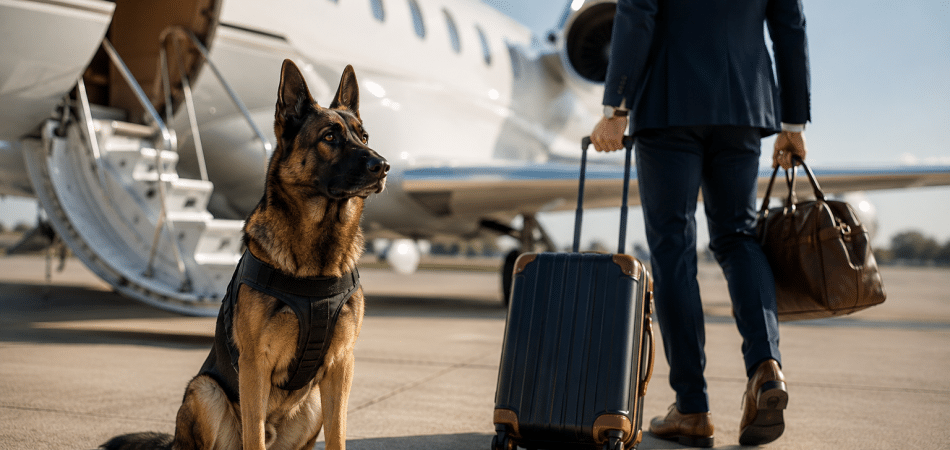
High-net-worth individuals traveling with a trained protection dog need to plan for airline regulations, hotel policies, breed-specific legislation, and vehicle safety before leaving home. Private aviation is the most common air travel option because it bypasses breed and size restrictions enforced by commercial carriers.
Road trips require crash-tested crates or harnesses, regular rest stops, and climate-controlled vehicles. Maintaining obedience drills and consistent handler routines during travel keeps the dog responsive and calm in unfamiliar settings. Owners should carry updated health certificates, rabies documentation, microchip records, and training credentials at all times while traveling.
A weekend trip to Amelia Island, a cross-country flight to Aspen, or a month-long stay at a coastal estate in the Hamptons. Jacksonville’s high-net-worth families don’t stop needing personal security when they leave home.
Bringing a trained protection dog along on these trips means the same level of safety follows the family wherever they go, but traveling with a 70- to 100-pound working dog takes planning that goes well beyond booking a pet-friendly hotel.
Vanguard Protection Dogs has spent 16+ years placing fully trained protection dogs with families, executives, and public figures across the country. With AKC-registered, FCI-certified, and OFA-certified dogs from elite European bloodlines, the Vanguard team understands the unique demands of travel-ready protection dogs.
Our 5.0-star rating and trainer certifications, recognized by elite European police agencies, reflect a standard designed for clients who expect their dogs to perform reliably in any environment, not just at home.
Families in Jacksonville and beyond who are considering a protection dog built for a mobile lifestyle can reach out to discuss breed selection, training levels, and travel readiness with the Vanguard team.
Protection dog breeds like German Shepherds, Belgian Malinois, and Rottweilers exceed the cabin size limits on most commercial airlines and typically fly in pressurized cargo holds or on private charter flights. Private aviation remains the preferred option for high-net-worth families because it eliminates breed restrictions, size caps, and the stress of cargo separation while keeping the dog in a protective role throughout the journey.
Most commercial airlines restrict in-cabin pets to dogs weighing under 20 pounds in an approved carrier that fits beneath the seat. Protection dog breeds fall well outside this limit. Airlines that accept large dogs typically route them through pressurized, temperature-controlled cargo compartments with booking required.
Each airline sets its own breed policies. Some carriers restrict Rottweilers, Doberman Pinschers, and other breeds commonly associated with protection work regardless of the dog’s training credentials. Owners should call the airline directly to confirm breed acceptance, crate specifications, and temperature embargo dates (many airlines suspend cargo pet transport when ground temperatures exceed 85 degrees Fahrenheit).
Private charter flights remove every restriction that makes commercial travel difficult with a protection dog. The dog rides in the cabin alongside the owner, maintains its protective role during the flight, and avoids the extended crating that cargo transport requires. No breed restrictions, no weight limits, and no separation from the handler.
For families traveling between Jacksonville and seasonal residences in destinations like New York, Colorado, or the Caribbean, private aviation offers consistency. The dog boards and deplanes with the family, reducing stress and maintaining the working relationship between handler and dog.
Several pet-focused charter services operating out of Jacksonville International Airport (JAX) and regional airfields accommodate large working dogs with climate-controlled cabins and flexible scheduling.
Air travel with a protection dog requires a current rabies vaccination certificate, a veterinary health certificate issued within 10 days of departure (for domestic flights), and proof of microchip registration. International flights add layers of documentation including a USDA-endorsed health certificate, a rabies titer test, and destination-specific import permits.
Carrying copies of the dog’s AKC registration, training certifications (IGP, BH, or CGC credentials), and a letter from the training provider can help smooth interactions with airline staff and customs officials. These documents signal that the dog is a professionally trained working animal, not an untrained pet.
A crash-tested crate or harness system is the safest way to transport a protection dog by vehicle. Dogs should never ride unrestrained, and owners should plan stops every 2 to 3 hours for water, exercise, and bathroom breaks. Climate control is non-negotiable, as vehicles can reach dangerous interior temperatures within minutes when parked in Florida’s heat.
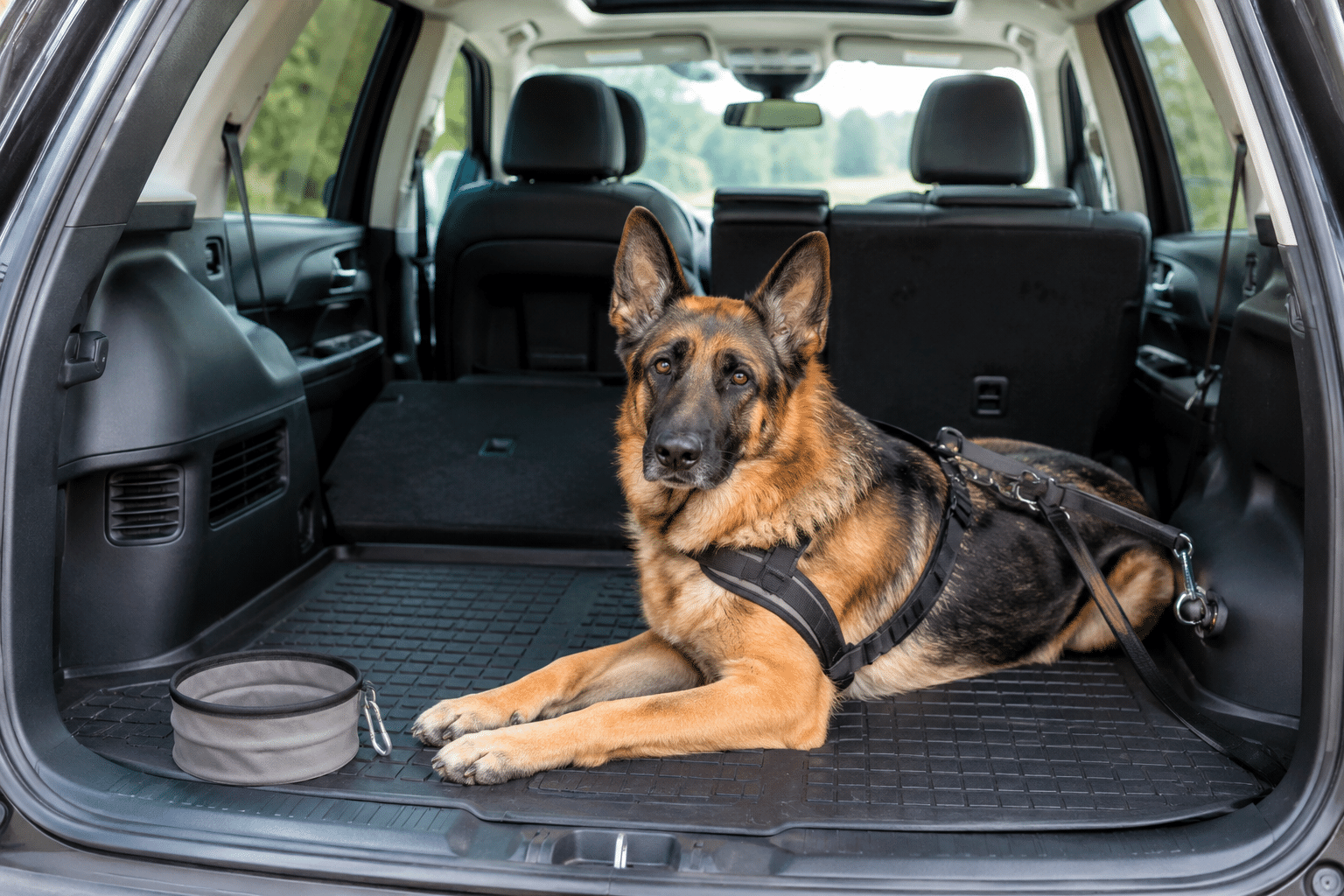 The American Kennel Club and veterinary safety organizations recommend securing dogs in vehicles using crash-tested equipment rated for the dog’s weight.
For SUVs and large vehicles, a reinforced travel crate anchored in the cargo area provides the highest level of protection during collisions or sudden stops.
For dogs riding in the back seat, a crash-tested harness attached to the vehicle’s seat belt system offers a practical alternative.
Protection dog breeds ranging from 50 to 135 pounds need equipment rated for their specific weight class. A German Shepherd requires a crate measuring at least 42 inches in length, while a Rottweiler may need 48 inches or larger. The crate should allow the dog to stand, turn around, and lie down comfortably during extended travel.
Jacksonville’s year-round warm climate makes vehicle heat management a serious concern. A parked car’s interior temperature can climb 20 degrees Fahrenheit above the outside temperature within 10 minutes, even with windows cracked. On a 90-degree Florida day, interior temperatures can reach 110 degrees or higher in under 15 minutes.
Dogs should never be left unattended in a parked vehicle. During road trips, the vehicle’s air conditioning should run continuously when the dog is inside. Belgian Malinois, with their lighter builds and higher energy output, and double-coated breeds like German Shepherds are particularly vulnerable to heat stress during summer travel across the Southeast.
Veterinary experts recommend feeding a protection dog a light meal 3 to 4 hours before departure and avoiding feeding during the drive to prevent motion sickness. Fresh water should be offered at every rest stop. For trips exceeding 4 hours, a collapsible travel bowl and a cooler with bottled water make hydration convenient.
Rest stops every 2 to 3 hours give the dog time to stretch, relieve itself, and reset mentally. Short leash walks at rest areas also serve as informal obedience reinforcement, keeping the dog engaged and responsive throughout the journey.
Traveling with a protection dog requires advance research into hotel pet policies, breed-specific legislation at the destination, and local leash and licensing laws. Laws governing protection dog ownership vary not just by state but sometimes by county or municipality, and failing to check these regulations before arrival can result in fines, confiscation, or denied accommodation.
Many luxury hotels and resort properties accept dogs, but policies differ widely between chains and individual locations. Some properties welcome all breeds. Others restrict dogs over a certain weight or ban specific breeds associated with protection work. Calling the hotel directly before booking confirms whether the specific breed is accepted, what fees or deposits apply, and whether any floor or room restrictions exist.
Properties that cater to high-net-worth clientele tend to be more accommodating of well-trained working dogs. A dog with advanced obedience and protection training that walks calmly on leash, remains quiet in hallways, and settles quickly in a room makes a strong impression on hotel staff. Many luxury concierge teams will even arrange ground-floor rooms or suites with direct outdoor access for guests traveling with large dogs.
Breed-specific legislation (BSL) restricts or bans certain breeds in specific jurisdictions across the United States. German Shepherds, Rottweilers, Doberman Pinschers, and various mastiff-type breeds appear on restricted lists in some municipalities. Florida has no statewide breed ban, but some Florida cities and counties enforce their own breed-related ordinances.
Before traveling to a new city or state, owners should research local BSL by checking the destination municipality’s animal control regulations. States like Iowa, Kansas, and Ohio have municipalities with active breed restrictions. Some cities require additional liability insurance, muzzling in public, or registration of restricted breeds. A 10-minute check of local ordinances before departure prevents legal complications on arrival.
Interstate travel within the United States requires a current rabies certificate and a Certificate of Veterinary Inspection (CVI) issued within 10 days of travel. Some states have additional import requirements for dogs, including specific vaccination records or proof of parasite treatment. The USDA APHIS website lists state-by-state entry requirements for pet travel.
International travel adds complexity. The European Union requires an EU pet passport, a microchip meeting ISO 11784 standards, and a rabies titer test taken at least 30 days after vaccination. Countries like Australia, Japan, and the United Kingdom enforce quarantine periods that can range from a few days to 180 days depending on the animal’s vaccination and testing history. Planning international trips with a protection dog should begin at least 4 to 6 months in advance to meet all documentation deadlines.
Protection dogs maintain peak performance during travel when owners run short daily obedience drills, keep feeding and exercise routines consistent, and provide structured downtime in each new environment. A dog that trains for 10 to 15 minutes per day while traveling retains the same command responsiveness and behavioral standards it demonstrates at home.
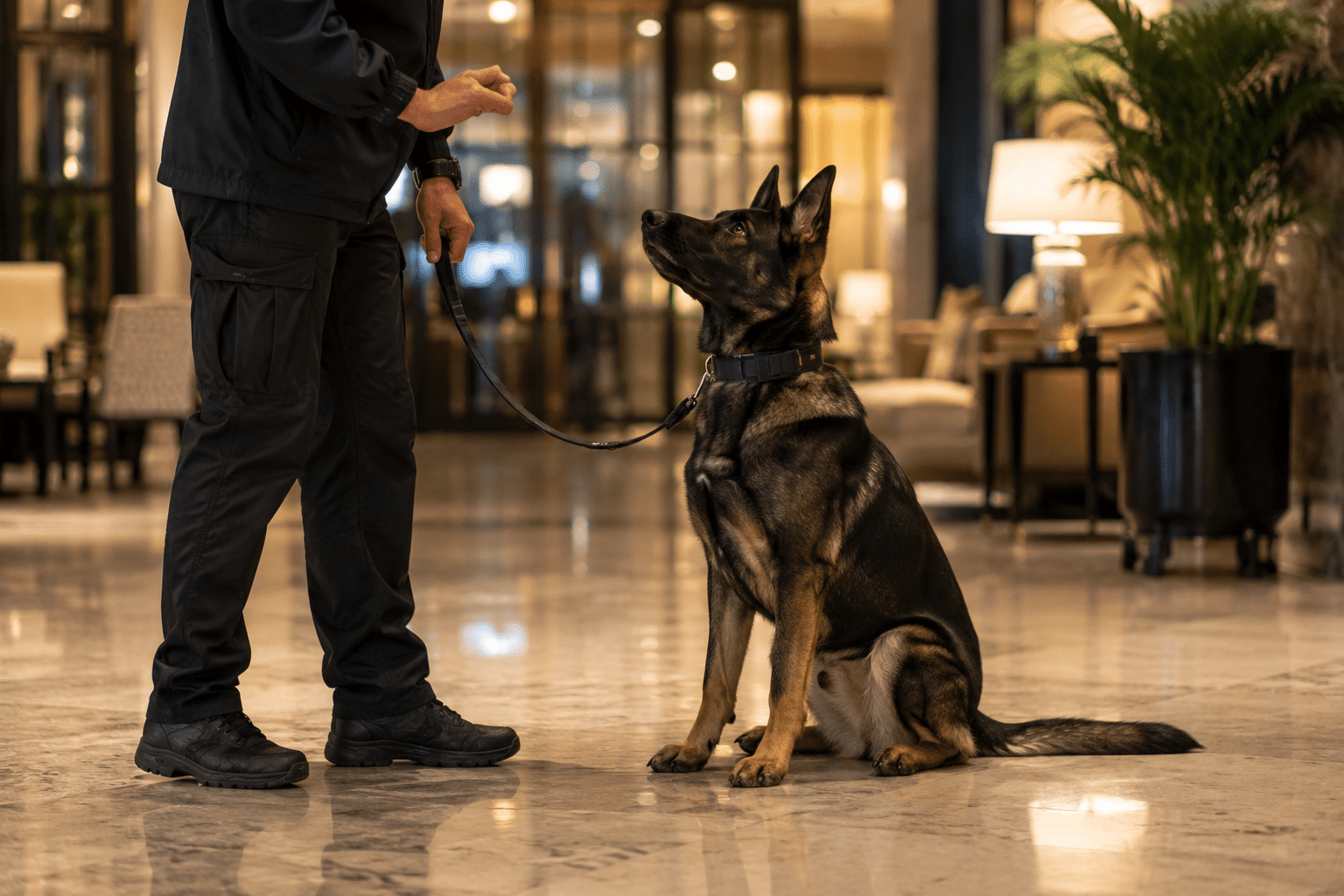 Running familiar obedience commands in unfamiliar settings strengthens a protection dog’s ability to perform reliably anywhere.
Short sessions covering heel, sit, stay, down, and recall reinforce the handler-dog relationship and confirm that the dog responds to verbal and hand commands even with new distractions.
Dogs trained through the IGP (Internationale Gebrauchshund Pruefung) system or similar certification programs have an advantage during travel.
Their training is built on consistent performance across varied environments, from indoor spaces to open fields to crowded public areas. That foundation transfers directly to hotel lobbies, airports, and vacation properties.
Protection dogs thrive on predictable routines. Feeding at the same times each day, walking on a consistent schedule, and providing a designated rest area in each new location (a familiar blanket or travel bed) helps the dog settle into new environments faster. Dogs that maintain routine typically acclimate within 24 to 48 hours of arriving at a new location.
Handler behavior matters as much as the dog’s environment. A calm, confident handler signals to the dog that the new environment is safe. Abrupt changes in routine, raised voices, or anxious body language from the handler can trigger heightened alertness or stress responses in even the most seasoned protection dogs. Families considering how elite protection dogs perform in high-security settings will find that travel readiness is a natural extension of advanced training.
Reputable protection dog providers offer follow-up training support that owners can access from any travel destination. Video calls, phone consultations, and text-based guidance allow owners to troubleshoot behavioral questions or reinforce specific commands while away from home.
This remote support is especially valuable during extended trips lasting two weeks or longer, when a protection dog may encounter a wider range of new environments, people, and situations. Having a professional trainer available on short notice keeps the owner confident and the dog on track.
Vanguard Protection Dogs places fully trained protection dogs that perform reliably at home, on the road, in the air, and at any destination. With 16+ years of selective breeding and training experience, AKC-registered, FCI-certified, and OFA-certified dogs from elite European bloodlines, and only 12 to 15 placements per year, every dog receives the individualized preparation that a travel-ready lifestyle demands.
The Vanguard team’s 5-Pillar System pairs the right dog with the right family based on lifestyle, travel frequency, and security needs. Concierge onboarding with door-to-door delivery and a 3-day immersive training experience prepares both the dog and the family for smooth transitions between home and travel. L
ifetime aftercare with guaranteed 24-hour response means expert guidance is always available, whether the family is at their Jacksonville estate or a vacation property across the country.
High-net-worth Jacksonville families ready to discuss a protection dog built for their travel lifestyle can call (904) 822-1609 or schedule a consultation to explore breed selection, training levels, and travel readiness with the Vanguard team.
Vanguard Protection Dogs is based in Jacksonville, Florida, and delivers fully trained protection dogs nationwide with a concierge onboarding experience.
Most commercial airlines allow dogs to travel in cargo or cabin depending on size and breed. Protection dog breeds like German Shepherds, Belgian Malinois, and Rottweilers typically exceed cabin size limits and fly in pressurized cargo holds. Private charter flights offer the most flexibility, allowing the dog to remain with the owner throughout the journey without breed or size restrictions.
A current rabies vaccination certificate and a health certificate issued by a licensed veterinarian within 10 days of travel are standard requirements for interstate travel. Some states require additional documentation for specific breeds. Owners should also carry proof of microchip registration, AKC registration papers, and any training certifications such as IGP or CGC credentials.
Many luxury and boutique hotels accept well-trained dogs, though policies vary by property and chain. Pet-friendly hotels may charge a nightly fee or require a refundable deposit. Protection dogs with strong obedience training and calm public behavior tend to be welcomed at properties that accept large breeds, and calling ahead to confirm breed-specific policies is always recommended.
Professionally trained protection dogs are conditioned to remain calm in unfamiliar and high-stimulation environments. Dogs with advanced obedience training and socialization experience adapt more quickly to travel than untrained pets. Maintaining consistent routines, familiar commands, and a calm handler presence helps reduce any adjustment period during trips.
Private aviation is the preferred option for high-net-worth families traveling with protection dogs. Private flights eliminate breed restrictions, size limits, and the stress of cargo hold travel. The dog remains with the owner in the cabin, maintains its protective role throughout the journey, and avoids the extended crating required by commercial cargo transport.
German Shepherds, Rottweilers, Doberman Pinschers, and certain mastiff breeds face breed-specific legislation (BSL) in some municipalities across the United States. Florida has no statewide breed restrictions, but some cities and counties enforce their own breed bans or ownership requirements. Owners should research local ordinances at every planned destination before traveling with a restricted breed.
Trained protection dogs handle road trips well when owners provide regular stops every 2 to 3 hours for water, exercise, and bathroom breaks. A crash-tested travel crate or harness system keeps the dog secure during transit. Feeding the dog a light meal 3 to 4 hours before departure and avoiding meals during the drive helps prevent motion sickness.
International travel with a protection dog requires advance planning that varies by destination country. Most countries require a valid rabies titer test, a USDA-endorsed international health certificate, and microchip identification. Some nations enforce quarantine periods ranging from 30 to 180 days. The European Union, United Kingdom, Japan, and Australia each have distinct import protocols that owners must research well in advance of travel.
A clearly labeled vest or harness identifying the dog as a trained working dog (not a service animal, which has separate legal definitions) can help smooth interactions with hotel staff, airline personnel, and security teams. The vest signals professionalism and training rather than aggression. Owners should never misrepresent a protection dog as a service animal, as this violates federal law under the ADA.
Owners should run short obedience drills (10 to 15 minutes) daily during trips to reinforce commands, recall, and controlled behavior in new environments. Familiar verbal and hand commands keep the dog’s response patterns sharp. Reputable protection dog providers offer remote follow-up training support via video calls and phone consultations that owners can access from any travel destination.
 904-441-8475